

ASTM C1499-19
(Test Method)Standard Test Method for Monotonic Equibiaxial Flexural Strength of Advanced Ceramics at Ambient Temperature
General Information
- Abstract
SIGNIFICANCE AND USE
4.1 This test method may be used for material development, material comparison, quality assurance, characterization, and design code or model verification.
4.2 Engineering applications of ceramics frequently involve biaxial tensile stresses. Generally, the resistance to equibiaxial flexure is the measure of the least flexural strength of a monolithic advanced ceramic. The equibiaxial flexural strength distributions of ceramics are probabilistic and can be described by a weakest-link failure theory (1, 2).4 Therefore, a sufficient number of test specimens at each testing condition is required for statistical estimation or the equibiaxial strength.
4.3 Equibiaxial strength tests provide information on the strength and deformation of materials under multiple tensile stresses. Multiaxial stress states are required to effectively evaluate failure theories applicable to component design, and to efficiently sample surfaces that may exhibit anisotropic flaw distributions. Equibiaxial tests also minimize the effects of test specimen edge preparation as compared to uniaxial tests because the generated stresses are lowest at the test specimen edges.
4.4 The test results of equibiaxial test specimens fabricated to standardized dimensions from a particular material or selected portions of a component, or both, may not totally represent the strength properties in the entire full-size component or its in-service behavior in different environments.
4.5 For quality control purposes, results derived from standardized equibiaxial test specimens may be considered indicative of the response of the bulk material from which they were taken for any given primary processing conditions and post-processing heat treatments or exposures.
SCOPE
1.1 This test method covers the determination of the equibiaxial strength of advanced ceramics at ambient temperature via concentric ring configurations under monotonic uniaxial loading. In addition, test specimen fabrication methods, testing modes, testing rates, allowable deflection, and data collection and reporting procedures are addressed. Two types of test specimens are considered: machined test specimens and as-fired test specimens exhibiting a limited degree of warpage. Strength as used in this test method refers to the maximum strength obtained under monotonic application of load. Monotonic loading refers to a test conducted at a constant rate in a continuous fashion, with no reversals from test initiation to final fracture.
1.2 This test method is intended primarily for use with advanced ceramics that macroscopically exhibit isotropic, homogeneous, continuous behavior. While this test method is intended for use on monolithic advanced ceramics, certain whisker- or particle-reinforced composite ceramics, as well as certain discontinuous fiber-reinforced composite ceramics, may also meet these macroscopic behavior assumptions. Generally, continuous fiber ceramic composites do not macroscopically exhibit isotropic, homogeneous, continuous behavior, and the application of this test method to these materials is not recommended.
1.3 The values stated in SI units are to be regarded as standard. No other units of measurement are included in this standard.
1.4 This standard does not purport to address all of the safety concerns, if any, associated with its use. It is the responsibility of the user of this standard to establish appropriate safety, health, and environmental practices and determine the applicability of regulatory limitations prior to use.
1.5 This international standard was developed in accordance with internationally recognized principles on standardization established in the Decision on Principles for the Development of International Standards, Guides and Recommendations issued by the World Trade Organization Technical Barriers to Trade (TBT) Committee.
- Status
- Published
- Publication Date
- 30-Jun-2019
- Technical Committee
- C28 - Advanced Ceramics
- Drafting Committee
- C28.01 - Mechanical Properties and Performance
Buy Documents
ASTM C1499-19 - Standard Test Method for Monotonic Equibiaxial Flexural Strength of Advanced Ceramics at Ambient Temperature
REDLINE ASTM C1499-19 - Standard Test Method for Monotonic Equibiaxial Flexural Strength of Advanced Ceramics at Ambient Temperature
Overview
ASTM C1499-19 is the recognized international standard for assessing the monotonic equibiaxial flexural strength of advanced ceramics at ambient temperature. This test method, developed by ASTM Committee C28 on Advanced Ceramics, utilizes a concentric ring fixture to apply a continuous, uniaxial load, enabling accurate measurement of the material’s maximum equibiaxial strength. The procedure is particularly valuable for ceramics that demonstrate isotropic, homogeneous, and continuous behavior, ensuring the relevance of results for engineering applications and quality assurance.
Key Topics
- Test Objective: Determines the equibiaxial flexural strength using a monotonic loading approach, which maintains a constant load application rate until fracture.
- Specimen Types: Covers both machined test specimens with precise dimensions and as-fired specimens allowing limited warpage, suiting varied production conditions.
- Test Setup: Employs a concentric ring configuration to distribute stresses uniformly and minimize the influence of specimen edge flaws, making it especially suitable for advanced ceramics.
- Statistical Significance: Recognizes that the strength distribution of ceramics is probabilistic, recommending multiple specimens for robust statistical analysis.
- Surface and Edge Preparation: Specifies requirements for flatness, edge quality, and avoidance of machining-induced flaws, as these factors directly affect measured strength.
- Environmental Effects: Addresses how test environment and specimen preparation can affect results, advocating for documentation and, when relevant, testing under service-similar conditions.
- Data Acquisition and Reporting: Stresses the importance of accurate measurements and data logging to ensure test repeatability and traceability.
Applications
The ASTM C1499-19 test method is widely utilized across industries and research sectors where advanced ceramics are integral. Key use cases include:
- Material Development: Supports the evaluation of new ceramic formulations by providing reliable strength data for comparison and optimization.
- Quality Assurance: Enables manufacturers to verify material consistency, ensuring that bulk and batch properties meet required specifications.
- Component Design & Verification: Offers designers essential input for failure theory and mechanical modeling of ceramic components subjected to biaxial tensile stresses.
- Manufacturing Process Control: Assists in monitoring the effects of primary processing, post-processing, and heat treatments, linking material properties to specific production steps.
- Comparative Studies: Facilitates benchmarking between different materials, production methods, or treatments by utilizing standardized testing conditions.
This method is particularly valued because the equibiaxial test configuration best represents many real-world service conditions for ceramics (e.g., in electronics, energy, and biomedical applications), where multiaxial stress states are common.
Related Standards
The following ASTM standards complement or interface with ASTM C1499-19 for advanced ceramics testing and evaluation:
- ASTM C1145: Terminology of Advanced Ceramics - defines key terms used in ceramic testing.
- ASTM C1239: Practice for Reporting Uniaxial Strength Data and Estimating Weibull Distribution Parameters for Advanced Ceramics - statistical analysis and data reporting.
- ASTM C1259: Test Method for Young’s Modulus, Shear Modulus, and Poisson’s Ratio for Advanced Ceramics by Impulse Excitation of Vibration - for characterizing ceramic elastic properties.
- ASTM C1322: Practice for Fractography and Characterization of Fracture Origins in Advanced Ceramics - aids in understanding failure mechanisms.
- ASTM E4: Practices for Force Verification of Testing Machines - ensures mechanical test accuracy.
- ASTM E6: Terminology Relating to Mechanical Testing - general mechanical testing terms.
- ASTM E83: Practice for Verification and Classification of Extensometer Systems - for dimensional measurement accuracy.
- ASTM E337: Test Method for Measuring Humidity with a Psychrometer - relevant for controlling and documenting test environment.
Conclusion
The ASTM C1499-19 Standard Test Method for Monotonic Equibiaxial Flexural Strength of Advanced Ceramics at Ambient Temperature provides a rigorous, repeatable approach for ceramic strength testing. Its adoption enables reliable material development, comparative analysis, quality control, and compliance with international best practices. Integrating this standard within your materials testing protocol ensures confidence in the performance and safety of advanced ceramic components across a spectrum of engineering applications.
Relations
- Effective Date
- 01-Jul-2019
- Effective Date
- 01-Jul-2019
- Effective Date
- 01-Jul-2018
- Effective Date
- 01-Jul-2015
- Effective Date
- 01-Jun-2014
- Effective Date
- 01-Jan-2014
- Effective Date
- 01-Aug-2013
- Effective Date
- 01-Feb-2013
- Effective Date
- 01-Feb-2013
- Effective Date
- 15-Jul-2010
- Effective Date
- 01-Jun-2010
- Effective Date
- 01-Jun-2010
- Effective Date
- 01-Jan-2010
- Effective Date
- 01-Nov-2009
- Effective Date
- 15-May-2009
Buy Documents
ASTM C1499-19 - Standard Test Method for Monotonic Equibiaxial Flexural Strength of Advanced Ceramics at Ambient Temperature
REDLINE ASTM C1499-19 - Standard Test Method for Monotonic Equibiaxial Flexural Strength of Advanced Ceramics at Ambient Temperature
Frequently Asked Questions
ASTM C1499-19 is a standard published by ASTM International. Its full title is "Standard Test Method for Monotonic Equibiaxial Flexural Strength of Advanced Ceramics at Ambient Temperature". This standard covers: SIGNIFICANCE AND USE 4.1 This test method may be used for material development, material comparison, quality assurance, characterization, and design code or model verification. 4.2 Engineering applications of ceramics frequently involve biaxial tensile stresses. Generally, the resistance to equibiaxial flexure is the measure of the least flexural strength of a monolithic advanced ceramic. The equibiaxial flexural strength distributions of ceramics are probabilistic and can be described by a weakest-link failure theory (1, 2).4 Therefore, a sufficient number of test specimens at each testing condition is required for statistical estimation or the equibiaxial strength. 4.3 Equibiaxial strength tests provide information on the strength and deformation of materials under multiple tensile stresses. Multiaxial stress states are required to effectively evaluate failure theories applicable to component design, and to efficiently sample surfaces that may exhibit anisotropic flaw distributions. Equibiaxial tests also minimize the effects of test specimen edge preparation as compared to uniaxial tests because the generated stresses are lowest at the test specimen edges. 4.4 The test results of equibiaxial test specimens fabricated to standardized dimensions from a particular material or selected portions of a component, or both, may not totally represent the strength properties in the entire full-size component or its in-service behavior in different environments. 4.5 For quality control purposes, results derived from standardized equibiaxial test specimens may be considered indicative of the response of the bulk material from which they were taken for any given primary processing conditions and post-processing heat treatments or exposures. SCOPE 1.1 This test method covers the determination of the equibiaxial strength of advanced ceramics at ambient temperature via concentric ring configurations under monotonic uniaxial loading. In addition, test specimen fabrication methods, testing modes, testing rates, allowable deflection, and data collection and reporting procedures are addressed. Two types of test specimens are considered: machined test specimens and as-fired test specimens exhibiting a limited degree of warpage. Strength as used in this test method refers to the maximum strength obtained under monotonic application of load. Monotonic loading refers to a test conducted at a constant rate in a continuous fashion, with no reversals from test initiation to final fracture. 1.2 This test method is intended primarily for use with advanced ceramics that macroscopically exhibit isotropic, homogeneous, continuous behavior. While this test method is intended for use on monolithic advanced ceramics, certain whisker- or particle-reinforced composite ceramics, as well as certain discontinuous fiber-reinforced composite ceramics, may also meet these macroscopic behavior assumptions. Generally, continuous fiber ceramic composites do not macroscopically exhibit isotropic, homogeneous, continuous behavior, and the application of this test method to these materials is not recommended. 1.3 The values stated in SI units are to be regarded as standard. No other units of measurement are included in this standard. 1.4 This standard does not purport to address all of the safety concerns, if any, associated with its use. It is the responsibility of the user of this standard to establish appropriate safety, health, and environmental practices and determine the applicability of regulatory limitations prior to use. 1.5 This international standard was developed in accordance with internationally recognized principles on standardization established in the Decision on Principles for the Development of International Standards, Guides and Recommendations issued by the World Trade Organization Technical Barriers to Trade (TBT) Committee.
SIGNIFICANCE AND USE 4.1 This test method may be used for material development, material comparison, quality assurance, characterization, and design code or model verification. 4.2 Engineering applications of ceramics frequently involve biaxial tensile stresses. Generally, the resistance to equibiaxial flexure is the measure of the least flexural strength of a monolithic advanced ceramic. The equibiaxial flexural strength distributions of ceramics are probabilistic and can be described by a weakest-link failure theory (1, 2).4 Therefore, a sufficient number of test specimens at each testing condition is required for statistical estimation or the equibiaxial strength. 4.3 Equibiaxial strength tests provide information on the strength and deformation of materials under multiple tensile stresses. Multiaxial stress states are required to effectively evaluate failure theories applicable to component design, and to efficiently sample surfaces that may exhibit anisotropic flaw distributions. Equibiaxial tests also minimize the effects of test specimen edge preparation as compared to uniaxial tests because the generated stresses are lowest at the test specimen edges. 4.4 The test results of equibiaxial test specimens fabricated to standardized dimensions from a particular material or selected portions of a component, or both, may not totally represent the strength properties in the entire full-size component or its in-service behavior in different environments. 4.5 For quality control purposes, results derived from standardized equibiaxial test specimens may be considered indicative of the response of the bulk material from which they were taken for any given primary processing conditions and post-processing heat treatments or exposures. SCOPE 1.1 This test method covers the determination of the equibiaxial strength of advanced ceramics at ambient temperature via concentric ring configurations under monotonic uniaxial loading. In addition, test specimen fabrication methods, testing modes, testing rates, allowable deflection, and data collection and reporting procedures are addressed. Two types of test specimens are considered: machined test specimens and as-fired test specimens exhibiting a limited degree of warpage. Strength as used in this test method refers to the maximum strength obtained under monotonic application of load. Monotonic loading refers to a test conducted at a constant rate in a continuous fashion, with no reversals from test initiation to final fracture. 1.2 This test method is intended primarily for use with advanced ceramics that macroscopically exhibit isotropic, homogeneous, continuous behavior. While this test method is intended for use on monolithic advanced ceramics, certain whisker- or particle-reinforced composite ceramics, as well as certain discontinuous fiber-reinforced composite ceramics, may also meet these macroscopic behavior assumptions. Generally, continuous fiber ceramic composites do not macroscopically exhibit isotropic, homogeneous, continuous behavior, and the application of this test method to these materials is not recommended. 1.3 The values stated in SI units are to be regarded as standard. No other units of measurement are included in this standard. 1.4 This standard does not purport to address all of the safety concerns, if any, associated with its use. It is the responsibility of the user of this standard to establish appropriate safety, health, and environmental practices and determine the applicability of regulatory limitations prior to use. 1.5 This international standard was developed in accordance with internationally recognized principles on standardization established in the Decision on Principles for the Development of International Standards, Guides and Recommendations issued by the World Trade Organization Technical Barriers to Trade (TBT) Committee.
ASTM C1499-19 is classified under the following ICS (International Classification for Standards) categories: 81.060.30 - Advanced ceramics. The ICS classification helps identify the subject area and facilitates finding related standards.
ASTM C1499-19 has the following relationships with other standards: It is inter standard links to ASTM C1499-15, ASTM C1145-19, ASTM C1239-13(2018), ASTM C1322-15, ASTM E4-14, ASTM C1259-14, ASTM C1239-13, ASTM C1145-06(2013)e1, ASTM C1145-06(2013), ASTM C1322-05b(2010), ASTM E4-10, ASTM E83-10a, ASTM E83-10, ASTM E4-09a, ASTM E6-09be1. Understanding these relationships helps ensure you are using the most current and applicable version of the standard.
ASTM C1499-19 is available in PDF format for immediate download after purchase. The document can be added to your cart and obtained through the secure checkout process. Digital delivery ensures instant access to the complete standard document.
Standards Content (Sample)
This international standard was developed in accordance with internationally recognized principles on standardization established in the Decision on Principles for the
Development of International Standards, Guides and Recommendations issued by the World Trade Organization Technical Barriers to Trade (TBT) Committee.
Designation: C1499 − 19
Standard Test Method for
Monotonic Equibiaxial Flexural Strength of Advanced
Ceramics at Ambient Temperature
This standard is issued under the fixed designation C1499; the number immediately following the designation indicates the year of
original adoption or, in the case of revision, the year of last revision.Anumber in parentheses indicates the year of last reapproval.A
superscript epsilon (´) indicates an editorial change since the last revision or reapproval.
1. Scope ization established in the Decision on Principles for the
Development of International Standards, Guides and Recom-
1.1 Thistestmethodcoversthedeterminationoftheequibi-
mendations issued by the World Trade Organization Technical
axialstrengthofadvancedceramicsatambienttemperaturevia
Barriers to Trade (TBT) Committee.
concentric ring configurations under monotonic uniaxial load-
ing. In addition, test specimen fabrication methods, testing
2. Referenced Documents
modes, testing rates, allowable deflection, and data collection
2.1 ASTM Standards:
and reporting procedures are addressed. Two types of test
C1145Terminology of Advanced Ceramics
specimens are considered: machined test specimens and as-
C1239Practice for Reporting Uniaxial Strength Data and
fired test specimens exhibiting a limited degree of warpage.
EstimatingWeibull Distribution Parameters forAdvanced
Strength as used in this test method refers to the maximum
Ceramics
strength obtained under monotonic application of load. Mono-
C1259Test Method for Dynamic Young’s Modulus, Shear
tonic loading refers to a test conducted at a constant rate in a
Modulus, and Poisson’s Ratio forAdvanced Ceramics by
continuous fashion, with no reversals from test initiation to
Impulse Excitation of Vibration
final fracture.
C1322Practice for Fractography and Characterization of
1.2 This test method is intended primarily for use with
Fracture Origins in Advanced Ceramics
advanced ceramics that macroscopically exhibit isotropic,
E4Practices for Force Verification of Testing Machines
homogeneous, continuous behavior. While this test method is
E6Terminology Relating to Methods of MechanicalTesting
intended for use on monolithic advanced ceramics, certain
E83Practice for Verification and Classification of Exten-
whisker- or particle-reinforced composite ceramics, as well as
someter Systems
certain discontinuous fiber-reinforced composite ceramics,
E337Test Method for Measuring Humidity with a Psy-
may also meet these macroscopic behavior assumptions.
chrometer (the Measurement of Wet- and Dry-Bulb Tem-
Generally, continuous fiber ceramic composites do not macro-
peratures)
scopically exhibit isotropic, homogeneous, continuous
F394Test Method for Biaxial Flexure Strength (Modulus of
behavior, and the application of this test method to these
Rupture) of Ceramic Substrates (Discontinued 2001)
materials is not recommended.
(Withdrawn 2001)
IEEE/ASTM SI 10American National Standard for Metric
1.3 The values stated in SI units are to be regarded as
Practice
standard. No other units of measurement are included in this
standard.
3. Terminology
1.4 This standard does not purport to address all of the
3.1 Definitions:
safety concerns, if any, associated with its use. It is the
3.1.1 The definitions of terms relating to biaxial testing
responsibility of the user of this standard to establish appro-
appearing in Terminologies E6 and C1145 may apply to the
priate safety, health, and environmental practices and deter-
terms used in this test method. Pertinent definitions are listed
mine the applicability of regulatory limitations prior to use.
below with the appropriate source given in bold type. Addi-
1.5 This international standard was developed in accor-
tional terms used in conjunction with this test method are
dance with internationally recognized principles on standard-
defined in the following section.
1 2
This test method is under the jurisdiction of ASTM Committee C28 on For referenced ASTM standards, visit the ASTM website, www.astm.org, or
Advanced Ceramics and is the direct responsibility of Subcommittee C28.01 on contact ASTM Customer Service at service@astm.org. For Annual Book of ASTM
Mechanical Properties and Performance. Standards volume information, refer to the standard’s Document Summary page on
Current edition approved July 1, 2019. Published August 2019. Originally the ASTM website.
approved in 2001. Last previous edition approved in 2015 as C1499–15. DOI: The last approved version of this historical standard is referenced on
10.1520/C1499-19. www.astm.org.
Copyright © ASTM International, 100 Barr Harbor Drive, PO Box C700, West Conshohocken, PA 19428-2959. United States
C1499 − 19
3.1.2 advanced ceramic, n—highly engineered, high- 4.5 For quality control purposes, results derived from stan-
performance, predominately non-metallic, inorganic, ceramic dardized equibiaxial test specimens may be considered indica-
material having specific functional attributes. C1145 tive of the response of the bulk material from which they were
taken for any given primary processing conditions and post-
3.1.3 breaking load, [F], n—load at which fracture occurs.
processing heat treatments or exposures.
E6
–2
3.1.4 equibiaxial flexural strength, [FL ], n—maximum
5. Interferences
stressthatamaterialiscapableofsustainingwhensubjectedto
5.1 Test environment (vacuum, inert gas, ambient air, etc.),
flexure between two concentric rings. This mode of flexure is
a cupping of the circular plate caused by loading at the inner including moisture content (for example, relative humidity),
may have an influence on the measured equibiaxial strength.
load ring and outer support ring. The equibiaxial flexural
strength is calculated from the maximum load of a biaxial test Testing to evaluate the maximum strength potential of a
material can be conducted in inert environments or at suffi-
carriedtorupture,theoriginaldimensionsofthetestspecimen,
and Poisson’s ratio. ciently rapid testing rates, or both, so as to minimize any
environmental effects. Conversely, testing can be conducted in
3.1.5 homogeneous, n—conditionofamaterialinwhichthe
environments, test modes, and test rates representative of
relevant properties (composition, structure, density, etc.) are
service conditions to evaluate material performance under use
uniform, so that any smaller sample taken from an original
conditions.
body is representative of the whole. Practically, as long as the
geometrical dimensions of a sample are large with respect to
5.2 Fabricationoftestspecimenscanintroducedimensional
thesizeoftheindividualgrains,crystals,components,pores,or
variations that may have pronounced effects on the measured
microcracks, the sample can be considered homogeneous.
equibiaxial mechanical properties and behavior (for example,
–2
shape and level of the resulting stress-strain curve, equibiaxial
3.1.6 modulus of elasticity, [FL ], n—ratio of stress to
strength, failure location, etc.). Surface preparation can also
corresponding strain below the proportional limit. E6
lead to the introduction of residual stresses, and final machin-
3.1.7 Poisson’s ratio, n—negative value of the ratio of
ing steps might or might not negate machining damage
transverse strain to the corresponding axial strain resulting
introducedduringtheinitialmachining.Therefore,asuniversal
from uniformly distributed axial stress below the proportional
orstandardizedmethodsofsurfacepreparationdonotexist,the
limit of the material.
test specimen fabrication history should be reported. In
addition, the nature of fabrication used for certain advanced
4. Significance and Use
ceramic components may require testing of specimens with
4.1 Thistestmethodmaybeusedformaterialdevelopment,
surfaces in the as-fabricated condition (that is, it may not be
material comparison, quality assurance, characterization, and
possible, desired, or required to machine some of the test
design code or model verification.
specimen surfaces directly in contact with the test fixture). For
4.2 Engineeringapplicationsofceramicsfrequentlyinvolve
very rough or wavy as-fabricated surfaces, perturbations in the
biaxial tensile stresses. Generally, the resistance to equibiaxial
stress state due to non-symmetric cross sections, as well as
flexure is the measure of the least flexural strength of a
variationsinthecross-sectionaldimensions,mayalsointerfere
monolithicadvancedceramic.Theequibiaxialflexuralstrength
with the equibiaxial strength measurement. Finally, close
distributionsofceramicsareprobabilisticandcanbedescribed
geometric tolerances, particularly in regard to flatness of test
by a weakest-link failure theory (1, 2). Therefore, a sufficient
specimen surfaces in contact with the test fixture components,
number of test specimens at each testing condition is required
are critical requirements for successful equibiaxial tests. In
for statistical estimation or the equibiaxial strength.
somecasesitmaybeappropriatetouseothertestmethods(for
example, Test Method F394).
4.3 Equibiaxial strength tests provide information on the
strength and deformation of materials under multiple tensile
5.3 Contact and frictional stresses in equibiaxial tests can
stresses. Multiaxial stress states are required to effectively
introducelocalizedfailurenotrepresentativeoftheequibiaxial
evaluate failure theories applicable to component design, and
strength under ideal loading conditions. These effects may
to efficiently sample surfaces that may exhibit anisotropic flaw
resultineitheroverorunderestimatesoftheactualstrength (1,
distributions. Equibiaxial tests also minimize the effects of test
3).
specimen edge preparation as compared to uniaxial tests
5.4 Fractures that consistently initiate near or just outside
because the generated stresses are lowest at the test specimen
the load ring may be due to factors such as friction or contact
edges.
stressesintroducedbytheloadfixtures,orviamisalignmentof
4.4 The test results of equibiaxial test specimens fabricated
thetestspecimenrings.Suchfractureswillnormallyconstitute
to standardized dimensions from a particular material or
invalidtests(seeNote14).Splittingofthetestspecimenalong
selected portions of a component, or both, may not totally
a diameter that expresses the characteristic size may result
represent the strength properties in the entire full-size compo-
from poor test specimen preparation (for example, severe
nent or its in-service behavior in different environments.
grinding or very poor edge preparation), excessive tangential
stresses at the test specimen edges, or a very weak material.
Such fractures will constitute invalid tests if failure occurred
Theboldfacenumbersinparenthesesrefertothelistofreferencesattheendof
this standard. from the edge.
C1499 − 19
5.5 Deflectionsgreaterthanone-quarterofthetestspecimen load and support rings, shall be as given in Fig. 2.The ratio of
thickness can result in nonlinear behavior and stresses not theloadringdiameter, D ,tothatofthesupportring, D ,shall
L S
accounted for by simple plate theory. be 0.2 ≤ D /D ≤ 0.5. For test materials exhibiting low elastic
L S
modulus (E < 100 GPa) and high strength (σ > 1 GPa), it is
ƒ
5.6 Warpage of the test specimen can result in nonuniform
recommended that the ratio of the load ring diameter to that of
loadingandcontactstressesthatresultinincorrectestimatesof
the support ring be D /D = 0.2. The sizes of the load and
L S
the test specimen’s actual equibiaxial strength. The test speci-
support rings depend on the dimensions and the properties of
menshallmeettheflatnessrequirements(see8.2and8.3)orbe
the ceramic material to be tested. The rings are sized to the
specifically noted as warped and considered as a censored test.
thickness, diameter, strength, and elastic modulus of the
6. Apparatus
ceramic test specimens (see Section 8). For test specimens
made from typical substrates (h ≈ 0.5 mm), a support ring
6.1 Testing Machines—Machines used for equibiaxial test-
diameter as small as 12 mm may be required. For test
ingshallconformtotherequirementsofPracticesE4.Theload
specimenstobeusedformodelverification,itisrecommended
cellsusedindeterminingequibiaxialstrengthshallbeaccurate
that the test specimen support diameter be at least 35 mm.The
within 61% at any load within the selected load range of the
tip radius, r, of the cross sections of the load and support rings
testing machine as defined in Practices E4. Check that the
should be h/2 ≤ r ≤ 3h/2.
expected breaking load for the desired test specimen geometry
6.2.3 Load and Support Ring Materials—For machined test
and test material is within the capacity of the test machine and
specimens (see Section 8), the load and support fixtures shall
loadcell.Advancedceramicequibiaxialtestspecimensrequire
greater loads to fracture than those usually encountered in be made of hardened steel of HR > 40. For as-fabricated test
C
specimens, the load/support rings shall be made of steel or
uniaxial flexure of test specimens with similar cross-sectional
dimensions. acetyl polymer.
6.2.4 Compliant Layer and Friction Elimination—The
6.2 Loading Fixtures for Concentric Ring Testing—An as-
brittle nature of advanced ceramics and the sensitivity to
sembly drawing of a fixture and a test specimen is shown in
misalignment, contact stresses, and friction may require a
Fig. 1, and the geometries of the load and support rings are
compliantinterfacebetweentheload/supportringsandthetest
given in Fig. 2.
specimen, especially if the test specimen is not flat. Line or
6.2.1 Loading Rods and Platens—Surfaces of the support
point contact stresses and frictional stresses can lead to crack
platenshallbeflatandparallelto0.05mm.Thefaceoftheload
initiationandfractureofthetestspecimenatstressesotherthan
rodincontactwiththesupportplatenshallbeflatto0.025mm.
the actual equibiaxial strength.
In addition, the two loading rods shall be parallel to 0.05 mm
per25-mmlengthandconcentricto0.25mmwheninstalledin 6.2.4.1 Machined Test Specimens—For test specimens ma-
the test machine. chinedaccordingtothetoleranceinFig.3,acompliantlayeris
6.2.2 Loading Fixture and Ring Geometry—Ideally, the not necessary. However, friction needs to be eliminated. Place
bases of the load and support fixtures should have the same a sheet of carbon foil (~0.13 mm thick) or Teflon tape
outer diameter as the test specimen for ease of alignment. (~0.07mmthick)betweenthecompressiveandtensilesurfaces
Parallelismandflatnessoffaces,aswellasconcentricityofthe of the test specimen and the load and support rings.
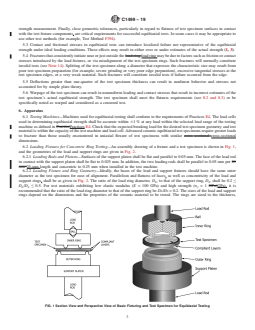
FIG. 1 Section View and Perspective View of Basic Fixturing and Test Specimen for Equibiaxial Testing
C1499 − 19
NOTE 1—0.4 to 0.8-µm surface finish. Harden to 40 Rc or greater.
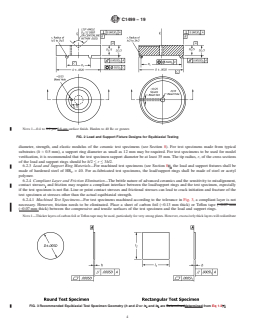
FIG. 2 Load and Support Fixture Designs for Equibiaxial Testing
FIG. 3 Recommended Equibiaxial Test Specimen Geometry (h and D or l and l are determined from Eq 1-3)
1 2
NOTE 1—Thicker layers of carbon foil or Teflon tape may be used,
example,as-firedceramicsandglasstestspecimens),minimize
particularly for very strong plates. However, excessively thick layers will
the effects of misalignment between the test specimen and the
redistribute the contact region and may affect results. The thicknesses
ring by placing a sheet of rubber or silicone (shore hardness of
listed above have been used successfully. Guidance regarding the use of
60 6 5) of approximately one half the test specimen thickness
thick layers cannot be given currently; some judgment may be required.
between the test specimen and the support ring. To aid
Alternatively, an appropriate lubricant (anti-seizing com-
fractographicexamination,placeasinglestripofadhesivetape
pound or Teflon oil) may be used to minimize friction. The
with a width of D or greater on the compressive face of the
lubricant should be placed only on the load and support rings L
test specimen. Do not use multiple strips of tape, or a strip of
so that effects of the test environment are not significantly
tapewithawidthlessthanD ,asthismayresultinnonuniform
altered. To aid fractographic examination, place a single strip
L
loading. To minimize the effects of friction at the load ring
of adhesive tape with a width of D or greater on the
L
interface,placeasheetofcarbonfoilorTFE-fluorocarbontape
compressive face of the test specimen. Do not use multiple
between the compressive surface of the test specimen and the
stripsoftape,orastripoftapewithawidthlessthanD ,asthis
L
may result in nonuniform loading. load ring. Alternatively, an appropriate lubricant (anti-seizing
compound or TFE-fluorocarbon oil) may be used to minimize
6.2.4.2 As-Fabricated Test Specimens—If steel load and
support rings are used to test as-fabricated test specimens (for friction at the load ring. If acetyl polymer load rings are used,
C1499 − 19
of the strength when the test specimens are less than 1 mm thick.
a compliant layer is not required. Minimize the effects of
friction at the load ring interface by placing a sheet of carbon
7. Precautionary Statement
foil or TFE-fluorocarbon tape between the compressive and
tensile surfaces of the test specimen and the load and support 7.1 Fractures of loaded advanced ceramics can occur at
rings.Alternatively,anappropriatelubricant(anti-seizingcom-
large loads and high strain energies. To prevent the release of
pound or TFE-fluorocarbon oil) may be used to minimize uncontrolled fragments, polycarbonate shielding or equivalent
friction at the load ring.
is recommended for operator safety and to capture test speci-
men fragments to aid fractography.
NOTE 2—As-fabricated test specimens that meet the flatness require-
mentsinFig.3maybetestedasdescribedin6.2.4.1.Acompliantlayeris
7.2 Fractures can create fine particles that may be a health
not necessary.
hazard. Materials containing whiskers, small fibers, or silica
NOTE 3—The use of acetyl polymer load rings can result in sufficiently
particlesmayalsocausehealthhazards.Forsuchmaterials,the
lowfriction (4)sothatnolayerisrequired.Ifthefrictioncoefficientisless
operator is advised to consult the Material Safety Data Sheet
than 0.05, then the friction reduction layer may be eliminated.
forguidancepriortotesting.Suitableventilationormasksmay
6.3 Alignment—The load ring and support ring shall be
be warranted.
aligned concentrically to 0.5% of the support ring diameter.
Thetestspecimenshallbeconcentricwiththeloadandsupport
8. Test Specimens
rings to 2% of the support ring diameter.
8.1 Test Specimen Dimensions—Fig. 3 illustrates test speci-
6.4 Allowable Deflection—Excessive deflections can result
men geometry. The relative dimensions are chosen to ensure
in a calculated equibiaxial strength different than the actual
behavior reasonably described by simple plate theory. Choose
equibiaxial strength. The test specimens allowed in this stan-
thedimensionsuchthatthetestspecimenthickness, h,inunits
dard are designed to avoid excessive deflection (3, 5-7).
of mm, is:
Measurement of deflection is not required; however, center-
D
point deflection can be measured using a deflectometer S
=
$ h$ 2σ D /3E (1)
f S
mounted in the test fixturing (Practice E83). Load-point de-
flection also may be measured via the test machine actuator;
where:
however, appropriate corrections for the test system compli-
D = the support ring diameter in units mm,
S
ance may need to be applied to the deflection data.
σ = theexpectedequibiaxialfracturestrengthinunitsMPa,
f
Alternatively, deflection can be estimated via the elastic
and
solutions given in 10.1.
E = the modulus of elasticity in units MPa (Test Method
6.5 Data Acquisition—At the minimum, obtain an auto- C1259).
graphic record of applied load versus time. Either analog chart
Choose the test specimen and support ring diameters such
recorders or digital data acquisition systems can be used for
that the difference in diameters (D–D ) is:
S
thispurpose,althoughadigitalrecordisrecommendedforease
D 2 D
S
of later data analysis. Ideally, an analog chart recorder or
2# #12 (2)
h
plotter should be used in conjunction with the digital data
acquisitionsystemtoprovideanimmediaterecordofthetestas
where:
a supplement to the digital record. Recording devices shall be
D = the test specimen diameter in units of mm for circular
accurate to within 61% of the selected range for the testing
test specimens.
systemincludingreadoutunit,asspecifiedinPracticesE4,and
NOTE 5—For test specimens machined according to 8.2.3, a non-
shall have a minimum data acquisition rate of 10 Hz, with a
dimensionalized overhang of (D–D )/h = 2 is generally sufficient.
S
However, for test specimens that are scored from larger plates or for test
rate of 50 Hz preferred for the rates recommended in 9.2.2.If
specimens with poor edge finish, a non-dimensionalized overhang of
faster loading rates are used, then use an acquisition rate
(D–D )/h = 12 may be required. For optical materials, non-
S
adequate to provide an error less than 61% in the load
dimensionalized overhang larger than 12 may be required, and it is
reading.
recommended that at least (D–DS)/h = 3 be used. Eq 7 is valid for
6.5.1 Record crosshead displacement of the test machine or overhangs as large as (D–D )/h = 24. However, such large overhang
S
substantially alters the stress distribution, and tests performed with large
time similarly to the load or as independent variables of load.
overhang may result in substantially different measured strengths than
6.6 Dimension-Measuring Devices—Micrometers and other
testsperformedwithmuchsmalleroverhang.Thus,overhangof(D−D )/h
S
devicesusedformeasuringlineardimensionsshallbeaccurate ≤24isallowed.However,itisrecommendedthat(D−D )/h ≤12beused.
S
The edge stress for D /h = 10 varies from ~30 % to ~50 % of the
and precise to at least one half the smallest unit to which the S
maximum stress as (D–D )/h varies from 12 to 2, respectively. For D /h
S S
individual dimension is required to be measured. For measur-
= 30, the edge stress varies from ~12% to ~40% of the maximum stress
ing the thickness, a micrometer with flat anvil faces and a
as (D–D )/h varies from 12 to 2, respectively (8). The exact solution for
S
resolution better than or equal 0.002 mm is required. Ball-
the tangential stress at the edge of a circular plate (9) can be calculated
from:
tipped or sharp anvil micrometers are not allowed because
localized damage (for example, cracking) can be induced.
2 2
3F 1 2 v D 2 D
~ !~ !
s L
σ 5
e 2 2
NOTE4—Thicknessmeasurementisespeciallycriticaltothecalculation 2πh D
C1499 − 19
where the variables are as defined in Eq 1 and Eq 2.
8.2.3.3 Grinding is followed by either annealing or lapping,
as deemed appropriate.
It is recommended that the test specimens be circular;
however, in some cases it is advantageous to fabricate rectan-
NOTE 8—For alpha silicon carbide, annealing at ~1200°C in air for
gulartestspecimens.Forarectangulartestspecimen,thevalue
~2h was sufficient to heal the grinding damage induced by the procedure
in 8.2.3.2 without otherwise altering the material’s strength (10).
of D for calculations with Eq 1 and Eq 2 is:
However,notethatannealingcansignificantlyalteramaterial’sproperties
D 50.54 l 1l (3)
~ !
1 2
(11, 12), and specific procedures will need to be developed for each
material.
where:
NOTE 9—For lapping of alpha silicon carbide, the following procedure
l and l = the lengths of the edges.The edge lengths should
1 2
was successful in elimination of machining damage induced by uniaxial
be within 0.98 ≤ l /l ≤ 1.02.
1 2 grinding:successivelappingwith15,9,and6-µmdiamondpastesfor~30,
~25, and ~15 min, respectively (13). Approximately 10 µm of materials
8.2 Test Specimen Preparation – Machined Test
was removed. For tungsten carbide, successive machine lapping with 15
Specimens—A variety of surface preparations are acceptable.
and 6-µm diamond pastes for ~60 and ~30 min, respectively, with a
Unless the process used is proprietary, report specifics about
pressureof~13.8kPawassufficient (14).Specificprocedureswillneedto
the stages of material removal, wheel grits, wheel bonding, be developed for other materials.
amountofmaterialremovedperpass,andtypeofcoolantused.
8.2.3.4 Toaidinpost-failurefractographicexamination,itis
Regardlessoftheprocedureusedtomachinethetensilesurface
recommended that the orientation of the grinding direction be
of the test specimen, the flatness of the faces as well as the
marked on the test specimens. This can be accomplished with
flatness of the edges shall be as specified in Fig. 3.
an indelible marker.
8.2.1 Application-Matched Machining—The tensile face of
the equibiaxial test specimen will have the same surface/edge 8.3 Test Specimen Preparation – As-Fabricated Test
preparation as that given to a service component. Specimens—In order to simulate the surface condition of an
application in which no machining is used, limited testing of
NOTE 6—An example of application-matched machining is blanchard
as-fabricated surfaces is allowed and precautions are recom-
grinding of electronic substrates. Although damage may exist, it is
mended.Thetestspecimenshouldbeflatto0.1mmin25mm.
acceptable as the component has such damage in its application.
For test specimens exhibiting less flatness, it is suggested that
8.2.2 CustomaryPractices—Ininstanceswhereacustomary
the user consider Test Method F394 or the use of fixturing
machining procedure has been developed that is completely
designedtoaccommodatewarpedtestspecimens(forexample,
satisfactory for a class of materials (that is, it induces negli-
(15)). Data generated via this standard from test specimens
gible surface/subsurface damage or residual stresses), this
with flatness tolerance exceeding 0.1 mm in 25 mm should be
procedure may be used to machine the equibiaxial test speci-
noted as warped and used only for comparison and quality
mens.
control purposes.
NOTE 7—Uniaxial surface grinding creates surface and subsurface
8.4 Edge Preparation—Edge failure can be minimized by
microcracks, which may (or may not) be the strength-controlling flaws.
Such machining cracks usually are oriented relative to the grinding
using the machining practice described in 8.2.3. Additional
direction and, consequently, may cause a pronounced variation in the
beveling or edge preparation is not necessary. However, for
uniaxial strength as a function of the test specimen orientation. If
as-fabricated test specimens exhibiting poor edge finish or for
machining flaws dominate, equibiaxial test specimens will fail from the
test specimens made from materials that are particularly
worst orientation and the measured equibiaxial strength will be represen-
tativeofthemachiningdamage.Further,theequibiaxialstrengthdatamay
difficulttomachinewithoutchippingoftheedges,edge-related
not correlate well with uniaxial data generated with standardized proce-
failures can be minimized by using the overhang described in
dures that minimize the effects of such populations (10). Lapping or
Eq2orbybevelingthetestspecimen’stensileedge(thatis,the
annealing can be used to minimize such effects in both equibiaxial
edge of the face in contact with the support ring). If edge
strength tests and advanced ceramic components subjected to multiaxial
stresses. Lapping needs to be sufficiently deep to remove machining failures are a concern, it is recommended that the edge on the
damage(typically10to30µmdeep).Notethatsurfacefinishisnotagood
tensile face be inspected at ~30× magnification and any
indicator of the absence of machining damage.
observed chips removed by beveling.
8.2.3 RecommendedProcedure—Ininstanceswhere8.2.1or
NOTE 10—For polycrystalline ceramics such as dense silicon carbides,
8.2.2 is not appropriate, 8.2.3.1 – 8.2.3.4 shall apply.
siliconnitrides,andaluminas,bevelingcanbeaccomplishedbyhandwith
8.2.3.1 Performallgrindingorcuttingwithamplesupplyof
400-grit silicon carbide abrasive paper. Alternatively, a ~0.125-mm, 45°
appropriate filtered coolant to keep the test specimen and
bevel can be ground onto the tensile edge according to the procedures in
grindingwheelconstantlyfloodedandparticlesflushed.Grind- 8.2.3. The grinding direction should be circumferential for circular test
specimens and parallel to the edges for square test specimens. For softer
ingcanbedoneintwostages,rangingfromcoarsetofinerates
materials or extremely strong materials, other methods may need to be
of material removal. All cutting can be done in one stage
developed.
appropriate for the depth of cut.
8.5 Handling Precaution—Exercise care in storage and
8.2.3.2 Thestockremovalrateshallnotexceed0.03mmper
handling of test specimens to minimize the introduction of
pass to the last 0.06 mm of material removed. Final finishing
severe, extrinsic flaws. In addition, give attention to pre-test
shallusediamondtoolsbetween320and500grit.Nolessthan
0.06 mm shall be removed during the final finishing stage, and storage of test specimens in controlled environments or desic-
cators to avoid unquantifiable environmental degradation of
ataratelessthan0.002mmperpass.Removeequalstockfrom
opposite faces. test specimens prior to testing.
C1499 − 19
8.6 Number of Test Specimens—A minimum of ten test ambient temperatures. Test
...
This document is not an ASTM standard and is intended only to provide the user of an ASTM standard an indication of what changes have been made to the previous version. Because
it may not be technically possible to adequately depict all changes accurately, ASTM recommends that users consult prior editions as appropriate. In all cases only the current version
of the standard as published by ASTM is to be considered the official document.
Designation: C1499 − 15 C1499 − 19
Standard Test Method for
Monotonic Equibiaxial Flexural Strength of Advanced
Ceramics at Ambient Temperature
This standard is issued under the fixed designation C1499; the number immediately following the designation indicates the year of
original adoption or, in the case of revision, the year of last revision. A number in parentheses indicates the year of last reapproval. A
superscript epsilon (´) indicates an editorial change since the last revision or reapproval.
1. Scope
1.1 This test method covers the determination of the equibiaxial strength of advanced ceramics at ambient temperature via
concentric ring configurations under monotonic uniaxial loading. In addition, test specimen fabrication methods, testing modes,
testing rates, allowable deflection, and data collection and reporting procedures are addressed. Two types of test specimens are
considered: machined test specimens and as-fired test specimens exhibiting a limited degree of warpage. Strength as used in this
test method refers to the maximum strength obtained under monotonic application of load. Monotonic loading refers to a test
conducted at a constant rate in a continuous fashion, with no reversals from test initiation to final fracture.
1.2 This test method is intended primarily for use with advanced ceramics that macroscopically exhibit isotropic, homogeneous,
continuous behavior. While this test method is intended for use on monolithic advanced ceramics, certain whisker- or
particle-reinforced composite ceramics, as well as certain discontinuous fiber-reinforced composite ceramics, may also meet these
macroscopic behavior assumptions. Generally, continuous fiber ceramic composites do not macroscopically exhibit isotropic,
homogeneous, continuous behavior, and the application of this test method to these materials is not recommended.
1.3 The values stated in SI units are to be regarded as standard. No other units of measurement are included in this standard.
1.4 This standard does not purport to address all of the safety concerns, if any, associated with its use. It is the responsibility
of the user of this standard to establish appropriate safety safety, health, and healthenvironmental practices and determine the
applicability of regulatory limitations prior to use.
1.5 This international standard was developed in accordance with internationally recognized principles on standardization
established in the Decision on Principles for the Development of International Standards, Guides and Recommendations issued
by the World Trade Organization Technical Barriers to Trade (TBT) Committee.
2. Referenced Documents
2.1 ASTM Standards:
C1145 Terminology of Advanced Ceramics
C1239 Practice for Reporting Uniaxial Strength Data and Estimating Weibull Distribution Parameters for Advanced Ceramics
C1259 Test Method for Dynamic Young’s Modulus, Shear Modulus, and Poisson’s Ratio for Advanced Ceramics by Impulse
Excitation of Vibration
C1322 Practice for Fractography and Characterization of Fracture Origins in Advanced Ceramics
E4 Practices for Force Verification of Testing Machines
E6 Terminology Relating to Methods of Mechanical Testing
E83 Practice for Verification and Classification of Extensometer Systems
E337 Test Method for Measuring Humidity with a Psychrometer (the Measurement of Wet- and Dry-Bulb Temperatures)
F394 Test Method for Biaxial Flexure Strength (Modulus of Rupture) of Ceramic Substrates (Discontinued 2001) (Withdrawn
2001)
IEEE/ASTM SI 10 Standard for Use of the International System of Units (SI): The Modern Metric SystemAmerican National
Standard for Metric Practice
This test method is under the jurisdiction of ASTM Committee C28 on Advanced Ceramics and is the direct responsibility of Subcommittee C28.01 on Mechanical
Properties and Performance.
Current edition approved July 1, 2015July 1, 2019. Published October 2013August 2019. Originally approved in 2001. Last previous edition approved in 20132015 as
C1499 – 09 (2013).C1499 – 15. DOI: 10.1520/C1499-15.10.1520/C1499-19.
For referenced ASTM standards, visit the ASTM website, www.astm.org, or contact ASTM Customer Service at service@astm.org. For Annual Book of ASTM Standards
volume information, refer to the standard’s Document Summary page on the ASTM website.
The last approved version of this historical standard is referenced on www.astm.org.
Copyright © ASTM International, 100 Barr Harbor Drive, PO Box C700, West Conshohocken, PA 19428-2959. United States
C1499 − 19
3. Terminology
3.1 Definitions:
3.1.1 The definitions of terms relating to biaxial testing appearing in TerminologyTerminologies E6 and Terminology C1145
may apply to the terms used in this test method. Pertinent definitions are listed below with the appropriate source given in
parentheses. bold type. Additional terms used in conjunction with this test method are defined in the following section.
3.1.2 advanced ceramic, n—highly engineered, high performance predominately non- metallic, high-performance, predomi-
nately non-metallic, inorganic, ceramic material having specific functional attributes. C1145
3.1.3 breaking load, [F], n—load at which fracture occurs. E6
–2
3.1.4 equibiaxial flexural strength, [F/L[FL ], n—maximum stress that a material is capable of sustaining when subjected to
flexure between two concentric rings. This mode of flexure is a cupping of the circular plate caused by loading at the inner load
ring and outer support ring. The equibiaxial flexural strength is calculated from the maximum-load maximum load of a biaxial test
carried to rupture, the original dimensions of the test specimen, and Poisson’s ratio.
3.1.5 homogeneous, n—condition of a material in which the relevant properties (composition, structure, density, etc.) are
uniform, so that any smaller sample taken from an original body is representative of the whole. Practically, as long as the
geometrical dimensions of a sample are large with respect to the size of the individual grains, crystals, components, pores, or
microcracks, the sample can be considered homogeneous.
–2
3.1.6 modulus of elasticity, [F/L[FL ], n—ratio of stress to corresponding strain below the proportional limit. E6
3.1.7 Poisson’s ratio, n—negative value of the ratio of transverse strain to the corresponding axial strain resulting from
uniformly distributed axial stress below the proportional limit of the material.
4. Significance and Use
4.1 This test method may be used for material development, material comparison, quality assurance, characterization, and
design code or model verification.
4.2 Engineering applications of ceramics frequently involve biaxial tensile stresses. Generally, the resistance to equibiaxial
flexure is the measure of the least flexural strength of a monolithic advanced ceramic. The equibiaxial flexural strength distributions
of ceramics are probabilistic and can be described by a weakest link weakest-link failure theory,theory (1, 2)). . Therefore, a
sufficient number of test specimens at each testing condition is required for statistical estimation or’or the equibiaxial strength.
4.3 Equibiaxial strength tests provide information on the strength and deformation of materials under multiple tensile stresses.
Multiaxial stress states are required to effectively evaluate failure theories applicable to component design, and to efficiently
sample surfaces that may exhibit anisotropic flaw distributions. Equibiaxial tests also minimize the effects of test specimen edge
preparation as compared to uniaxial tests because the generated stresses are lowest at the test specimen edges.
4.4 The test results of equibiaxial test specimens fabricated to standardized dimensions from a particular material and/oror
selected portions of a component component, or both, may not totally represent the strength properties in the entire,entire full-size
component or its in-service behavior in different environments.
4.5 For quality control purposes, results derived from standardized equibiaxial test specimens may be considered indicative of
the response of the bulk material from which they were taken for any given primary processing conditions and post-processing
heat treatments or exposures.
5. Interferences
5.1 Test environment (vacuum, inert gas, ambient air, etc.)etc.), including moisture content (for example, relative
humidity)humidity), may have an influence on the measured equibiaxial strength. Testing to evaluate the maximum strength
potential of a material can be conducted in inert environments and/oror at sufficiently rapid testing rates rates, or both, so as to
minimize any environmental effects. Conversely, testing can be conducted in environments, test modes, and test rates
representative of service conditions to evaluate material performance under use conditions.
5.2 Fabrication of test specimens can introduce dimensional variations that may have pronounced effects on the measured
equibiaxial mechanical properties and behavior (for example, shape and level of the resulting stress-strain curve, equibiaxial
strength, failure location, etc.). Surface preparation can also lead to the introduction of residual stresses, and final machining steps
might or might not negate machining damage introduced during the initial machining. Therefore, as universal or standardized
methods of surface preparation do not exist, the test specimen fabrication history should be reported. In addition, the nature of
fabrication used for certain advanced ceramic components may require testing of specimens with surfaces in the as-fabricated
condition (that is, it may not be possible, desired, or required to machine some of the test specimen surfaces directly in contact
with the test fixture). For very rough or wavy as-fabricated surfaces, perturbations in the stress state due to non-symmetric
cross-sections cross sections, as well as variations in the cross-sectional dimensions, may also interfere with the equibiaxial
The boldface numbers in parentheses refer to the list of references at the end of this standard.
C1499 − 19
strength measurement. Finally, close geometric tolerances, particularly in regard to flatness of test specimen surfaces in contact
with the test fixture components, are critical requirements for successful equibiaxial tests. In some cases it may be appropriate to
use other test methods (for example, Test Method F394).
5.3 Contact and frictional stresses in equibiaxial tests can introduce localized failure not representative of the equibiaxial
strength under ideal loading conditions. These effects may result in either over or under estimates of the actual strength (1, 3).
5.4 Fractures that consistently initiate near or just outside the load-ring load ring may be due to factors such as friction or contact
stresses introduced by the load fixtures, or via misalignment of the test specimen rings. Such fractures will normally constitute
invalid tests (see Note 14). Splitting of the test specimen along a diameter that expresses the characteristic size may result from
poor test specimen preparation (for example, severe grinding or very poor edge preparation), excessive tangential stresses at the
test specimen edges, or a very weak material. Such fractures will constitute invalid tests if failure occurred from the edge.
5.5 Deflections greater than one-quarter of the test specimen thickness can result in nonlinear behavior and stresses not
accounted for by simple plate theory.
5.6 Warpage of the test specimen can result in nonuniform loading and contact stresses that result in incorrect estimates of the
test specimen’s actual equibiaxial strength. The test specimen shall meet the flatness requirements (see 8.2 and 8.3) or be
specifically noted as warped and considered as a censored test.
6. Apparatus
6.1 Testing Machines—Machines used for equibiaxial testing shall conform to the requirements of Practices E4. The load cells
used in determining equibiaxial strength shall be accurate within 61 % at any load within the selected load range of the testing
machine as defined in PracticePractices E4. Check that the expected breaking load for the desired test specimen geometry and test
material is within the capacity of the test machine and load cell. Advanced ceramic equibiaxial test specimens require greater loads
to fracture than those usually encountered in uniaxial flexure of test specimens with similar cross sectional cross-sectional
dimensions.
6.2 Loading Fixtures for Concentric Ring Testing—An assembly drawing of a fixture and a test specimen is shown in Fig. 1,
and the geometries of the load and support rings are given in Fig. 2.
6.2.1 Loading Rods and Platens—Surfaces of the support platen shall be flat and parallel to 0.05 mm. The face of the load rod
in contact with the support platen shall be flat to 0.025 mm. In addition, the two loading rods shall be parallel to 0.05 mm per 25
mm 25-mm length and concentric to 0.25 mm when installed in the test machine.
6.2.2 Loading Fixture and Ring Geometry—Ideally, the bases of the load and support fixtures should have the same outer
diameter as the test specimen for ease of alignment. Parallelism and flatness of faces, as well as concentricity of the load and
support rings, shall be as given in Fig. 2. The ratio of the load ring diameter, D , to that of the support ring, D , shall be 0.2 ≤
L S
D /D ≤ 0.5. For test materials exhibiting low elastic modulus (E < 100 GPa) and high strength (σ > 1 GPa)GPa), it is
L S ƒ
recommended that the ratio of the load ring diameter to that of the support ring be D /D = 0.2. The sizes of the load and support
L S
rings depend on the dimensions and the properties of the ceramic material to be tested. The rings are sized to the thickness,
FIG. 1 Section View and Perspective View of Basic Fixturing and Test Specimen for Equibiaxial Testing
C1499 − 19
NOTE 1—0.4 to 0.8 μm 0.8-μm surface finish. Harden to 40 Rc or greater.
FIG. 2 Load and Support Fixture Designs for Equibiaxial Testing
diameter, strength, and elastic modulus of the ceramic test specimens (see Section 8). For test specimens made from typical
substrates (h ≈ 0.5 mm), a support ring diameter as small as 12 mm may be required. For test specimens to be used for model
verification, it is recommended that the test specimen support diameter be at least 35 mm. The tip radius, r, of the cross sections
of the load and support rings should be h/2 ≤ r ≤ 3h/2.
6.2.3 Load and Support Ring Materials—For machined test specimens (see Section 8)), the load and support fixtures shall be
made of hardened steel of HR > 40. For as-fabricated test specimens, the load/support rings shall be made of steel or acetyl
C
polymer.
6.2.4 Compliant Layer and Friction Elimination—The brittle nature of advanced ceramics and the sensitivity to misalignment,
contact stresses, and friction may require a compliant interface between the load/support rings and the test specimen, especially
if the test specimen is not flat. Line or point contact stresses and frictional stresses can lead to crack initiation and fracture of the
test specimen at stresses other than the actual equibiaxial strength.
6.2.4.1 Machined Test Specimens—For test specimens machined according to the tolerance in Fig. 3, a compliant layer is not
necessary. However, friction needs to be eliminated. Place a sheet of carbon foil (~0.13 mm thick) or Teflon tape (~0.07 mm
(~0.07 mm thick) between the compressive and tensile surfaces of the test specimen and the load and support rings.
NOTE 1—Thicker layers of carbon foil or Teflon tape may be used, particularly for very strong plates. However, excessively thick layers will redistribute
FIG. 3 Recommended Equibiaxial Test Specimen Geometry (h and D or l and l are Determineddetermined from Eq 1-3).)
11 22
C1499 − 19
the contact region and may affect results. The thicknesses listed above have been used successfully. Guidance regarding the use of thick layers cannot
be given currently; some judgementjudgment may be required.
Alternatively, an appropriate lubricant (anti-seizing compound or Teflon oil) may be used to minimize friction. The lubricant
should be placed only on the load and support rings so that effects of the test environment are not significantly altered. To aid
fractographic examination, place a single strip of adhesive tape with a width of D or greater on the compressive face of the test
L
specimen. Do not use multiple strips of tape, or a strip of tape with a width less than D , as this may result in nonuniform loading.
L
6.2.4.2 As-Fabricated Test Specimens—If steel load and support rings are used to test as-fabricated test specimens (for example,
as-fired ceramics and glass test specimens), minimize the effects of test specimen-ring misalignment misalignment between the test
specimen and the ring by placing a sheet of rubber or silicone (shore hardness of 60 6 5) of approximately one-half one half the
test specimen thickness between the test specimen and the support ring. To aid fractographic examination, place a single strip of
adhesive tape with a width of D or greater on the compressive face of the test specimen. Do not use multiple strips of tape, or
L
a strip of tape with a width less than D , as this may result in nonuniform loading. To minimize the effects of friction at the load
L
ring interface, place a sheet of carbon foil or TFE-fluorocarbon tape between the compressive surface of the test specimen and the
load-ring. load ring. Alternatively, an appropriate lubricant (anti-seizing compound or TFE-fluorocarbon oil) may be used to
minimize friction at the load ring. If acetyl polymer load rings are used, a compliant layer is not required. Minimize the effects
of friction at the load ring interface,interface by placing a sheet of carbon foil or TFE-fluorocarbon tape between the compressive
and tensile surfaces of the test specimen and the load and support rings. Alternatively, an appropriate lubricant (anti-seizing
compound or TFE-fluorocarbon oil) may be used to minimize friction at the load ring.
NOTE 2—As-fabricated test specimens that meet the flatness requirements in Fig. 3 may be tested as described in 6.2.4.1. A compliant layer is not
necessary.
NOTE 3—The use of acetyl polymer load rings can result in sufficiently low friction (4) so that no layer is required. If the friction coefficient is less
than 0.05, then the friction reduction layer may be eliminated.
6.3 Alignment—The load ring and support ring shall be aligned concentrically to 0.5 % of the support ring diameter. The test
specimen shall be concentric with the load and support rings to 2 % of the support ring diameter.
6.4 Allowable Deflection—Excessive deflections can result in a calculated equibiaxial strength different than the actual
equibiaxial strength. The test specimens allowed in this standard are designed to avoid excessive deflection (3, 5-7). Measurement
of deflection is not required,required; however, center-point deflection can be measured using a deflectometer mounted in the test
fixturing (Practice E83). Load-point deflection also may be measured via the test machine actuator,actuator; however, appropriate
corrections for the test system compliance may need to be applied to the deflection data. Alternatively, deflection can be estimated
via the elastic solutions given in section 10.1.
6.5 Data Acquisition—At the minimum, obtain an autographic record of applied load versus time. Either analog chart recorders
or digital data acquisition systems can be used for this purpose, although a digital record is recommended for ease of later data
analysis. Ideally, an analog chart recorder or plotter should be used in conjunction with the digital data acquisition system to
provide an immediate record of the test as a supplement to the digital record. Recording devices shall be accurate to within 61 %
of the selected range for the testing system including readout unit, as specified in PracticePractices E4, and shall have a minimum
data acquisition rate of 10 Hz, with a rate of 50 Hz preferred for the rates recommended in 9.2.2. If faster loading rates are used,
then use an acquisition rate adequate to provide an error less than 61 % in the load reading.
6.5.1 Record crosshead displacement of the test machine or time similarly to the load or as independent variables of load.
6.6 Dimension-Measuring Devices—Micrometers and other devices used for measuring linear dimensions shall be accurate and
precise to at least one half the smallest unit to which the individual dimension is required to be measured. For measuring the
thickness, a micrometer with flat anvil faces and a resolution better than or equal 0.002 mm is required. Ball-tipped or sharp anvil
micrometers are not allowed because localized damage (for example, cracking) can be induced.
NOTE 4—Thickness measurement is especially critical to the calculation of the strength when the test specimens are less than 1 mm thick.
7. Precautionary Statement
7.1 Fractures of loaded advanced ceramics can occur at large loads and high strain energies. To prevent the release of
uncontrolled fragments, polycarbonate shielding or equivalent is recommended for operator safety and to capture test specimen
fragments to aid fractography.
7.2 Fractures can create fine particles that may be a health hazard. Materials containing whiskers, small fibers, or silica particles
may also cause health hazards. For such materials, the operator is advised to consult the material safety data sheetMaterial Safety
Data Sheet for guidance prior to testing. Suitable ventilation or masks may be warranted.
8. Test Specimens
8.1 Test Specimen Dimensions—Fig. 3 illustrates test specimen geometry. The relative dimensions are chosen to ensure behavior
reasonably described by simple plate theory. Choose the dimension such that the test specimen thickness, h, in units of mm, isis:
C1499 − 19
D
S
$ h $=2σ D /3E (1)
f S
where:
D = the support ring diameter in units mm,
S
σ = the expected equibiaxial fracture strength in units MPa, and
f
E = the modulus of elasticity in units MPa (Test Method C1259).
Choose the test specimen and support ring diameters such that the difference in diameters (D–D ) isis:
S
D 2 D
S
2# # 12 (2)
h
where:
D = the test specimen diameter in units of mm for circular test specimens.
NOTE 5—For test specimens machined according to 8.2.38.2.3,, a non-dimensionalized overhang of (D–D )/h = 2 is generally sufficient. However, for
S
test specimens that are scored from larger plates or for test specimens with poor edge finish, a non-dimensionalized overhang of (D–D )/h = 12 may be
S
required. For optical materials, non-dimensionalized overhang larger than 12 may be required, and it is recommended that at least (D–DS)/h = 3 be used.
Eq 7 is valid for overhangs as large as (D–D )/h = 24. However, such large overhang substantially alters the stress distribution, and tests performed with
S
large overhang may result in substantially different measured strengths than tests performed with much smaller overhang. Thus, overhang of (D−D )/h
S
≤ 24 is allowed. However, it is recommended that (D−D )/h ≤ 12 be used. The edge stress for D /h = 10 varies from ~30 % to ~50 % of the maximum
S S
stress as (D–D )/h varies from 12 to 2, respectively. For D /h = 30, the edge stress varies from ˜12%~12 % to ˜40%~40 % of the maximum stress as
S S
(D–D )/h varies from 12 to 2, respectively ((8).). The exact solution for the tangential stress at the edge of a circular plate ((9)) can be calculated from:
S
2 2
3F 12v D 2 D
~ !~ !
s L
σ 5
e 2 2
2πh D
where the variables are as defined in Eq 1 and Eq 2.
It is recommended that the test specimens be circular,circular; however, in some cases it is advantageous to fabricate rectangular
test specimens. For a rectangular test specimen, the value of D for calculations with Eq 1 and Eq 2 is:
D 5 0.54~l 1l ! (3)
1 2
where:
l and l = the lengths of the edges. The edge lengths should be within 0.98 ≤ l /l ≤ 1.02.
1 2 1 2
8.2 Test Specimen Preparation: Preparation – Machined Test Specimens—A variety of surface preparations are acceptable.
Unless the process used is proprietary, report specifics about the stages of material removal, wheel grits, wheel bonding, amount
of material removed per pass, and type of coolant used. Regardless of the procedure used to machine the tensile surface of the test
specimen, the flatness of the faces as well as the flatness of the edges shall be as specified in Fig. 3.
8.2.1 Application-Matched Machining—The tensile face of the equibiaxial test specimen will have the same surface/edge
preparation as that given to a service component.
NOTE 6—An example of application matched application-matched machining is blanchard grinding of electronic substrates. Although damage may
exist, it is acceptable as the component has such damage in its application.
8.2.2 Customary Practices—In instances where a customary machining procedure has been developed that is completely
satisfactory for a class of materials (that is, it induces negligible surface/subsurface damage or residual stresses), this procedure
may be used to machine the equibiaxial test specimens.
NOTE 7—Uniaxial surface grinding creates surface and subsurface microcracks, which may (or may not) be the strength-controlling flaws. Such
machining cracks usually are oriented relative to the grinding direction and consequentlyand, consequently, may cause a pronounced variation in the
uniaxial strength as a function of the test specimen orientation. If machining flaws dominate, equibiaxial test specimens will fail from the worst orientation
and the measured equibiaxial strength will be representative of the machining damage. Further, the equibiaxial strength data may not correlate well with
uniaxial data generated with standardized procedures that minimize the effects of such populations (10). Lapping or annealing can be used to minimize
such effects in both equibiaxial strength tests and advanced ceramic components subjected to multiaxial stresses. Lapping needs to be sufficiently deep
to remove machining damage (typically 10 to 30 μm deep). Note that surface finish is not a good indicator of the absence of machining damage.
8.2.3 Recommended Procedure—In instances where 8.2.1 or 8.2.2 areis not appropriate, 8.2.3.1 – 8.2.3.4 shall apply.
8.2.3.1 Perform all grinding or cutting with ample supply of appropriate filtered coolant to keep the test specimen and grinding
wheel constantly flooded and particles flushed. Grinding can be done in two stages, ranging from coarse to fine rates of material
removal. All cutting can be done in one stage appropriate for the depth of cut.
8.2.3.2 The stock removal rate shall not exceed 0.03 mm per pass to the last 0.06 mm of material removed. Final finishing shall
use diamond tools between 320 and 500 grit. No less than 0.06 mm shall be removed during the final finishing stage, and at a rate
less than 0.002 mm per pass. Remove equal stock from opposite faces.
8.2.3.3 Grinding is followed by either annealing or lapping, as deemed appropriate.
NOTE 8—For alpha silicon carbide, annealing at ~1200°C~1200 °C in air for ~2 hours ~2 h was sufficient to heal the grinding damage induced by the
procedure in 8.2.3.2 without otherwise altering the material’s strength (10). However, note that annealing can significantly alter a material’s properties
(11, 12), and specific procedures will need to be developed for each material.
C1499 − 19
NOTE 9—For lapping of alpha silicon carbide, the following procedure was successful in elimination of machining damage induced by uniaxial
grinding: successive lapping with 15, 9, and 6 μm 6-μm diamond pastes for ~30, ~25~25, and ~15 minutesmin, respectively (13). Approximately 10 μm
of materials was removed. For tungsten carbide, successive machine lapping with 15 and 6 μm 6-μm diamond pastes for ~60 and ~30 minutes,min,
respectively, with a pressure of ~13.8 kPa was sufficient (14). Specific procedures will need to be developed for other materials.
8.2.3.4 To aid in post failure post-failure fractographic examination, it is recommended that the orientation of the grinding
direction be marked on the test specimens. This can be accomplished with an indelible marker.
8.3 Test Specimen Preparation: Preparation – As-Fabricated Test Specimens—In order to simulate the surface condition of an
application in which no machining is used, limited testing of as-fabricated surfaces is allowed and precautions are recommended.
The test specimen should be flat to 0.1 mm in 25 mm. For test specimens exhibiting less flatness, it is suggested that the user
consider Test Method F394 or the use of fixturing designed to accommodate warped test specimens (for example, (15)). Data
generated via this standard from test specimens with flatness tolerance exceeding 0.1 mm in 25 mm should be noted as warped
and used only for comparison and quality control purposes.
8.4 Edge Preparation—Edge failure can be minimized by using the machining practice described in section 8.2.3. Additional
beveling or edge preparation is not necessary. However, for as-fabricated test specimens exhibiting poor edge finish or for test
specimens made from materials that are particularly difficult to machine without chipping of the edges, edge related edge-related
failures can be minimized by using the overhang described in Eq 2 or by beveling the test specimen’s tensile edge (that is, the edge
of the face in contact with the support ring). If edge failures are a concern, it is recommended that the edge on the tensile face be
inspected at ~30× magnification and any observed chips removed by beveling.
NOTE 10—For polycrystalline ceramics such as dense silicon carbides, silicon nitrides, and aluminas, beveling can be accomplished by hand with
400-grit silicon carbide abrasive paper. Alternatively, a ~0.125 mm, ~0.125-mm, 45° bevel can be ground onto the tensile edge according to the procedures
in section 8.2.3. The grinding direction should be circumferential for circular test specimens and parallel to the edges for square test specimens. For softer
materials or extremely strong materials, other methods may need to be developed.
8.5 Handling Precaution—Exercise care in storage and handling of test specimens to minimize the introduction of severe,
extrinsic flaws. In addition, give attention to pre-test storage of test specimens in controlled environments or desiccators to avoid
unquantifiable environmental degradation of test specimens prior to testing.
8.6 Number of Test Specimens—A minimum of 10ten test specimens tested validly is required for the purpose of estimating a
mean biaxial flexural strength. For the estimation of the Weibull parameters, a m
...