

ASTM E2977-15(2023)
(Practice)Standard Practice for Measuring and Reporting Performance of Fourier-Transform Nuclear Magnetic Resonance (FT-NMR) Spectrometers for Liquid Samples
General Information
- Abstract
SIGNIFICANCE AND USE
4.1 This practice permits an analyst to compare the performance of an NMR spectrometer for a particular test on any given day with the instrument's prior performance for that test. The practice can also provide sufficient quantitative performance information for problem diagnosis and solving. If complete information about how a test is carried out is supplied and sufficient replicates are collected to substantiate statistical relevance, the tests in this practice can be used to establish the setting and meeting of relevant performance specifications. This practice is not necessarily meant for the comparison of different instruments with each other, even if the instruments are of the same type and model. This practice is not meant for the comparison of the performance of different instruments operated under conditions differing from those specified for a particular test.
SCOPE
1.1 This practice covers procedures for measuring and reporting the performance of Fourier-transform nuclear magnetic resonance spectrometers (FT-NMRs) using liquid samples.
1.2 This practice is not directly applicable to FT-NMR spectrometers outfitted to measure gaseous, anisotropically structured liquid, semi-solid, or solid samples; those set up to work with flowing sample streams; or those used to make hyperpolarization measurements.
1.3 This practice was expressly developed for FT-NMR spectrometers operating with proton resonance frequencies between 200 MHz and 1200 MHz.
1.4 This practice is not directly applicable to continuous wave (scanning) NMR spectrometers.
1.5 This practice is not directly applicable to instruments using single-sideband detection.
1.6 Units—The values stated in SI units are to be regarded as the standard. No other units of measurement are included in this standard.
1.7 This standard does not purport to address all of the safety concerns, if any, associated with its use. It is the responsibility of the user of this standard to establish appropriate safety, health, and environmental practices and determine the applicability of regulatory limitations prior to use.
1.8 This international standard was developed in accordance with internationally recognized principles on standardization established in the Decision on Principles for the Development of International Standards, Guides and Recommendations issued by the World Trade Organization Technical Barriers to Trade (TBT) Committee.
- Status
- Published
- Publication Date
- 31-Dec-2022
- Technical Committee
- E13 - Molecular Spectroscopy and Separation Science
- Drafting Committee
- E13.15 - Analytical Data
Overview
ASTM E2977-15(2023), titled Standard Practice for Measuring and Reporting Performance of Fourier-Transform Nuclear Magnetic Resonance (FT-NMR) Spectrometers for Liquid Samples, provides standardized procedures for assessing and documenting the performance of FT-NMR spectrometers using liquid samples. Developed by ASTM International, this practice ensures that the quality and consistency of measurements are maintained over time for individual instruments, supporting reliable scientific research and analytical quality control.
This standard is specifically designed for FT-NMR spectrometer systems operating at proton resonance frequencies between 200 MHz and 1200 MHz. It enables users to quantitatively compare current instrument performance to historical baselines, aiding in troubleshooting and verification activities. It is not intended for cross-comparison between different instruments or those operated under different conditions.
Key Topics
- Performance Measurement Procedures: The standard details systematic methods for measuring key indicators, such as sensitivity and signal-to-noise ratio (S/N), using well-characterized test samples and clearly defined acquisition parameters.
- Reporting and Documentation: Specifies requirements for consistent reporting of test results, including sample identification, analyte concentration, instrument settings, and environmental conditions.
- Sample Preparation: Outlines best practices for preparing, labeling, and storing liquid test samples, including recommendations on purity, solvent use (typically deuterated solvents), and traceability in accordance with ISO Guide 31.
- Instrument Suitability Checks: Provides methods for regular evaluation of a spectrometer’s performance, supporting ongoing quality assurance.
- Scope Limitations: The standard specifies its inapplicability to continuous wave NMR instruments, solid or semi-solid sample configurations, instruments with single-sideband detection, and hyperpolarization measurements.
Applications
ASTM E2977-15(2023) is a vital resource for laboratories and organizations that rely on FT-NMR spectrometry for research, quality control, and analytical support in various industries, including pharmaceuticals, chemicals, biotechnology, and academia. Key applications include:
- Routine Performance Verification: Enabling laboratories to regularly verify their FT-NMR spectrometer’s function against historical benchmarks, thereby ensuring data reliability.
- Troubleshooting and Problem Analysis: Offering quantitative methods to identify and resolve instrument malfunctions or drift over time, reducing downtime and maintenance costs.
- Specification Establishment and Validation: Supporting the development and validation of instrument performance specifications when sufficient statistically relevant replicates are gathered.
- Regulatory Compliance: Providing a standardized approach for internal and external audits, helping organizations comply with ISO, GMP, and other regulatory frameworks that demand rigorous instrument validation.
- Internal Quality Programs: Supporting laboratory accreditation and proficiency testing by providing consistent, reproducible measures of instrument performance.
By following this ASTM standard, users can confidently demonstrate the ongoing suitability of their FT-NMR equipment for sensitive and accurate characterization of liquid samples.
Related Standards
Several other standards complement the scope and procedures outlined in ASTM E2977-15(2023):
- ASTM E131: Terminology relating to molecular spectroscopy, providing standardized language for NMR and related analytical methods.
- ISO Guide 31: Reference materials - Guidance on certificates and labels, ensuring the traceability and reliability of test samples.
- (Withdrawn) ASTM E386: Data presentation in high-resolution NMR spectroscopy (for referencing historical methods).
- ISO/IEC 17025: General requirements for the competence of testing and calibration laboratories.
- GMP/GLP Guidelines: Regulatory guidance for instrument qualification and periodic verification.
Keywords: FT-NMR spectrometer performance, ASTM E2977, NMR instrument validation, liquid NMR standards, spectrometer sensitivity measurement, instrument suitability check, analytical laboratory standards.
Relations
- Effective Date
- 08-Sep-2015
- Effective Date
- 01-Mar-2010
- Effective Date
- 01-Sep-2005
- Effective Date
- 01-Nov-2004
- Effective Date
- 10-Sep-2002
- Effective Date
- 10-Sep-2000
- Effective Date
- 10-Oct-1999
Get Certified
Connect with accredited certification bodies for this standard

BSMI (Bureau of Standards, Metrology and Inspection)
Taiwan's standards and inspection authority.
Sponsored listings
Frequently Asked Questions
ASTM E2977-15(2023) is a standard published by ASTM International. Its full title is "Standard Practice for Measuring and Reporting Performance of Fourier-Transform Nuclear Magnetic Resonance (FT-NMR) Spectrometers for Liquid Samples". This standard covers: SIGNIFICANCE AND USE 4.1 This practice permits an analyst to compare the performance of an NMR spectrometer for a particular test on any given day with the instrument's prior performance for that test. The practice can also provide sufficient quantitative performance information for problem diagnosis and solving. If complete information about how a test is carried out is supplied and sufficient replicates are collected to substantiate statistical relevance, the tests in this practice can be used to establish the setting and meeting of relevant performance specifications. This practice is not necessarily meant for the comparison of different instruments with each other, even if the instruments are of the same type and model. This practice is not meant for the comparison of the performance of different instruments operated under conditions differing from those specified for a particular test. SCOPE 1.1 This practice covers procedures for measuring and reporting the performance of Fourier-transform nuclear magnetic resonance spectrometers (FT-NMRs) using liquid samples. 1.2 This practice is not directly applicable to FT-NMR spectrometers outfitted to measure gaseous, anisotropically structured liquid, semi-solid, or solid samples; those set up to work with flowing sample streams; or those used to make hyperpolarization measurements. 1.3 This practice was expressly developed for FT-NMR spectrometers operating with proton resonance frequencies between 200 MHz and 1200 MHz. 1.4 This practice is not directly applicable to continuous wave (scanning) NMR spectrometers. 1.5 This practice is not directly applicable to instruments using single-sideband detection. 1.6 Units—The values stated in SI units are to be regarded as the standard. No other units of measurement are included in this standard. 1.7 This standard does not purport to address all of the safety concerns, if any, associated with its use. It is the responsibility of the user of this standard to establish appropriate safety, health, and environmental practices and determine the applicability of regulatory limitations prior to use. 1.8 This international standard was developed in accordance with internationally recognized principles on standardization established in the Decision on Principles for the Development of International Standards, Guides and Recommendations issued by the World Trade Organization Technical Barriers to Trade (TBT) Committee.
SIGNIFICANCE AND USE 4.1 This practice permits an analyst to compare the performance of an NMR spectrometer for a particular test on any given day with the instrument's prior performance for that test. The practice can also provide sufficient quantitative performance information for problem diagnosis and solving. If complete information about how a test is carried out is supplied and sufficient replicates are collected to substantiate statistical relevance, the tests in this practice can be used to establish the setting and meeting of relevant performance specifications. This practice is not necessarily meant for the comparison of different instruments with each other, even if the instruments are of the same type and model. This practice is not meant for the comparison of the performance of different instruments operated under conditions differing from those specified for a particular test. SCOPE 1.1 This practice covers procedures for measuring and reporting the performance of Fourier-transform nuclear magnetic resonance spectrometers (FT-NMRs) using liquid samples. 1.2 This practice is not directly applicable to FT-NMR spectrometers outfitted to measure gaseous, anisotropically structured liquid, semi-solid, or solid samples; those set up to work with flowing sample streams; or those used to make hyperpolarization measurements. 1.3 This practice was expressly developed for FT-NMR spectrometers operating with proton resonance frequencies between 200 MHz and 1200 MHz. 1.4 This practice is not directly applicable to continuous wave (scanning) NMR spectrometers. 1.5 This practice is not directly applicable to instruments using single-sideband detection. 1.6 Units—The values stated in SI units are to be regarded as the standard. No other units of measurement are included in this standard. 1.7 This standard does not purport to address all of the safety concerns, if any, associated with its use. It is the responsibility of the user of this standard to establish appropriate safety, health, and environmental practices and determine the applicability of regulatory limitations prior to use. 1.8 This international standard was developed in accordance with internationally recognized principles on standardization established in the Decision on Principles for the Development of International Standards, Guides and Recommendations issued by the World Trade Organization Technical Barriers to Trade (TBT) Committee.
ASTM E2977-15(2023) is classified under the following ICS (International Classification for Standards) categories: 17.060 - Measurement of volume, mass, density, viscosity. The ICS classification helps identify the subject area and facilitates finding related standards.
ASTM E2977-15(2023) has the following relationships with other standards: It is inter standard links to ASTM E386-90(2011), ASTM E131-10, ASTM E131-05, ASTM E386-90(2004), ASTM E131-02, ASTM E131-00a, ASTM E386-90(1999). Understanding these relationships helps ensure you are using the most current and applicable version of the standard.
ASTM E2977-15(2023) is available in PDF format for immediate download after purchase. The document can be added to your cart and obtained through the secure checkout process. Digital delivery ensures instant access to the complete standard document.
Standards Content (Sample)
This international standard was developed in accordance with internationally recognized principles on standardization established in the Decision on Principles for the
Development of International Standards, Guides and Recommendations issued by the World Trade Organization Technical Barriers to Trade (TBT) Committee.
Designation: E2977 − 15 (Reapproved 2023)
Standard Practice for
Measuring and Reporting Performance of Fourier-Transform
Nuclear Magnetic Resonance (FT-NMR) Spectrometers for
Liquid Samples
This standard is issued under the fixed designation E2977; the number immediately following the designation indicates the year of
original adoption or, in the case of revision, the year of last revision. A number in parentheses indicates the year of last reapproval. A
superscript epsilon (´) indicates an editorial change since the last revision or reapproval.
1. Scope 2. Referenced Documents
2.1 ASTM Standards:
1.1 This practice covers procedures for measuring and
E131 Terminology Relating to Molecular Spectroscopy
reporting the performance of Fourier-transform nuclear mag-
E386 Practice for Data Presentation Relating to High-
netic resonance spectrometers (FT-NMRs) using liquid
Resolution Nuclear Magnetic Resonance (NMR) Spec-
samples.
troscopy (Withdrawn 2015)
1.2 This practice is not directly applicable to FT-NMR
2.2 ISO Standard:
spectrometers outfitted to measure gaseous, anisotropically
ISO Guide 31 Reference Materials—Contents of Certificates
structured liquid, semi-solid, or solid samples; those set up to
and Labels
work with flowing sample streams; or those used to make
hyperpolarization measurements.
3. Terminology
1.3 This practice was expressly developed for FT-NMR
3.1 Definitions—For definitions of terms used in this
spectrometers operating with proton resonance frequencies practice, refer to Terminology E131, Practice E386, and Refs
between 200 MHz and 1200 MHz.
(1-4). Chemical shifts are usually given in the dimensionless
quantity, δ, commonly expressed in parts per million. For a
1.4 This practice is not directly applicable to continuous
given nucleus, the chemical shift scale is relative and is
wave (scanning) NMR spectrometers.
commonly pegged to the resonance of an agreed upon refer-
1.5 This practice is not directly applicable to instruments
ence material as described by Eq 1.
using single-sideband detection.
δ 5 ~ν 2 ν ! ÷ ν (1)
sample sample reference reference
1.6 Units—The values stated in SI units are to be regarded
3.1.1 Frequencies are given in Hertz. Because the numerator
as the standard. No other units of measurement are included in
is very small compared with the denominator, it is usually
this standard.
convenient to express δ in parts per million.
1.7 This standard does not purport to address all of the
3.1.2 As the location of a resonance is determined in part by
safety concerns, if any, associated with its use. It is the
the ratio of the magnetic field to the radio frequency at which
responsibility of the user of this standard to establish appro-
it is observed, chemical shifts and spectral regions are often
priate safety, health, and environmental practices and deter- designated as lower frequency (increased shielding) or higher
mine the applicability of regulatory limitations prior to use.
frequency (decreased shielding) relative to a reference point.
Defined in this manner, chemical shifts are independent of
1.8 This international standard was developed in accor-
dance with internationally recognized principles on standard- either the magnetic field or the radio frequency used. Coupling
constants, which are independent of the magnetic field or radio
ization established in the Decision on Principles for the
Development of International Standards, Guides and Recom- frequency used, are expressed in Hertz.
mendations issued by the World Trade Organization Technical
Barriers to Trade (TBT) Committee.
For referenced ASTM standards, visit the ASTM website, www.astm.org, or
contact ASTM Customer Service at service@astm.org. For Annual Book of ASTM
Standards volume information, refer to the standard’s Document Summary page on
the ASTM website.
1 3
This practice is under the jurisdiction of ASTM Committee E13 on Molecular The last approved version of this historical standard is referenced on www.ast-
Spectroscopy and Separation Science and is the direct responsibility of Subcom- m.org.
mittee E13.15 on Analytical Data. Available from American National Standards Institute (ANSI), 25 W. 43rd St.,
Current edition approved Jan. 1, 2023. Published February 2023. Originally 4th Floor, New York, NY 10036, http://www.ansi.org.
approved in 2014. Last previous edition approved in 2015 as E2977–15. DOI: The boldface numbers in parentheses refer to the list of references at the end of
10.1520/E2977-15R23. this standard.
Copyright © ASTM International, 100 Barr Harbor Drive, PO Box C700, West Conshohocken, PA 19428-2959. United States
E2977 − 15 (2023)
3.1.3 nuclear magnetic resonance (NMR) tube camber, 5.4 Analytes, Solvents, and Chemical Shift Standards—
n—maximum total deflection of any part of the outer wall of Analyte concentration is defined as a volume percentage (v/v)
the tube held at the ends and rotated 360°; a measure of the at 25 °C, that is, the volume of the analyte divided by the total
bow in the tube. volume of the solution.
5.4.1 Unless otherwise specified, the chemical purity of
3.1.4 NMR tube concentricity, n—maximum variation in
each component for standard samples used to test sensitivity
wall thickness of the tube; a measure of how centered the tube
shall be ≥99.5 weight % and the purity of each component for
inside diameter is relative to the tube outer diameter.
all other standard samples shall be ≥99 weight %. The
resonances of impurities observed in the spectrum of the
4. Significance and Use
standard sample should not interfere with the resonances of
4.1 This practice permits an analyst to compare the perfor-
interest in the standard sample. This usually means that the
mance of an NMR spectrometer for a particular test on any
impurity peaks shall not appear within the region of the
given day with the instrument’s prior performance for that test.
satellite peaks, particularly for resolution standard samples.
The practice can also provide sufficient quantitative perfor-
However, samples with higher water content may still be
mance information for problem diagnosis and solving. If
usable so long as the water signal does not interfere with the
complete information about how a test is carried out is supplied
spectral test. Water content may be determined by Karl Fischer
and sufficient replicates are collected to substantiate statistical 1
titration or by H NMR spectroscopy (protic water only). The
relevance, the tests in this practice can be used to establish the
purity of the analyte(s) shall be stated.
setting and meeting of relevant performance specifications.
5.4.2 Except as noted, the sample solvent should be deuter-
This practice is not necessarily meant for the comparison of
ated to provide a field/frequency lock for the spectrometer, of
different instruments with each other, even if the instruments
the highest purity commonly obtainable, and have an atom-
are of the same type and model. This practice is not meant for
percent deuteration of at least 99 %. The solvent’s purity and
the comparison of the performance of different instruments
level of deuteration shall be stated.
operated under conditions differing from those specified for a
5.4.3 When used, chemical shift standards should be of the
particular test.
highest purity commonly available and added to the sample to
achieve a concentration approximately one tenth that of the
5. Test Samples
analyte. The purity and concentration of the chemical shift
standard shall be stated.
5.1 In general, the test samples called for in this practice are
commercially available materials made explicitly for the test-
5.5 Sample Preparation—Either a m/m method or a v/v
ing of NMR spectrometer performance. The particular samples
method may be used for sample preparation; however, care
chosen are those that have been widely accepted by the NMR
shall be taken to assure better than 1 % accuracy in the
community of users and vendors for these purposes. However,
measurements. If a v/v method is used, the densities used for
in certain instances, especially with higher field instruments,
the liquid components shall be stated. Unless specified
the commonly accepted samples may exhibit characteristics
otherwise, any impurities in the final sample (including water)
that render them less than ideal for such uses.
should be less than 10 mol % of the analyte concentration. The
final analyte concentration and its uncertainty shall be stated.
5.2 Each sample shall be uniquely identifiable, and a cer-
5.5.1 The sample should be sealed under nitrogen or argon
tificate containing information about the sample shall be
taking care that the final sample is near atmospheric pressure.
available (ISO Guide 31). In addition to the information
5.5.2 Each sample tube shall bear a label stating its content
required elsewhere in this practice, the certificate shall list the
and reference identifier.
manufacturer of the sample, the date of manufacture, the name
of the sample, and a reference number (for example, sample 5.5.3 For long-term storage, samples should be maintained
in the dark to prevent photolysis. Except as noted, samples may
serial or lot number) (see Fig. 1).
be stored at room temperature. For long-term storage, samples
5.3 Sample Tubes—Although sample tubes with sizes rang-
containing chloroform should be kept between −25 °C and
ing from about 1 mm to 25 mm outside diameter (OD) are used
8 °C unless the sample is known to have been deoxygenated.
in modern NMR spectrometers, the 5 mm OD tube remains the
most common size. To avoid detailing test procedures for all
6. Preliminary Experimental Procedures
possible tube sizes, this practice specifies tests for use with
5 mm OD sample tubes. Users requiring sample tubes of 6.1 To achieve consistent results, the following shall be
differing size should scale the quantities, dimensions, and completed before the performance measurement:
volumes given here to the requirements of their spectrometers 6.1.1 The sample temperature should be stabilized at ap-
taking into account any specific recommendations of the proximately 25 °C, controlled during the measurement (8.16),
instrument’s manufacturer. and specified in the report.
6.1.2 The magnetic field homogeneity shall be adjusted to
5.3.1 The inside diameter of the sample container shall be
stated along with tolerances from the manufacturer. the best achievable on the sample to be used (8.9 – 8.12).
5.3.2 The quality of the tube in terms of its concentricity and 6.1.3 The observe radio frequency (rf) circuitry shall be
camber shall be stated. The concentricity and camber of the well-tuned and matched to the sample to be used. If decoupling
tube should be smaller than 0.025 mm and 0.013 mm, is used, the decoupling rf circuitry shall be tuned and matched
respectively. to the sample to be used.
E2977 − 15 (2023)
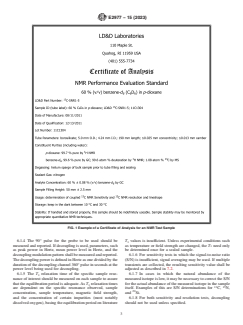
FIG. 1 Example of a Certificate of Analysis for an NMR Test Sample
6.1.4 The 90° pulse for the probe to be used should be T values is insufficient. Unless experimental conditions such
measured and reported. If decoupling is used, parameters, such as temperature or field strength are changed, the T need only
as peak power in Hertz, mean power level in Hertz, and the be determined once for a sealed sample.
decoupling modulation pattern shall be measured and reported. 6.1.6 For sensitivity tests in which the signal-to-noise ratio
The decoupling power is defined in Hertz as one divided by the (S/N) is insufficient, signal averaging may be used. If multiple
duration of the decoupling channel 360° pulse in seconds at the transients are collected, the resulting sensitivity value shall be
power level being used for decoupling. adjusted as described in 7.2.
6.1.5 The T relaxation time of the specific sample reso- 6.1.7 In cases in which the natural abundance of the
nance of interest should be measured on each sample to assure measured isotope is low, it may be necessary to correct the S/N
that the equilibration period is adequate. As T relaxation times for the actual abundance of the measured isotope in the sample
13 15
are dependent on the specific resonance observed, sample itself. Examples of this are S/N determinations for C, N,
concentration, sample temperature, magnetic field strength, and Si.
and the concentration of certain impurities (most notably 6.1.8 For both sensitivity and resolution tests, decoupling
dissolved oxygen), basing the equilibration period on literature should not be used unless specified.
E2977 − 15 (2023)
7. Reporting Results sample shall be less than 1 mol % of the ethylbenzene
concentration. The peak height of the signal from dissolved
7.1 General Tests—Results may be reported from determi-
water in the sample shall be smaller than that of the methyl
nations made by single procedures.
triplet. For very high-sensitivity systems, a more dilute sample
7.2 Signal Averaging—If signal averaging is used, the
may be used. Sensitivity shall then be converted to and clearly
measured sensitivity value shall be adjusted by dividing by the
reported as “equivalent to 0.1 % (v/v) ethylbenzene at 25 °C.”
square root of the number of transients.
The final concentration and its uncertainty shall be specified.
7.3 Tests for Establishing and Meeting Specifications—
8.1.2 Data Acquisition—The following data acquisition pa-
Specification-level test results shall be reported as the average rameters shall be used:
along with the standard deviation of the results from ten
8.1.2.1 Spectral Region—The larger of 30-ppm or 11-kHz
replications of the specified test made with no intervening
(for proton frequencies below 400 MHz) width centered on the
adjustments. For specification results, actual analyte concen-
methylene resonance of ethylbenzene.
trations and their uncertainties and tube dimensions
8.1.2.2 Equilibration Delay—At least five times the T
(specifically, either the internal diameter or the external diam-
relaxation time of the ethylbenzene methylene resonance
eter and wall thickness) shall be reported.
reduced by the acquisition time.
8.1.2.3 Pulse Flip Angle—90°.
8. Specific Test Procedures
8.1.2.4 Data Acquisition Time—4 s to 8 s.
8.1 H Sensitivity—This practice describes the determina-
8.1.2.5 Number of Transients—One.
tion of the proton sensitivity of the NMR system.
8.1.2.6 Receiver Gain—Optimized to take advantage of the
8.1.1 Sample—The sample is 0.1 % (v ⁄v) ethylbenzene in
full dynamic range of the receiver.
deuterochloroform (chloroform-d) containing 0.003 % (v/v) to
8.1.2.7 Spinning Rate—The measurement should be speci-
0.1 % (v/v) tetramethylsilane (TMS). The density of ethylben-
fied as spinning or nonspinning. If the sample is spinning, its
3 3
zene is 0.86702 g/cm at 20 °C, 0.862 64 g/cm at 25 °C, and
3 rate shall be specified.
0.858 28 g/cm at 30 °C (5). The density of chloroform-d is
3 3 8.1.3 Data Processing—The following data processing pa-
1.5007 g/cm at 20 °C (6), 1.4999 g/cm at 25 °C, and 1.4906
3 3
rameters shall be used:
g/cm at 30 °C (7). The density of TMS is 0.6386 g/cm at
3 3
8.1.3.1 Multiply the time domain data by an exponentially
20 °C, 0.6329 g/cm at 25 °C, and 0.6274 g/cm at 30 °C (8).
-LB·t·π
decaying function of the form e where LB (line broaden-
The ethylbenzene shall be 99.95 % pure and free from chlori-
ing) = 1 Hz and t = time value for each acquired data point.
nated by-products, such as (2-chloroethyl)benzene (9) and
8.1.4 Zero fill to at least twice the size of the data table.
(1-chloroethyl)benzene (in chloroform-d—5.12 and 1.88 ppm)
Calculate the FT using sufficient data points to yield a digital
(10), and care shall be taken to ensure that it has not reacted
resolution of ≤0.05 Hz per data point. Apply phase corrections
with air to produce oxygenated products (11), such as the
as needed to produce the pure absorption mode spectrum (Fig.
hydroperoxide [chloroform-d—8 ppm to 9 ppm (s, 1H), 5.05
2).
ppm (q, 1H), 1.45 ppm (d, 3H)] (12), sec-phenethyl alcohol
(13), acetophenone (14), and benzaldehyde (15). The total 8.1.5 No data smoothing or other types of data manipulation
contribution from all impurities (excluding water) in the final may be applied except as specified in 8.1.3.1.
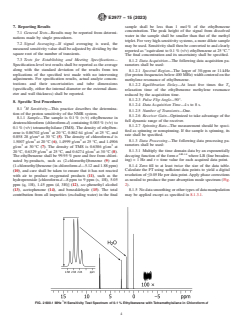
FIG. 2 600.1 MHz H Sensitivity Test Spectrum of 0.1 % Ethylbenzene with Tetramethylsilane in Chloroform-d
E2977 − 15 (2023)
8.1.6 S/N Calculation—The calculations for the S/N are 8.2.2.2 Equilibration Delay—At least five times the T
carried out on the real part of the pure phase absorption mode relaxation time of the ethylbenzene C2 or C3 resonances
spectrum. reduced by the acquisition time.
8.1.6.1 Signal is defined as the amplitude of the tallest peak 8.2.2.3 Pulse Flip Angle—90°.
in the methylene resonance (2.65 ppm) of the spectrum
8.2.2.4 Data Acquisition Time—5 s.
measured from the zero-intensity line determined by the
8.2.2.5 Number of Transients—One.
baseline correction. Zero- (offset) and first-order (slope) base-
8.2.2.6 Receiver Gain—Optimized to take advantage of the
line corrections should be applied to a region of 1 ppm around
full dynamic range of the receiver.
the signal.
8.2.2.7 Spinning Rate—The measurement should be speci-
8.1.6.2 Noise is defined as two times the root mean square
fied as spinning or nonspinning. If the sample is spinning, its
(rms) noise in the region of 1 kHz starting at −2 ppm from the
rate shall be specified.
TMS signal and going to lower frequency where minimal
8.2.2.8 Decoupling Conditions—Decoupling parameters
interference from resonances of chemical impurities is found.
such as peak power in Hertz, mean power levels in Hertz, and
Zero- and first-order baseline corrections should be applied to
decoupling modulation pattern shall be specified. The param-
the 1 kHz noise region.
eters chosen should result in all the ethylbenzene peaks
8.1.6.3 To calculate rms noise, use:
appearing as singlets with line widths less than 1 Hz. The
2 1⁄2
rms noise 5 Σ amplitude ⁄ N 2 1 (2)
$@ ~ ! # ~ !% decoupling frequency shall be centered at approximately 4.3
(1) The amplitude of each point measured from the zero-
ppm relative to the proton signal of chloroform at 7.26 ppm.
intensity line in the selected 1 kHz region is squared. Sum all
The same decoupling conditions shall be maintained during the
of these squared values. Divide the sum by one less than the
acquisition and the relaxation delay.
number of data points in the region. Take the square root of the
8.2.3 Data Processing—The following data processing pa-
result.
rameters shall be used:
8.2.3.1 Multiply the time domain data by an exponentially
8.1.6.4 The S/N is equal to: signal ÷ (2 × rms noise).
-LB·t·π
decaying function of the form e where LB (also known as
8.1.6.5 Any alteration of data points or use of alternative
width) = 0.3 Hz and t = time value for each acquired data point.
regions for the rms noise calculation constitutes noncompli-
Zero fill to at least double the size of the data table. Calculate
ance with this practice.
1 the FT using sufficient data points to yield a digital resolution
8.1.7 Reporting Sensitivity—The results of H sensitivity
of ≤0.02 Hz per data point. If the instrument cannot achieve
measurements shall be reported as described in Section 7. If
this resolution, the highest achievable resolution should be
sample concentrations other than those in 8.1.1 are used,
used. Apply phase corrections as needed to produce the pure
sensitivity results should be corrected for concentration and
absorption mode spectrum (see Fig. 3).
reported as “equivalent to 0.1 % (v/v) ethylbenzene.”
8.2.4 No data smoothing or other types of data manipulation
8.2 Decoupled C Sensitivity—This practice describes the
may be applied except as specified in 8.2.3.1.
determination of the decoupled carbon-13 sensitivity of the
8.2.5 S/N Calculation—The calculations for S/N are carried
NMR system.
out on the real part of the pure phase absorption mode
8.2.1 Sample—The sample is 10 % (v ⁄v) ethylbenzene in
spectrum.
chloroform-d. The densities and purities of the sample con-
8.2.5.1 Signal is defined as the amplitude of the tallest
stituents are given in 8.1.1. The ethylbenzene shall be 99.95 %
aromatic resonance of ethylbenzene (approximately 128 ppm)
pure and free from chlorinated by-products, such as (2-
in the spectrum measured from the zero-intensity line deter-
chloroethyl)benzene (16) and (1-chloroethyl)benzene (17), and
mined by the baseline correction. Zero- and first-order baseline
care shall be taken to ensure that it has not reacted with air to
corrections should be applied to a region of 10 ppm around the
produce oxygenated products (11), such as the hydroperoxide
signal.
(in chloroform-d—20.4 ppm, 84.0 ppm, 126.8 ppm,
8.2.5.2 Noise is defined as two times the rms noise in the
128.5 ppm, 128.9 ppm, and 141.7 ppm) (12), sec-phenethyl
region between 80 ppm and 120 ppm with the central peak of
alcohol (18), acetophenone (19), and benzaldehyde (20). The
chloroform-d referenced at approximately 77 ppm. Zero- and
sample shall be prepared from ethylbenzene of known C
first-order baseline corrections should be applied to the noise
isotopic abundance near that of the natural mean abundance at
region.
positions 2 and 3 of the benzene ring. The C abundance and
8.2.5.3 Use Eq 2 to calculate rms noise.
the means of measuring this shall be reported on the certificate.
8.2.5.4 The amplitude of each point measured from the
The total contribution from all impurities in the final sample
zero-intensity line in the selected 40 ppm region is squared.
(including water) should be less than 10 mol % of the ethyl-
Sum all of these squared values. Divide the sum by one less
benzene concentration. The final concentration and its uncer-
than the number of data points in the region. Take the square
tainty shall be specified.
root of the result.
8.2.2 Data Acquisition—The following data acquisition pa-
8.2.5.5 The corrected S/N is equal to:
rameters shall be used:
8.2.2.1 Spectral Region—A 200 ppm width with the trans- signal÷ 2 × rms noise ! × 1.105 ÷ the measured C abundance
~ ~ !
mitter frequency set to 100 ppm with chloroform-d referenced
(3)
to approximately 77 ppm. NOTE 1—Corrected for the average natural abundance of C (21).
E2977 − 15 (2023)
1 13
FIG. 3 125.8-MHz H Decoupled C Sensitivity Test Spectrum of 10 % Ethylbenzene in Chloroform-d
8.2.5.6 Any alteration of data points or use of alternative 8.3.2.7 Spinning Rate—The measurement should be speci-
regions for the rms noise calculation constitutes noncompli- fied as spinning or nonspinning. If the sample is spinning, its
ance with this practice. rate shall be specified.
8.2.6 Reporting Sensitivity—The results of the decoupled 8.3.2.8 No decoupling.
C sensitivity measurements shall be reported as described in
8.3.3 Data Processing—The following data processing pa-
Section 7.
rameters shall be used:
8.3.3.1 Multiply the time domain data by an exponentially
8.3 Coupled C Sensitivity—This practice describes the
-LB·t·π
decaying function of the form e where LB (also known as
determination of the coupled C sensitivity of the NMR
width) = 3.5 Hz and t = time value for each acquired data point.
system.
8.3.3.2 Zero fill to at least twice the size of the data table.
8.3.1 Sample—The sample is 60 % (v ⁄v) benzene-d in
Calculate the FT. Apply phase corrections as needed to produce
p-dioxane (also known as 1,4-dioxane). The density of
3 3
the pure absorption mode spectrum (Fig. 4).
benzene-d is 0.9494 g/cm at 20 °C, 0.9436 g/cm at 25 °C,
8.3.4 No data smoothing or other types of data manipulation
and 0.9378 g/cm at 30 °C (22). The density of p-dioxane is
3 3
may be applied except as specified in 8.3.3.1, unless its use is
1.0336 g/cm at 20 °C, 1.0280 g/cm at 25 °C, and 1.0224
specifically described in the resulting report.
g/cm at 30 °C (23). The benzene-d shall be at least 99 %
8.3.5 S/N Calculation—The calculations for the S/N ratio
deuterated. The p-dioxane shall be at least 99 % pure, and care
are carried out on the real part of the pure phase absorption
shall be taken to ensure that it has not reacted with air to
mode spectrum.
produce oxygenated products. The total contribution from all
8.3.5.1 Signal is defined as the amplitude of the tallest
impurities in the final sample (excluding water) shall be less
benzene-d resonance (approximately 128 ppm) in the spec-
than 1 mol % of the p-dioxane concentration. The final
trum measured from the zero-intensity line determined by the
concentration and its uncertainty shall be stated. For routine
baseline correction. Zero- and first-order baseline corrections
use (not for specification purposes), a relaxation agent, such as
should be applied to a region of 10 ppm around the signal.
0.2 % Cr(acac) , may be added to the sample to permit more
rapid data acquisition, provided its use is reported. 8.3.5.2 Noise is defined as two times the rms noise in the
region between 80 ppm and 120 ppm. For spectrometers with
8.3.2 Data Acquisition—The following data acquisition pa-
rameters shall be used: proton frequencies less than 350 MHz, this will result in fewer
than 1000 zero crossings within the noise region, which will
8.3.2.1 Spectral Region—A 100 ppm width with the trans-
mitter frequency set at 100 ppm 6 10 ppm. reduce the precision of the noise measurement. Zero- and
first-order baseline corrections should be applied to the noise
8.3.2.2 Equilibration Delay—At least five times the T
region.
relaxation time of the benzene-d resonance reduced by the
8.3.5.3 Use Eq 2 to calculate rms noise.
acquisition time.
8.3.2.3 Pulse Flip Angle—90°. 8.3.5.4 The amplitude of each point measured from the
8.3.2.4 Data Acquisition Time—1 s. zero-intensity line in the selected 40 ppm region is squared.
8.3.2.5 Number of Transients—One. Sum all of these squared values. Divide the sum by one less
8.3.2.6 Receiver Gain—Optimized to take advantage of the than the number of data points in the region. Take the square
full dynamic range of the receiver. root of the result.
E2977 − 15 (2023)
FIG. 4 125.8 MHz Coupled C Sensitivity Test Spectrum of 60 % Benzene-d and 40 % p-Dioxane
8.3.5.5 The corrected S/N is equal to: 8.4.3 Data Processing—The following data processing pa-
rameters shall be used:
signal÷~2 × rms noise! × ~1.105 ÷ the measured C abundance!
8.4.3.1 Multiply the time domain data by an exponentially
(4)
-LB·t·π
decaying function of the form e where LB (also known as
NOTE 2—Corrected for the average natural abundance of C (21).
width) = 5 Hz and t = time value for each acquired data point.
8.3.5.6 Any alteration of data points or use of alternative
8.4.3.2 Zero fill to at least twice the size of the data table.
regions for the rms noise calculation constitutes noncompli-
Calculate the FT. Apply phase corrections as needed to produce
ance with this practice.
the pure absorption mode spectrum (Fig. 5).
8.3.6 Reporting Sensitivity—The results of the coupled C
sensitivity measurements shall be reported as described in 8.4.4 No data smoothing or other types of data manipulation
may be applied except as specified in 8.4.3.1.
Section 7.
8.4.5 S/N Calculation—The calculations for the S/N are
8.4 P Sensitivity—This practice describes the determina-
carried out on the real part of the pure phase absorption mode
tion of the P sensitivity of the NMR system.
-1
spectrum.
8.4.1 Sample—The sample is 0.0485 mol L triphenylphos-
8.4.5.1 Signal is defined as the amplitude of the triph-
phate in acetone-d or chloroform-d. The molecular mass of
triphenylphosphate is 326.28 g. The triphenylphosphate shall enylphosphate resonance (approximately −18 ppm) in the
spectrum measured from the zero-intensity line determined by
be at least 99 % pure. The total contribution from all impurities
in the final sample (excluding water) shall be less than 1 mol % the baseline correction. Zero- and first-order baseline correc-
tions should be applied to a region of 65 kHz around the
of the triphenylphosphate concentration. The final concentra-
tion and its uncertainty shall be stated. signal.
8.4.2 Data Acquisition—The following data acquisition pa-
8.4.5.2 Noise is defined as two times the rms noise in the
rameters shall be used:
5 kHz region starting from −5 kHz to −10 kHz from the
8.4.2.1 Spectral Region—A 40 kHz width with the transmit-
triphenylphosphate resonance. Zero- and first-order baseline
ter frequency set to approximately the resonance of triph-
corrections should be applied to the noise region.
enylphosphate.
8.4.5.3 Use Eq 2 to calculate rms noise.
8.4.2.2 Equilibration Delay—At least five times the T
8.4.5.4 The amplitude of each point measured from the
relaxation time of the triphenylphosphate resonance reduced by
zero-intensity line in the selected 5 kHz region is squared. Sum
the acquisition time.
all of these squared values. Divide the sum by one less than the
8.4.2.3 Pulse Flip Angle—90°.
number of data points in the region. Take the square root of the
8.4.2.4 Data Acquisition Time—1 s.
result.
8.4.2.5 Number of Transients—One.
8.4.5.5 The S/N is equal to: signal ÷ (2 × rms noise).
8.4.2.6 Receiver Gain—Optimized to take advantage of the
8.4.5.6 Any alteration of data points or use of alternative
full dynamic range of the receiver.
regions for the rms noise calculation constitutes noncompli-
8.4.2.7 Spinning Rate—The measurement should be speci-
ance with this practice.
fied as spinning or nonspinning. If the sample is spinning, its
rate shall be specified. 8.4.6 Reporting Sensitivity—The results of the P sensitiv-
8.4.2.8 No decoupling. ity measurements shall be reported as described in Section 7.
E2977 − 15 (2023)
FIG. 5 202.5 MHz P Sensitivity Test Spectrum of 0.0485 mol/L Triphenylphosphate in Acetone-d
8.5 F Sensitivity—This practice describes the determina- 8.5.3.2 Zero fill to at least twice the size of the data table.
tion of the F sensitivity of the NMR system. Calculate the FT. Apply phase corrections as needed to produce
8.5.1 Sample—The sample is 0.05 % (v ⁄v) α,α,α- the pure absorption mode spectrum (Fig. 6).
8.5.4 No data smoothing or other types of data manipulation
trifluorotoluene [also known as trifluorotoluene,
benzotrifluoride, (trifluoromethyl) benzene, or phenylfluoro- may be applied except as specified in 8.5.3.1.
8.5.5 S/N Calculation—The calculations for the S/N are
form] in benzene-d or chloroform-d. The density of trifluoro-
3 3
toluene is 1.1884 g/cm at 20 °C, 1.1815 g/cm at 25 °C, and carried out on the real part of the pure phase absorption mode
1.1743 g/cm at 30 °C (24). The density of benzene-d is given spectrum.
in 8.3.1. The density of chloroform-d is given in 8.1.1. The 8.5.5.1 Signal is defined as the amplitude of the trifluoro-
trifluorotoluene shall be at least 99 % pure. The total contri- toluene resonance (approximately −63 ppm) in the spectrum
bution from all impurities in the final sample (excluding water) measured from the zero-intensity line determined by the
shall be less than 1 mol % of the trifluorotoluene concentration. baseline correction. Zero- and first-order baseline corrections
The final concentration and its uncertainty shall be stated. should be applied to a region of 62 kHz around the signal.
8.5.5.2 Noise is defined as two times the rms noise in the
8.5.2 Data Acquisition—The following data acquisition pa-
rameters shall be used: 2 kHz region from −2 kHz to −4 kHz from the trifluorotoluene
resonance. Zero- and first-order baseline corrections should be
8.5.2.1 Spectral Region—A 16 kHz width with the transmit-
applied to the noise region.
ter frequency set to approximately the resonance of trifluoro-
8.5.5.3 Use Eq 2 to calculate rms noise.
toluene.
8.5.5.4 The amplitude of each point measured from the
8.5.2.2 Equilibration Delay—At least five times the T
zero-intensity line in the selected 2 kHz region is squared. Sum
relaxation time of the trifluorotoluene resonance reduced by the
all of these squared values. Divide the sum by one less than the
acquisition time.
number of data points in the region. Take the square root of the
8.5.2.3 Pulse Flip Angle—90°.
result.
8.5.2.4 Data Acquisition Time—At least 4 s.
8.5.5.5 The S/N is equal to: signal ÷ (2 × rms noise).
8.5.2.5 Number of Transients—One.
8.5.5.6 Any alteration of data points or use of alternative
8.5.2.6 Receiver Gain—Optimized to take advantage of the
regions for the rms noise calculation constitutes noncompli-
full dynamic range of the receiver.
ance with this practice.
8.5.2.7 Spinning Rate—The measurement should be speci-
8.5.6 Reporting Sensitivity—The results of the F sensitiv-
fied as spinning or nonspinning. If the sample is spinning, its
ity measurements shall be reported as described in Section 7.
rate shall be specified.
8.5.2.8 No decoupling.
8.6 Si Sensitivity—This practice describes the determina-
8.5.3 Data Processing—The following data processing pa- tion of the Si sensitivity of the NMR system.
rameters shall be used:
8.6.1 Sample—The sample is 25 % (v ⁄v) hexamethyldisi-
8.5.3.1 Multiply the time domain data by an exponentially loxane in benzene-d . The density of hexamethyldisiloxane is
-LB·t·π 3 3
decaying function of the form e where LB (also known as 0.7636 g/cm at 20 °C, 0.7584 g/cm at 25 °C, and 0.7536
width) = 2 Hz and t = time value for each acquired data point. g/cm at 30 °C (25). The density of benzene-d is given in
E2977 − 15 (2023)
FIG. 6 470.6 MHz F Sensitivity Test Spectrum of 0.05 % α,α,α-Trifluorotoluene in Chloroform-d
FIG. 7 119.2 MHz Si Sensitivity Test Spectrum of 25 % Hexamethyldisiloxane in Benzene-d
8.3.1. The hexamethyldisiloxane shall be anhydrous and at 8.6.2.5 Number of Transients—One.
least 99 % pure. The total contribution from all impurities in
8.6.2.6 Receiver Gain—Optimized to take advantage of the
the final sample (excluding water) shall be less than 1 mol % of
full dynamic range of the receiver.
the hexamethyldisiloxane concentration. The final concentra-
8.6.2.7 Spinning Rate—The measurement should be speci-
tion and its uncertainty shall be stated.
fied as spinning or nonspinning. If the sample is spinning, its
8.6.2 Data Acquisition—The following data acquisition pa-
rate shall be specified.
rameters shall be used:
8.6.2.8 No Decoupling—This test is run without decoupling
8.6.2.1 Spectral Region—A 4 kHz width with the transmit-
to avoid issues resulting from the negative nuclear Overhauser
ter frequency set to approximately the resonance of hexameth-
enhancement (NOE) of Si.
yldisiloxane.
8.6.3 Data Processing—The following data processing pa-
8.6.2.2 Equilibration Delay—At least five times the T
rameters shall be used:
relaxation time of the hexamethyldisiloxane resonance reduced
by the acquisition time. 8.6.3.1 Multiply the time domain data by an exponentially
-LB·t·π
8.6.2.3 Pulse Flip Angle—90°. decaying function of the form e where LB (also known as
8.6.2.4 Data Acquisition Time—At least 4 s. width) = 0.5 Hz and t = time value for each acquired data point.
E2977 − 15 (2023)
8.6.3.2 Zero fill to at least twice the size of the data table. 8.7.2.5 Number of Transients—At least one. (The low sen-
Calculate the FT. Apply phase corrections as needed to produce sitivity of N may mean that more than one transient is
the pure absorption mode spectrum (Fig. 7). required to obtain an accurate result.)
8.6.4 No data smoothing or other types of data manipulation 8.7.2.6 Receiver Gain—Optimized to take advantage of the
may be applied except as specified in 8.6.3.1. full dynamic range of the receiver.
8.7.2.7 Spinning Rate—The measurement should be speci-
8.6.5 S/N Calculation—The calculations for the S/N are
carried out on the real part of the pure phase absorption mode fied as spinning or nonspinning. If the sample is spinning, its
rate shall be specified.
spectrum.
8.6.5.1 Signal is defined as the amplitude of the hexameth- 8.7.2.8 Decoupling Conditions—Decoupling parameters
such as peak power in Hertz, mean power levels in Hertz, and
yldisiloxane resonance (approximately 6 ppm) in the spectrum
measured from the zero-intensity line determined by the decoupling modulation pattern shall be specified. The param-
eters chosen should result in the signal appearing as a singlet
baseline correction. Zero- and first-order baseline corrections
should be applied to a region of 6500 Hz around the signal. with line widths less than 0.6 Hz after the application of
apodization as described in 8.7.3.1. From the proton spectrum
8.6.5.2 Noise is defined as two times the rms noise in the
of the sample, determine the mean frequency of the amide
500 Hz region from −500 Hz to −1000 Hz from the hexameth-
signals and set the decoupling frequency to this value. The
yldisiloxane resonance. Zero- and first-order baseline correc-
same decoupling conditions shall be maintained only during
tions should be applied to the noise region.
the acquisition. Because of the negative NOE of N, no
8.6.5.3 Use Eq 2 to calculate rms noise.
decoupling should be applied during the relaxation delay.
8.6.5.4 The amplitude of each point measured from the
8.7.3 Data Processing—The following data processing pa-
zero-intensity line in the selected 500-Hz region is squared.
rameters shall be used:
Sum all of these squared values. Divide the sum by one less
8.7.3.1 Multiply the time domain data by an exponentially
than the number of data points in the region. Take the square
-LB·t·π
decaying function of the form e where LB (also known as
root of the result.
width) = 0.3 Hz and t = time value for each acquired data point.
8.6.5.5 The S/N is equal to:
8.7.3.2 Zero fill to at least twice the size of the data table.
signal÷ 2 × rms noise × 4.685 ÷ the measured Si abundance
~ ! ~ !
Calculate the FT. Apply phase corrections as needed to produce
(5)
the pure absorption mode spectrum (Fig. 8).
NOTE 3—Corrected for the average natural abundance of Si (21).
8.7.4 No data smoothing or other types of data manipulation
8.6.5.6 Any alteration of data points or use of alternative
may be applied except as specified in 8.7.3.1.
regions for the rms noise calculation constitutes noncompli-
8.7.5 S/N Calculation—The calculations for the S/N are
ance with this practice.
carried out on the real part of the pure phase absorption mode
8.6.6 Reporting Sensitivity—The results of the Si sensitiv-
spectrum.
ity measurements shall be reported as described in Section 7.
8.7.5.1 Signal is defined as the amplitude of the formamide
resonance (approximately 113 ppm relative to Ξ =
8.7 N Sensitivity—This practice describes the determina-
10.132 911 1 %) in the spectrum measured from the zero-
tion of the nitrogen-15 sensitivity of the NMR system.
intensity line determined by the baseline correction. Zero- and
8.7.1 Sample—The sample is 90 % (v ⁄v) formamide in
first-order baseline corrections should be applied to a region of
dimethyl sulfoxide-d . The density of formamide is 1.1334
3 3 3
6300 Hz around the signal.
g/cm at 20 °C, 1.1330 g/cm at 25 °C, and 1.1246 g/cm at
8.7.5.2 Noise is defined as two times the rms noise in the
30 °C (26, 27). The density of dimethyl sulfoxide-d is 1.195
3 3 3
300 Hz region from −300 Hz to −600 Hz from the formamide
g/cm at 20 °C (7), 1.190 g/cm at 25 °C (28), and 1.185 g/cm
resonance. Zero- and first-order baseline corrections should be
at 30 °C (7). The formamide shall be anhydrous and at least
applied to the noise region.
99 % pure. The total contribution from all impurities in the
final sample (excluding water) shall be less than 1 mol % of the 8.7.5.3 Use Eq 2 to calculate rms noise.
formamide concentration. The final concentration and its
8.7.5.4 The amplitude of each point measured from the
uncertainty shall be stated.
zero-intensity line in the selected 300-Hz region is squared.
8.7.2 Data Acquisition—The following data acquisition pa- Sum all of these squared values. Divide the sum by one less
rameters shall be used: than the number of data points in the region. Take the square
root of the result.
8.7.2.1 Spectral Region—A 2.4 kHz width with the trans-
mitter frequency set to approximately the resonance of forma- 8.7.5.5 The corrected S/N is equal to:
mide.
signal÷~2 × rms noise! × ~0.366 ÷ the measured N abundance!
8.7.2.2 Equilibration Delay—At least seven times the T
(6)
relaxation time of the formamide resonance.
NOTE 5—Corrected for the average natural abundance of N (21).
NOTE 4—This is seven rather than five times T and not reduced by the 8.7.5.6 Any alteration of data points or use of alternative
acquisition time to allow sufficient time for the decay of the strongly
regions for the rms noise calculation constitutes noncompli-
negative nuclear Overhauser effect (NOE).
ance with this practice.
8.7.2.3 Pulse Flip Angle—90°.
8.7.6 Reporting Sensitivity—The results of the N sensitiv-
8.7.2.4 Data Acquisition Time—6 s. ity measurements shall be reported as described in Section 7.
E2977 − 15 (2023)
FIG. 8 50.7 MHz N Sensitivity Test Spectrum of 90 % Formamide in Dimethyl sulfoxide-d
FIG. 9 36.1 MHz N Sensitivity Test Spectrum of 90 % Formamide in Dimethyl Sulfoxide-d without Acoustic Ringing Suppression
8.8 N Sensitivity—This practice describes the determina- 8.8.2.5 The pre-acquisition delay to allow for dead time
tion of the nitrogen-14 sensitivity of the NMR system. should be set so that the S/N without acoustic ringing suppres-
8.8.1 Sample—The sample is 90 % (v ⁄v) formamide in sion is maximized.
dimethyl sulfoxide-d and is described in 8.7.1. 8.8.2.6 Number of Transients—Sixty-four. If acoustic ring-
8.8.2 Data Acquisition—The following data acquisition pa- ing distortion is present, the test may be carried out with
rameters shall be used: acoustic ringing suppression (29, 30, pp. 235-236). If acoustic
8.8.2.1 Spectral Region—A 250 kHz width with the trans- ringing suppression is used (Fig. 9), the associated pulse
mitter frequency set to approximately the resonance of forma- sequence shall be specified.
mide. 8.8.2.7 Receiver Gain—Optimized to take advantage of the
8.8.2.2 Equilibration Delay—At least five times the T full dynamic range of the receiver.
relaxation time of the formamide resonance reduced by the 8.8.2.8 Spinning Rate—The measurement should be speci-
acquisition time. fied as spinning or nonspinning. If the sample is spinning, its
8.8.2.3 Pulse Flip Angle—90°. rate shall be specified.
8.8.2.4 Data Acquisition Time—30 ms. 8.8.2.9 No decoupling.
E2977 − 15 (2023)
FIG. 10 36.1 MHz N Sensitivity Test Spectrum of 90 % Formamide in Dimethyl Sulfoxide-d with Acoustic Ringing Suppression
8.8.3 Data Processing—The following data processing pa- 8.8.6 Reporting Sensitivity—The results of the N sensitiv-
rameters shall be used: ity measurements shall be reported as described in Section 7.
8.8.3.1 Multiply the time domain data by an exponentially
8.9 Primary Proton Resolution and Line Shape—This prac-
-LB·t·π
decaying function of the form e where LB (also known as
tice describes the measurement of the proton resolution and
width) = 50 Hz and t = time value for each acquired data point.
line shape of the NMR system. It is useful for spectrometers
8.8.3.2 Zero fill to at least twice the size of the data table.
with proton resonances between 200 MHz and 1200 MHz. As
Calculate the FT. Apply phase corrections as needed to produce
the measured resolution and line shape are critically dependent
the pure absorption mode spectrum (Fig. 10).
on the shimming of the spectrometer, it is not possible to
8.8.4 No data smoothing or other types of data manipulation
separate unambiguously the instrument performance from
may be applied except as specified in 8.8.3.1.
operator performance.
8.8.5 S/N Calculation—The calculations for the S/N are
8.9.1 Sample—The sample is 0.003 to 0.1 % (v/v) (depend-
carried out on the real part of the pure phase absorption mode
ing on instrument sensitivity) TMS in chloroform-d. The TMS
spectrum.
concentration is defined as a volume percentage (v/v) at 25 °C.
8.8.5.1 Signal is defined as the amplitude of the formamide
The densities of TMS and chloroform-d are given in 8.1.1. Th
...