

ASTM D4753-24
(Guide)Standard Guide for Evaluating, Selecting, and Specifying Balances and Standard Masses for Use in Soil, Rock, and Construction Materials Testing
General Information
- Abstract
SIGNIFICANCE AND USE
4.1 This guide provides those using standards related to soil, rock, and related construction materials, with a means for selecting the balance required for a particular standard.
4.2 This guide provides those writing standards pertaining to soil, rock, and related construction materials with a means for specifying the balance capabilities required for a particular standard and for describing the balance selected in a uniform fashion.
4.3 This guide provides agencies conducting soil, rock, and related construction materials, testing with guidance for selecting and evaluating general purpose balances and standard masses.
4.4 This guide provides inspection organizations with criteria for evaluating general purpose balances and standard masses.
SCOPE
1.1 This guide provides minimum requirements for general-purpose balances and standard masses used in testing soil, rock, and related construction materials.
1.2 This guide provides guidance for evaluating, selecting, and specifying general purpose balances and standard masses used in testing soil, rock, and related construction materials.
1.3 The accuracy requirements for balances are specified in terms of the combined effect of all sources of error contributing to overall balance performance. The measurement of specific sources of error and consideration of details pertaining to balance construction has been intentionally avoided.
1.4 This guide does not include requirements for balances having accuracies greater than those generally required in testing soil, rock, and related construction materials or for research programs or specialized testing requirements.
1.5 This guide does not apply to nongraduated balances.
1.6 This guide does not address the methods used to verify or quantify specific parameters dealing with balances. For a description of tests used in evaluating balance performance, see NIST Handbook 44.
1.7 This guide is not intended to be used as a specification for the purchase of balances.
Note 1: The National Institute of Standards and Technology (NIST), formerly the National Bureau of Standards (NBS), and the International Organization of Legal Metrology (OIML) publish standards or practices that specify construction requirements as well as performance guides for balances. ASTM, OIML, and NIST publish construction standards and tolerances for standard masses.
Note 2: The terms “mass” and “determine the mass of” are used in this standard instead of the more commonly used terms “weight” and “weigh” to comply with standard metric practice. In addition, the term “standard mass(es)” is used instead of “standard weight(s)” when referring to a piece of material of known specified mass used to compare or measure the mass of other masses.
1.8 The values states in SI units are to be regarded as standard.
1.9 This guide offers an organized collection of information or a series of options and does not recommend a specific course of action. This document cannot replace education or experience and should be used in conjunction with professional judgment. Not all aspects of this guide may be applicable in all circumstances. This ASTM standard is not intended to represent or replace the standard of care by which the adequacy of a given professional service must be judged nor should this document be applied without consideration of a project's many unique aspects. The word “Standard” in the title of this document means only that the document has been approved through the ASTM consensus process.
1.10 This standard does not purport to address all of the safety concerns, if any, associated with its use. It is the responsibility of the user of this standard to establish appropriate safety, health, and environmental practices and determine the applicability of regulatory limitations prior to use.
1.11 This international standard was developed in accordance with internationally recognized principles on standard...
- Status
- Published
- Publication Date
- 31-Jan-2024
- Technical Committee
- D18 - Soil and Rock
- Drafting Committee
- D18.95 - Information Retrieval and Data Automation
Buy Documents
ASTM D4753-24 - Standard Guide for Evaluating, Selecting, and Specifying Balances and Standard Masses for Use in Soil, Rock, and Construction Materials Testing
REDLINE ASTM D4753-24 - Standard Guide for Evaluating, Selecting, and Specifying Balances and Standard Masses for Use in Soil, Rock, and Construction Materials Testing
Overview
ASTM D4753-24, "Standard Guide for Evaluating, Selecting, and Specifying Balances and Standard Masses for Use in Soil, Rock, and Construction Materials Testing," provides essential guidance for the selection and specification of balances and standard masses in geotechnical and construction material laboratories. This standard ensures consistency, accuracy, and traceability in mass measurements, supporting reliable test results in soil, rock, and related construction materials testing processes.
ASTM D4753-24 outlines the minimum requirements, evaluation methods, and selection criteria for general-purpose balances and standard masses, ensuring fitness for purpose in both routine laboratory and field applications. The guide also assists organizations in specifying balance performance within standards and provides uniform terminology and references for proper documentation and reporting.
Key Topics
- Minimum Requirements: Defines the baseline criteria for balances and standard masses, focusing on suitability for most soil, rock, and construction materials testing rather than specialized or research-grade accuracy levels.
- Balance Accuracy: Addresses total system accuracy, relying on the combined effect of all potential error sources instead of dissecting individual component tolerances or construction details.
- Evaluation and Selection:
- Offers criteria for evaluating the performance of balances and standard masses.
- Provides guidance for selecting appropriate balances based on required capacity, readability, and accuracy tolerances specific to testing scenarios.
- Specification Guidance: Assists in drafting consistent requirements and descriptions for balances within industry standards, fostering uniform procedures and procurement practices.
- Classifications and Definitions: Clarifies relevant measurement terms, such as readability, precision, sensitivity, and off-center error, ensuring clear communication across all stakeholders.
- Reference to International Practices: Aligns with standards from organizations such as NIST and OIML, enabling global applicability and regulatory compliance.
Applications
ASTM D4753-24 delivers practical value in the following areas:
- Laboratory Operations: Enables labs to select balances and standard masses matched to their test methods, ensuring mass measurements align with required precision and tolerances.
- Standard Development: Supports authors of soil, rock, and construction materials testing standards to specify, in a consistent and practical format, the measurement capabilities needed for valid test results.
- Quality and Inspection Agencies: Provides inspection and accreditation agencies with clear criteria for evaluating mass measurement equipment, promoting confidence in measurement results and laboratory competence.
- Procurement and Compliance: Assists in specifying balance and mass requirements in contracts and procurement documents, mitigating ambiguity and ensuring that purchased equipment fulfills both practical and reporting needs.
- Education and Training: Serves as a reference for training laboratory staff in the correct selection, use, and maintenance of balances and standard masses, reducing errors and improving reliability in test data.
Related Standards
For comprehensive compliance and best practice in mass measurement for soil, rock, and construction materials testing, the following standards and references should be consulted alongside ASTM D4753-24:
- ASTM D653 - Terminology Relating to Soil, Rock, and Contained Fluids
- ASTM E617 - Specification for Laboratory Weights and Precision Mass Standards
- NIST Handbook 44 - Specifications, Tolerances, and Other Technical Requirements for Weighing and Measuring Devices
- OIML R 76 - Non-Automatic Weighing Instruments: Metrological and Technical Requirements
- OIML R 111 - Weights of Various Classes: Metrological and Technical Requirements
Adherence to these related documents supports international traceability, calibration, and consistent laboratory practice for mass determination in geotechnical and construction materials testing.
Keywords: ASTM D4753, balances for soil testing, standard masses, laboratory balances, construction materials testing, geotechnical lab standards, mass measurement accuracy, balance selection guide.
Relations
- Effective Date
- 01-Feb-2024
- Referred By
ASTM D7196-23 - Standard Test Method for Raveling Test of Cold-Mixed Emulsified Asphalt Samples - Effective Date
- 01-Feb-2024
- Effective Date
- 01-Feb-2024
- Effective Date
- 01-Feb-2024
- Effective Date
- 01-Feb-2024
- Effective Date
- 01-Feb-2024
- Effective Date
- 01-Feb-2024
- Effective Date
- 01-Feb-2024
- Referred By
ASTM D2944-22 - Standard Practice of Sampling Processed Peat Materials for Horticultural Purposes - Effective Date
- 01-Feb-2024
- Effective Date
- 01-Feb-2024
- Effective Date
- 01-Feb-2024
- Effective Date
- 01-Feb-2024
- Effective Date
- 01-Feb-2024
- Effective Date
- 01-Feb-2024
- Effective Date
- 01-Feb-2024
Buy Documents
ASTM D4753-24 - Standard Guide for Evaluating, Selecting, and Specifying Balances and Standard Masses for Use in Soil, Rock, and Construction Materials Testing
REDLINE ASTM D4753-24 - Standard Guide for Evaluating, Selecting, and Specifying Balances and Standard Masses for Use in Soil, Rock, and Construction Materials Testing
Get Certified
Connect with accredited certification bodies for this standard

BSMI (Bureau of Standards, Metrology and Inspection)
Taiwan's standards and inspection authority.
Sponsored listings
Frequently Asked Questions
ASTM D4753-24 is a guide published by ASTM International. Its full title is "Standard Guide for Evaluating, Selecting, and Specifying Balances and Standard Masses for Use in Soil, Rock, and Construction Materials Testing". This standard covers: SIGNIFICANCE AND USE 4.1 This guide provides those using standards related to soil, rock, and related construction materials, with a means for selecting the balance required for a particular standard. 4.2 This guide provides those writing standards pertaining to soil, rock, and related construction materials with a means for specifying the balance capabilities required for a particular standard and for describing the balance selected in a uniform fashion. 4.3 This guide provides agencies conducting soil, rock, and related construction materials, testing with guidance for selecting and evaluating general purpose balances and standard masses. 4.4 This guide provides inspection organizations with criteria for evaluating general purpose balances and standard masses. SCOPE 1.1 This guide provides minimum requirements for general-purpose balances and standard masses used in testing soil, rock, and related construction materials. 1.2 This guide provides guidance for evaluating, selecting, and specifying general purpose balances and standard masses used in testing soil, rock, and related construction materials. 1.3 The accuracy requirements for balances are specified in terms of the combined effect of all sources of error contributing to overall balance performance. The measurement of specific sources of error and consideration of details pertaining to balance construction has been intentionally avoided. 1.4 This guide does not include requirements for balances having accuracies greater than those generally required in testing soil, rock, and related construction materials or for research programs or specialized testing requirements. 1.5 This guide does not apply to nongraduated balances. 1.6 This guide does not address the methods used to verify or quantify specific parameters dealing with balances. For a description of tests used in evaluating balance performance, see NIST Handbook 44. 1.7 This guide is not intended to be used as a specification for the purchase of balances. Note 1: The National Institute of Standards and Technology (NIST), formerly the National Bureau of Standards (NBS), and the International Organization of Legal Metrology (OIML) publish standards or practices that specify construction requirements as well as performance guides for balances. ASTM, OIML, and NIST publish construction standards and tolerances for standard masses. Note 2: The terms “mass” and “determine the mass of” are used in this standard instead of the more commonly used terms “weight” and “weigh” to comply with standard metric practice. In addition, the term “standard mass(es)” is used instead of “standard weight(s)” when referring to a piece of material of known specified mass used to compare or measure the mass of other masses. 1.8 The values states in SI units are to be regarded as standard. 1.9 This guide offers an organized collection of information or a series of options and does not recommend a specific course of action. This document cannot replace education or experience and should be used in conjunction with professional judgment. Not all aspects of this guide may be applicable in all circumstances. This ASTM standard is not intended to represent or replace the standard of care by which the adequacy of a given professional service must be judged nor should this document be applied without consideration of a project's many unique aspects. The word “Standard” in the title of this document means only that the document has been approved through the ASTM consensus process. 1.10 This standard does not purport to address all of the safety concerns, if any, associated with its use. It is the responsibility of the user of this standard to establish appropriate safety, health, and environmental practices and determine the applicability of regulatory limitations prior to use. 1.11 This international standard was developed in accordance with internationally recognized principles on standard...
SIGNIFICANCE AND USE 4.1 This guide provides those using standards related to soil, rock, and related construction materials, with a means for selecting the balance required for a particular standard. 4.2 This guide provides those writing standards pertaining to soil, rock, and related construction materials with a means for specifying the balance capabilities required for a particular standard and for describing the balance selected in a uniform fashion. 4.3 This guide provides agencies conducting soil, rock, and related construction materials, testing with guidance for selecting and evaluating general purpose balances and standard masses. 4.4 This guide provides inspection organizations with criteria for evaluating general purpose balances and standard masses. SCOPE 1.1 This guide provides minimum requirements for general-purpose balances and standard masses used in testing soil, rock, and related construction materials. 1.2 This guide provides guidance for evaluating, selecting, and specifying general purpose balances and standard masses used in testing soil, rock, and related construction materials. 1.3 The accuracy requirements for balances are specified in terms of the combined effect of all sources of error contributing to overall balance performance. The measurement of specific sources of error and consideration of details pertaining to balance construction has been intentionally avoided. 1.4 This guide does not include requirements for balances having accuracies greater than those generally required in testing soil, rock, and related construction materials or for research programs or specialized testing requirements. 1.5 This guide does not apply to nongraduated balances. 1.6 This guide does not address the methods used to verify or quantify specific parameters dealing with balances. For a description of tests used in evaluating balance performance, see NIST Handbook 44. 1.7 This guide is not intended to be used as a specification for the purchase of balances. Note 1: The National Institute of Standards and Technology (NIST), formerly the National Bureau of Standards (NBS), and the International Organization of Legal Metrology (OIML) publish standards or practices that specify construction requirements as well as performance guides for balances. ASTM, OIML, and NIST publish construction standards and tolerances for standard masses. Note 2: The terms “mass” and “determine the mass of” are used in this standard instead of the more commonly used terms “weight” and “weigh” to comply with standard metric practice. In addition, the term “standard mass(es)” is used instead of “standard weight(s)” when referring to a piece of material of known specified mass used to compare or measure the mass of other masses. 1.8 The values states in SI units are to be regarded as standard. 1.9 This guide offers an organized collection of information or a series of options and does not recommend a specific course of action. This document cannot replace education or experience and should be used in conjunction with professional judgment. Not all aspects of this guide may be applicable in all circumstances. This ASTM standard is not intended to represent or replace the standard of care by which the adequacy of a given professional service must be judged nor should this document be applied without consideration of a project's many unique aspects. The word “Standard” in the title of this document means only that the document has been approved through the ASTM consensus process. 1.10 This standard does not purport to address all of the safety concerns, if any, associated with its use. It is the responsibility of the user of this standard to establish appropriate safety, health, and environmental practices and determine the applicability of regulatory limitations prior to use. 1.11 This international standard was developed in accordance with internationally recognized principles on standard...
ASTM D4753-24 is classified under the following ICS (International Classification for Standards) categories: 17.060 - Measurement of volume, mass, density, viscosity. The ICS classification helps identify the subject area and facilitates finding related standards.
ASTM D4753-24 has the following relationships with other standards: It is inter standard links to ASTM D4753-15, ASTM D7196-23, ASTM D7503-18, ASTM D4643-17, ASTM D6780/D6780M-19, ASTM D6766-20a, ASTM D6521-22, ASTM D854-23, ASTM D2944-22, ASTM D4767-11(2020), ASTM D8199-20, ASTM D6913/D6913M-17, ASTM D7367/D7367M-22, ASTM D7351/D7351M-21, ASTM D2434-22. Understanding these relationships helps ensure you are using the most current and applicable version of the standard.
ASTM D4753-24 is available in PDF format for immediate download after purchase. The document can be added to your cart and obtained through the secure checkout process. Digital delivery ensures instant access to the complete standard document.
Standards Content (Sample)
This international standard was developed in accordance with internationally recognized principles on standardization established in the Decision on Principles for the
Development of International Standards, Guides and Recommendations issued by the World Trade Organization Technical Barriers to Trade (TBT) Committee.
Designation: D4753 − 24
Standard Guide for
Evaluating, Selecting, and Specifying Balances and
Standard Masses for Use in Soil, Rock, and Construction
Materials Testing
This standard is issued under the fixed designation D4753; the number immediately following the designation indicates the year of
original adoption or, in the case of revision, the year of last revision. A number in parentheses indicates the year of last reapproval. A
superscript epsilon (´) indicates an editorial change since the last revision or reapproval.
of material of known specified mass used to compare or measure the mass
1. Scope*
of other masses.
1.1 This guide provides minimum requirements for general-
1.8 The values states in SI units are to be regarded as
purpose balances and standard masses used in testing soil,
standard.
rock, and related construction materials.
1.9 This guide offers an organized collection of information
1.2 This guide provides guidance for evaluating, selecting,
and specifying general purpose balances and standard masses or a series of options and does not recommend a specific
course of action. This document cannot replace education or
used in testing soil, rock, and related construction materials.
experience and should be used in conjunction with professional
1.3 The accuracy requirements for balances are specified in
judgment. Not all aspects of this guide may be applicable in all
terms of the combined effect of all sources of error contributing
circumstances. This ASTM standard is not intended to repre-
to overall balance performance. The measurement of specific
sent or replace the standard of care by which the adequacy of
sources of error and consideration of details pertaining to
a given professional service must be judged nor should this
balance construction has been intentionally avoided.
document be applied without consideration of a project’s many
1.4 This guide does not include requirements for balances
unique aspects. The word “Standard” in the title of this
having accuracies greater than those generally required in
document means only that the document has been approved
testing soil, rock, and related construction materials or for
through the ASTM consensus process.
research programs or specialized testing requirements.
1.10 This standard does not purport to address all of the
1.5 This guide does not apply to nongraduated balances.
safety concerns, if any, associated with its use. It is the
1.6 This guide does not address the methods used to verify responsibility of the user of this standard to establish appro-
or quantify specific parameters dealing with balances. For a priate safety, health, and environmental practices and deter-
description of tests used in evaluating balance performance, mine the applicability of regulatory limitations prior to use.
see NIST Handbook 44.
1.11 This international standard was developed in accor-
dance with internationally recognized principles on standard-
1.7 This guide is not intended to be used as a specification
ization established in the Decision on Principles for the
for the purchase of balances.
Development of International Standards, Guides and Recom-
NOTE 1—The National Institute of Standards and Technology (NIST),
mendations issued by the World Trade Organization Technical
formerly the National Bureau of Standards (NBS), and the International
Barriers to Trade (TBT) Committee.
Organization of Legal Metrology (OIML) publish standards or practices
that specify construction requirements as well as performance guides for
balances. ASTM, OIML, and NIST publish construction standards and
2. Referenced Documents
tolerances for standard masses.
2.1 ASTM Standards:
NOTE 2—The terms “mass” and “determine the mass of” are used in this
standard instead of the more commonly used terms “weight” and “weigh”
D653 Terminology Relating to Soil, Rock, and Contained
to comply with standard metric practice. In addition, the term “standard
Fluids
mass(es)” is used instead of “standard weight(s)” when referring to a piece
E617 Specification for Laboratory Weights and Precision
Mass Standards
This guide is under the jurisdiction of ASTM Committee D18 on Soil and Rock
and is the direct responsibility of Subcommittee D18.95 on Information Retrieval
and Data Automation. For referenced ASTM standards, visit the ASTM website, www.astm.org, or
Current edition approved Feb. 1, 2024. Published March 2024. Originally contact ASTM Customer Service at service@astm.org. For Annual Book of ASTM
approved in 1987. Last previous edition approved in 2015 as D4753 – 15. DOI: Standards volume information, refer to the standard’s Document Summary page on
10.1520/D4753-24. the ASTM website.
*A Summary of Changes section appears at the end of this standard
Copyright © ASTM International, 100 Barr Harbor Drive, PO Box C700, West Conshohocken, PA 19428-2959. United States
D4753 − 24
2.2 National Institute of Standards and Technology Docu- determination of mass involving repeat determinations of
ments: mass, for example, averages, standard deviations, and correc-
NIST Handbook 44 Specifications, Tolerances, and Other tions).
Technical Requirements for Weighing and Measuring
3.2.8 general-purpose standard mass, n—a standard mass
Devices
used with a balance to make a general purpose determination of
2.3 International Organization for Legal Metrology mass. See general-purpose determination of mass.
(OIML):
3.2.9 hysteresis, n—the difference between successive mea-
International Recommendations OIML R 76–1 and R
surements of a standard mass when the standard mass is
76–2 Non-automatic weighing instruments
measured after a cycle of adding, and then removing (or
Part 1: Metrological and technical requirements—Tests
removing, then adding) mass from the balance.
Edition 2006 (E) Non-automatic weighing instruments
3.2.10 linearity error, n—in balances, this expression is
Part 2: Test report format Edition 2007 (E)
applied to the plus or minus deviation from the theoretically
International Recommendations OIML R 111–1 Edition
straight-lined (linear) course of two interdependent values of
2004 (E) Weights of classes E , E , F , F , M , M , M ,
1 2 1 2 1 1–2 2
the indicated measurement value from the true (actual) value of
M , and M
2–3 3
the mass.
Part 1: Metrological and technical requirements
3.2.10.1 Discussion—Linearity implies that the deviation
International Recommendations OIML R 111–2 Edition
from the true values are a continuous function of the applied
2004 (E) Weights of classes E , E , F , F , M , M , M ,
1 2 1 2 1 1–2 2
mass. Thus, obtaining enough values of the true applied mass
M , and M
2–3 3
versus balance reading to establish a relation between applied
Part 2: Test Report Format
mass and output should give the error that will occur at any
applied mass. Linearity, then, is a statement about the system-
3. Terminology
atic (nonrandom) error of a balance. Superimposed on the
3.1 Definitions—For definitions of terms used in this guide
linearity are precision and other effects, such as off-center
refer to Terminology D653.
errors and temperature effects. Linearity is a measure of
3.2 Definitions of Terms Specific to This Standard:
balance performance over its full range, and on most balances
3.2.1 balance, n—an instrument for determining the mass of
adjustments can be made to alter the useableness of a balance
an object by the action of gravity on the object. with a given linearity for measurements within a particular
range of use.
3.2.2 basic condition, n—a condition that must be met
before a basic measurement for evaluating a balance can be
3.2.11 nongraduated balance, n—balances not fitted with a
performed.
bar numbered in units of mass.
3.2.3 basic measurement (of error), n—evaluating a balance
3.2.12 off-center error, n—of a top loading or platform
by determining the change of indication of the balance when a
balance, the difference in indicated value when a mass is
known mass is added to or subtracted from any mass already
shifted to various positions on the loading area (pan or
on the balance and the difference between the change in the
platform); eccentric load error.
indication determined and the known value of the mass.
3.2.12.1 Discussion—The test for off-center error is called
3.2.4 basic tolerance, n—tolerances that are established by a
the shift test, or off center-load test. Information about balance
particular code for a particular device under all normal tests, performance under eccentric loadings is not normally found in
whether maintenance or acceptance.
product literature but such information can usually be obtained
3.2.4.1 Discussion—Basic tolerances include minimum tol- by contacting the manufacturer directly.
erance values when these are specified. Special tolerances,
3.2.13 precision of a balance, n—the degree of agreement
identified as such and pertaining to special tests, are not basic
between the indications of a balance for repeated determina-
tolerances.
tions of the same mass under essentially the same conditions.
3.2.5 capacity, n—of a balance, the maximum mass recom-
3.2.13.1 Discussion—Precision of a balance is usually ex-
mended by the manufacturer, disregarding any additional
pressed quantitatively as a standard deviation of a series of
capability supplied by a taring device.
mass determinations, or as a function of the range of several
mass determinations.
3.2.6 general-purpose balance, n—any balance used to
make a laboratory, industrial, education, and home use deter-
3.2.14 readability type I, n—the value of the smallest unit of
mination of mass.
mass that can be read without estimation over the given range
of measurement either directly or by use of a vernier or
3.2.7 general-purpose determination of mass, n—a single
determination of mass using a balance (not a special purpose micrometer.
3.2.15 readability type II, n—the value of the smallest unit
of mass that can be read with estimation over the given range
Available from National Institute of Standards and Technology (NIST), 100 of measurement.
Bureau Dr., Stop 1070, Gaithersburg, MD 20899-1070, http://www.nist.gov.
3.2.16 readability type III, n—the value of the smallest unit
Available from International Organization of Legal Metrology, 11 rue Turgo,
75009 Paris, France, http://www.oiml.org. of mass that can be read when in-service conditions such as
D4753 − 24
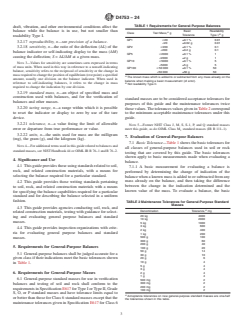
TABLE 1 Requirements for General-Purpose Balances
draft, vibration, and other environmental conditions affect the
balance while the balance is in use, but not smaller than Basic Readability
A
Class Test Mass, g
B
Tolerance Type I, g
readability Type I.
GP1 $20 ±0.1 % 0.01
3.2.17 reproducibility, n—see precision of a balance.
<20 ±0.02 g 0.01
3.2.18 sensitivity, n—the ratio of the deflection (ΔL) of the GP2 $200 ±0.1 % 0.1
<200 ±0.2 g 0.1
balance indicator or self-indicating display to the mass (ΔM)
GP5 $2000 ±0.1 % 1
causing the deflection; S = ΔL/ΔM at a given mass.
<2000 ±2 g 1
GP10 $5000 ±0.1 % 5
NOTE 3—Values for sensitivity are sometimes seen expressed in terms
<5000 ±5 g 5
of mass units. When used in this way in reference to a nonself-indicating
GP100 $50 000 ±0.1 % 50
balance, sensitivity refers to the reciprocal of sensitivity or the change in
<50 000 ±50 g 50
mass required to change the position of equilibrium (rest point) a specified
A
The known mass which is added to or subtracted from any mass already on the
amount, usually one division on the balance indicator. When used in
balance when making a basic measurement (of error).
reference to self-indicating balances, it refers to the change in mass B
Not readability Type II.
required to change the indication by one division.
3.2.19 standard mass, n—an object of specified mass and
construction used with balances, and for the verification of
standard masses are to be considered acceptance tolerances for
balances and other masses.
purposes of this guide and the maintenance tolerances twice
3.2.20 taring range, n—a range within which it is possible
those values. The tolerances values given in Table 2 correspond
to reset the indicator or display to zero by use of the tare
to the minimum acceptable maintenance tolerances under this
device.
guide.
3.2.21 tolerance, n—a value fixing the limit of allowable
NOTE 5—Former NIST Class J, M, S, S-1, P, and Q standard masses
error or departure from true performance or value.
meet this guide, as do OIML Class M standard masses (IR R 111–1).
3.2.22 units, n—the units used for mass are the milligram
7. Evaluation of General-Purpose Balances
(mg), the gram (g), and the kilogram (kg).
7.1 Basic Tolerance—Table 1 shows the basic tolerances for
NOTE 4—For additional terms used in this guide related to balances and
all classes of general-purpose balances used in soil or rock
standard masses, see NIST Handbook 44 or OIML IR R 76–1 and R 76–2.
testing that are covered by this guide. The basic tolerances
shown apply to basic measurements made when evaluating a
4. Significance and Use
balance.
4.1 This guide provides those using standards related to soil,
7.1.1 A basic measurement for evaluating a balance is
rock, and related construction materials, with a means for
performed by determining the change of indication of the
selecting the balance required for a particular standard.
balance when a known mass is added to or subtracted from any
mass already on the balance, and then taking the difference
4.2 This guide provides those writing standards pertaining
between the change in the indication determined and the
to soil, rock, and related construction materials with a means
known value of the mass. To evaluate a balance, the basic
for specifying the balance capabilities required for a particular
...
This document is not an ASTM standard and is intended only to provide the user of an ASTM standard an indication of what changes have been made to the previous version. Because
it may not be technically possible to adequately depict all changes accurately, ASTM recommends that users consult prior editions as appropriate. In all cases only the current version
of the standard as published by ASTM is to be considered the official document.
Designation: D4753 − 15 D4753 − 24
Standard Guide for
Evaluating, Selecting, and Specifying Balances and
Standard Masses for Use in Soil, Rock, and Construction
Materials Testing
This standard is issued under the fixed designation D4753; the number immediately following the designation indicates the year of
original adoption or, in the case of revision, the year of last revision. A number in parentheses indicates the year of last reapproval. A
superscript epsilon (´) indicates an editorial change since the last revision or reapproval.
1. Scope*
1.1 This guide provides minimum requirements for general-purpose scales, balances, balances and standard masses used in testing
soil, rock, and related construction materials.
1.2 This guide provides guidance for evaluating, selecting, and specifying general purpose scales, balances, balances and standard
masses used in testing soil, rock, and related construction materials.
1.3 The accuracy requirements for balances and scales are specified in terms of the combined effect of all sources of error
contributing to overall balance performance. The measurement of specific sources of error and consideration of details pertaining
to balance construction has been intentionally avoided.
1.4 This guide does not include requirements for balances and scales having accuracies greater than those generally required in
testing soil, rock, and related construction materials or for research programs or specialized testing requirements.
1.5 This guide does not apply to nongraduated balances.
1.6 This guide does not address the methods used to verify or quantify specific parameters dealing with balances and scales.
balances. For a description of tests used in evaluating balance performance, see NIST Handbook 44.
1.7 This guide is not intended to be used as a specification for the purchase of balances and scales.balances.
NOTE 1—The National Institute of Standards and Technology (NIST), formerly the National Bureau of Standards (NBS), and the International
Organization of Legal Metrology (OIML) publish standards or practices that specify construction requirements as well as performance guides for
balances. ASTM, OIML, and NIST publish construction standards and tolerances for standard masses.
NOTE 2—The terms “mass” and “determine the mass of” are used in this standard instead of the more commonly used terms “weight” and “weigh” to
comply with standard metric practice. In addition, the term “standard mass(es)” is used instead of standard “standard weight(s)” when referring to a piece
of material of known specified mass used to compare or measure the mass of other masses.
1.8 The values states in SI units are to be regarded as standard.
This guide is under the jurisdiction of ASTM Committee D18 on Soil and Rock and is the direct responsibility of Subcommittee D18.95 on Information Retrieval and
Data Automation.
Current edition approved May 1, 2015Feb. 1, 2024. Published May 2015March 2024. Originally approved in 1987. Last previous edition approved in 20072015 as
D4753 – 07.D4753 – 15. DOI: 10.1520/D4753-15.10.1520/D4753-24.
*A Summary of Changes section appears at the end of this standard
Copyright © ASTM International, 100 Barr Harbor Drive, PO Box C700, West Conshohocken, PA 19428-2959. United States
D4753 − 24
1.9 This guide offers an organized collection of information or a series of options and does not recommend a specific course of
action. This document cannot replace education or experience and should be used in conjunction with professional judgment. Not
all aspects of this guide may be applicable in all circumstances. This ASTM standard is not intended to represent or replace the
standard of care by which the adequacy of a given professional service must be judged nor should this document be applied without
consideration of a project’s many unique aspects. The word “Standard” in the title of this document means only that the document
has been approved through the ASTM consensus process.
1.10 This standard does not purport to address all of the safety concerns, if any, associated with its use. It is the responsibility
of the user of this standard to establish appropriate safety and healthsafety, health, and environmental practices and determine
the applicability of regulatory limitations prior to use.
1.11 This international standard was developed in accordance with internationally recognized principles on standardization
established in the Decision on Principles for the Development of International Standards, Guides and Recommendations issued
by the World Trade Organization Technical Barriers to Trade (TBT) Committee.
2. Referenced Documents
2.1 ASTM Standards:
D653 Terminology Relating to Soil, Rock, and Contained Fluids
E617 Specification for Laboratory Weights and Precision Mass Standards
2.2 National Institute of Standards and Technology Documents:
NIST Handbook 44 Specifications, Tolerances, and Other Technical Requirements for Weighing and Measuring Devices
2.3 International Organization for Legal Metrology (OIML):
International Recommendations OIML R 76–1 and R 76–2 Non-automatic weighing instruments
Part 1: Metrological and technical requirements—Tests Edition 2006 (E) Non-automatic weighing instruments
Part 2: Test report format Edition 2007 (E)
International Recommendations OIML R 111–1 Edition 2004 (E) Weights of classes E , E , F , F , M , M , M , M , and
1 2 1 2 1 1–2 2 2–3
M
Part 1: Metrological and technical requirements
International Recommendations OIML R 111–2 Edition 2004 (E) Weights of classes E , E , F , F , M , M , M , M , and
1 2 1 2 1 1–2 2 2–3
M
Part 2: Test Report Format
International Recommendations OIML R 76–1 and R 76–2 Non-automatic weighing instruments
Part 1: Metrological and technical requirements—Test Non-automatic weighing instruments Edition 2006 (E)
Part 2: Test report format Edition 2007 (E)
3. Terminology
3.1 Definitions—For definitions of terms used in this guide refer to Terminology D653.
3.2 Definitions of Terms Specific to This Standard:
3.2.1 balance—balance, n—an instrument for determining the mass of an object by the action of gravity on the object. See scale.
3.2.1.1 Discussion—
In this guide and in common usage, the terms balance and scale are used interchangeably. The term balance is more often used
in scientific fields of application. The term scale usually refers to instruments intended for commercial or industrial applications,
and when so used, usually implies an instrument of lesser performance than a balance.
3.2.2 basic condition—condition, n—a condition that must be met before a basic measurement for evaluating a balance can be
performed.
3.2.3 basic measurement (of error)—error), n—evaluating a balance by determining the change of indication of the balance when
For referenced ASTM standards, visit the ASTM website, www.astm.org, or contact ASTM Customer Service at service@astm.org. For Annual Book of ASTM Standards
volume information, refer to the standard’s Document Summary page on the ASTM website.
Available from National Institute of Standards and Technology (NIST), 100 Bureau Dr., Stop 1070, Gaithersburg, MD 20899-1070, http://www.nist.gov.
Available from U.S. Government Printing Office Superintendent of Documents, 732 N. Capitol St., NW, Mail Stop: SDE, Washington, DC 20401, http://
www.access.gpo.gov.International Organization of Legal Metrology, 11 rue Turgo, 75009 Paris, France, http://www.oiml.org.
D4753 − 24
a known mass is added to or subtracted from any mass already on the balance and the difference between the change in the
indication determined and the known value of the mass.
3.2.4 basic tolerance—tolerance, n—tolerances that are established by a particular code for a particular device under all normal
tests, whether maintenance or acceptance.
3.2.4.1 Discussion—
Basic tolerances include minimum tolerance values when these are specified. Special tolerances, identified as such and pertaining
to special tests, are not basic tolerances.
3.2.5 capacity—capacity, n—of a balance, the maximum mass recommended by the manufacturer, disregarding any additional
capability supplied by a taring device.
3.2.6 general-purpose balance—balance, n—any balance used to make a laboratory, industrial, education, and home use
determination of mass.
3.2.7 general-purpose determination of mass—mass, n—a single determination of mass using a balance (not a special purpose
determination of mass involving repeat determinations of mass, for example, averages, standard deviations, corrections, etc.).and
corrections).
3.2.8 general-purpose standard mass—mass, n—a standard mass used with a balance to make a general purpose determination of
mass. See general-purpose determination of mass.
3.2.9 hysteresis—hysteresis, n—the difference between successive measurements of a standard mass when the standard mass is
measured after a cycle of adding, and then removing (or removing, then adding) mass from the balance.
3.2.10 linearity error—error, n—in balances, this expression is applied to the plus or minus deviation from the theoretically
straight-lined (linear) course of two interdependent values of the indicated measurement value from the true (actual) value of the
mass.
3.2.10.1 Discussion—
Linearity implies that the deviation from the true values are a continuous function of the applied mass. Thus, obtaining enough
values of the true applied mass versus balance reading to establish a relation between applied mass and output should give the error
that will occur at any applied mass. Linearity, then, is a statement about the systematic (nonrandom) error of a balance.
Superimposed on the linearity are precision and other effects, such as off-center errors, temperature effects, etc. errors and
temperature effects. Linearity is a measure of balance performance over its full range, and on most balances adjustments can be
made to alter the useableness of a balance with a given linearity for measurements within a particular range of use.
3.2.11 nongraduated balance—balance, n—balances not fitted with a scalebar numbered in units of mass.
3.2.12 off-center error—error, n—of a top loading or platform balance, the difference in indicated value when a mass is shifted
to various positions on the loading area (pan or platform); eccentric load error.
3.2.12.1 Discussion—
The test for off-center error is called the shift test, or offcenter-load off center-load test. Information about balance performance
under eccentric loadings is not normally found in product literature but such information can usually be obtained by contacting
the manufacturer directly.
3.2.13 precision of a balance—balance, n—the degree of agreement between the indications of a balance for repeated
determinations of the same mass under essentially the same conditions.
3.2.13.1 Discussion—
It Precision of a balance is usually expressed quantitatively as a standard deviation of a series of mass determinations, or as a
function of the range of several mass determinations.
3.2.14 readability type I—I, n—the value of the smallest unit of mass that can be read without estimation over the given range of
measurement either directly or by use of a vernier or micrometer.
D4753 − 24
3.2.15 readability type II—II, n—the value of the smallest unit of mass that can be read with estimation over the given range of
measurement.
3.2.16 readability type III—III, n—the value of the smallest unit of mass that can be read when in-service conditions such as draft,
vibration, and other environmental conditions affect the balance while the balance is in use, but not smaller than readability Type
I.
3.2.17 reproducibility—reproducibility, n—see precision of a balance.
3.2.18 scale—see balance.
3.2.18 sensitivity—sensitivity, n—the ratio of the deflection (ΔL) of the balance indicator or self-indicating display to the mass
(ΔM) causing the deflection; S = ΔL/ΔM at a given mass.
NOTE 3—Values for sensitivity are sometimes seen expressed in terms of mass units. When used in this way in reference to a nonself-indicating balance,
sensitivity refers to the reciprocal of sensitivity or the change in mass required to change the position of equilibrium (rest point) a specified amount,
usually one division on the balance indicator. When used in reference to self-indicating balances, it refers to the change in mass required to change the
indication by one scale division.
3.2.19 standard mass—mass, n—an object of specified mass and construction used with balances, and for the verification of
balances and other masses.
3.2.20 taring range—range, n—a range within which it is possible to reset the indicator or display to zero by use of the tare device.
3.2.21 tolerance, n—a value fixing the limit of allowable error or departure from true performance or value.
3.2.22 tolerance—units, n—a value fixing the limit of allowable error or departure from true performance or value.the units used
for mass are the milligram (mg), the gram (g), and the kilogram (kg).
NOTE 4—For additional terms used in this guide related to balances and standard masses, see NIST Handbook 44 or OIML IR R 76–1 and R 76–2.
4. Significance and Use
4.1 This guide provides those using standards related to soil, rock, and related construction materials, with a means for selecting
the balance required for a particular standard.
4.2 This guide provides those writing standards pertaining to soil, rock, and related construction materials with a means for
specifying the balance capabilities required for a particular standard and for describing the balance selected in a uniform fashion.
4.3 This guide provides agencies conducting soil, rock, and related construction materials, testing with guidance for selecting and
evaluating general purpose balances and standard masses.
4.4 This guide provides inspection organizations with criteria for evaluating general purpose balances and standard masses.
5. Requirements for General-Purpose Balances
5.1 General-purpose balances shall be judged accurate for a given class if their indications meet the basic tolerances shown in
Table 1.
6. Requirements for General-Purpose Masses
6.1 General-purpose standard masses for use in verification balances and testing of soil and rock shall conform to the requirements
in Specification E617 for Type I or Type II, Grade S, O, or P standard masses and have tolerance limits equal to or better than those
for Class 6 standard masses except that the maintenance tolerances given in Specification E617 for Class 6 standard masses are
D4753 − 24
TABLE 1 Requirements for General-Purpose Balances
Basic Readability
A
Class Test Mass, g
B
Tolerance Type I, g
GP1 $20 ±0.1 % 0.01
<20 ±0.02 g 0.01
GP2 $200 ±0.1 % 0.1
<200 ±0.2 g 0.1
GP5 $2000 ±0.1 % 1
<2000 ±2 g 1
GP10 $5000 ±0.1 % 5
<5000 ±5 g 5
GP100 $50 000 ±0.1 % 50
<50 000 ±50 g 50
A
The known mass which is added to or subtracted from any mass already on the
balance when making a basic measurement (of error).
B
Not readability Type II.
to be considered acceptance tolerances for purposes of this guide and the maintenance tolerances twice those values. The tolerances
values given in Table 2 correspond to the minimum acceptable maintenance tolerances under this guide.
NOTE 5—Former NIST Class J, M, S, S-1, P, and Q standard masses meet this guide, as do OIML Class M standard masses (IR R 111–1).
7. Evaluation of General-Purpose Balances
7.1 Basic Tolerance—Table 1 shows the basic tolerances for all classes of general-purpose balances used in soil or rock testing
that are covered by this guide. The basic tolerances shown apply to basic measurements made when evaluating a balance.
7.1.1 A basic measurement for evaluating a balance is performed by determining the cha
...