


ASTM C1424-15(2019)
(Test Method)Standard Test Method for Monotonic Compressive Strength of Advanced Ceramics at Ambient Temperature
Standard Test Method for Monotonic Compressive Strength of Advanced Ceramics at Ambient Temperature
SIGNIFICANCE AND USE
4.1 This test method may be used for material development, material comparison, quality assurance, characterization, and design data generation.
4.2 Generally, resistance to compression is the measure of the greatest strength of a monolithic advanced ceramic. Ideally, ceramics should be compressively stressed in use, although engineering applications may frequently introduce tensile stresses in the component. Nonetheless, compressive behavior is an important aspect of mechanical properties and performance. Although tensile strength distributions of ceramics are probabilistic and can be described by a weakest-link failure theory, such descriptions have been shown to be inapplicable to compressive strength distributions in at least one study (1).3 However, the need to test a statistically significant number of compressive test specimens is not obviated. Therefore, a sufficient number of test specimens at each testing condition is required for statistical analysis and design.
4.3 Compression tests provide information on the strength and deformation of materials under uniaxial compressive stresses. Uniform stress states are required to effectively evaluate any nonlinear stress-strain behavior which may develop as the result of cumulative damage processes (for example, microcracking) which may be influenced by testing mode, testing rate, processing or compositional effects, microstructure, or environmental influences.
4.4 The results of compression tests of test specimens fabricated to standardized dimensions from a particular material or selected portions of a part, or both, may not totally represent the strength and deformation properties in the entire full-size product or its in-service behavior in different environments.
4.5 For quality control purposes, results derived from standardized compressive test specimens may be considered indicative of the response of the material from which they were taken for given primary processing conditions and post-proces...
SCOPE
1.1 This test method covers the determination of compressive strength including stress-strain behavior, under monotonic uniaxial loading of advanced ceramics at ambient temperature. This test method is restricted to specific test specimen geometries. In addition, test specimen fabrication methods, testing modes (force or displacement), testing rates (force rate, stress rate, displacement rate, or strain rate), allowable bending, and data collection and reporting procedures are addressed. Compressive strength as used in this test method refers to the compressive strength obtained under monotonic uniaxial loading. Monotonic loading refers to a test conducted at a constant rate in a continuous fashion, with no reversals from test initiation to final fracture.
1.2 This test method is intended primarily for use with advanced ceramics that macroscopically exhibit isotropic, homogeneous, continuous behavior. While this test method is intended for use on monolithic advanced ceramics, certain whisker- or particle-reinforced composite ceramics, as well as certain discontinuous fiber-reinforced composite ceramics, may also meet these macroscopic behavior assumptions. Generally, continuous fiber ceramic composites (CFCCs) do not macroscopically exhibit isotropic, homogeneous, continuous behavior and, application of this test method to these materials is not recommended.
1.3 Values expressed in this test method are in accordance with the International System of Units (SI) and IEEE/ASTM SI 10.
1.4 This standard does not purport to address all of the safety concerns, if any, associated with its use. It is the responsibility of the user of this standard to establish appropriate safety, health, and environmental practices and determine the applicability of regulatory limitations prior to use.
1.5 This international standard was developed in accordance with internationally recognized principles on standardization established i...
General Information
- Status
- Published
- Publication Date
- 30-Jun-2019
- Technical Committee
- C28 - Advanced Ceramics
- Drafting Committee
- C28.01 - Mechanical Properties and Performance
Relations
- Effective Date
- 01-Jul-2019
- Effective Date
- 01-Jul-2019
- Effective Date
- 01-Jun-2014
- Effective Date
- 01-Feb-2013
- Effective Date
- 01-Feb-2013
- Effective Date
- 01-Jun-2012
- Effective Date
- 01-Jun-2012
- Effective Date
- 01-Mar-2011
- Effective Date
- 01-Jun-2010
- Effective Date
- 01-Jun-2010
- Effective Date
- 01-Apr-2010
- Effective Date
- 01-Jan-2010
- Effective Date
- 01-Nov-2009
- Effective Date
- 15-May-2009
- Effective Date
- 15-May-2009
Overview
ASTM C1424-15(2019), Standard Test Method for Monotonic Compressive Strength of Advanced Ceramics at Ambient Temperature, establishes procedures for determining the compressive strength and stress-strain behavior of advanced ceramics under monotonic uniaxial loading at ambient temperature. This ASTM standard addresses specific specimen geometries, fabrication practices, allowable bending, testing modes and rates, data acquisition, and comprehensive reporting procedures, offering critical guidelines for consistent mechanical testing of high-performance ceramics.
Key Topics
Monotonic Compressive Strength Measurement:
The standard details the process for assessing compressive strength using a continuous, constant rate (force or displacement controlled) until specimen failure, aiding in understanding the peak compressive behavior of advanced ceramics.Specimen Preparation and Geometry:
Specific requirements for specimen geometry, surface finish, and dimension tolerance are provided to reduce stress concentrations, misalignment, and non-uniform loading during testing. High-precision fabrication and careful handling of specimens are emphasized to achieve reliable results.Test Modes and Data Collection:
Guidelines allow for both force and displacement control testing. Procedures outline how to set appropriate test rates and ensure data accuracy, including recommendations for the use of digital data acquisition systems and strain measurement techniques, even if strain measurement is not mandated.Statistical Analysis and Interpretation:
To ensure valid and statistically significant results, testing of multiple specimens per condition is required. The data collected allows for meaningful material development, quality assurance, and mechanical characterization.Quality Control and Material Comparison:
The standard is designed for use in material development, comparison, quality assurance, and design data generation for advanced ceramics. Results from standardized specimens can indicate material responses under given processing conditions.Safety and Precautionary Measures:
Comprehensive safety considerations are outlined, including requirements for protective shielding and air quality management, especially when testing materials with hazardous constituents.
Applications
ASTM C1424-15(2019) is widely used in:
Material Development:
Evaluating the compressive properties of new or modified advanced ceramics, supporting R&D initiatives, and enabling reliable material selection for components experiencing compressive stress.Quality Assurance Testing:
Routine batch testing for consistency in manufacturing processes, ensuring compliance with mechanical performance criteria for ceramics used in critical applications such as electronics, aerospace, medical devices, and energy systems.Design Data Generation:
Providing mechanical property data necessary for engineers and designers to perform structural analysis and ensure the safe use of ceramics in load-bearing applications where compressive forces are predominant.Material Comparison:
Offering a standardized basis for comparing compressive strengths of different advanced ceramic materials, including certain reinforcement composites, to support performance benchmarking.
Related Standards
The following standards and practices are referenced in or complement ASTM C1424-15(2019):
- ASTM C773 – Test Method for Compressive (Crushing) Strength of Fired Whiteware Materials
- ASTM C1145 – Terminology of Advanced Ceramics
- ASTM D695 – Test Method for Compressive Properties of Rigid Plastics
- ASTM E4 – Practices for Force Verification of Testing Machines
- ASTM E6 – Terminology Relating to Methods of Mechanical Testing
- ASTM E83 – Practice for Verification and Classification of Extensometer Systems
- IEEE/ASTM SI 10 – American National Standard for Metric Practice
Practical Value
Compliance with ASTM C1424-15(2019) ensures accurate and repeatable results for monotonic compressive strength testing of advanced ceramics at ambient temperatures. By adhering to this standard, laboratories, manufacturers, and designers can confidently generate data suitable for:
- Material specification and qualification
- Product development cycles
- Regulatory and quality compliance
- Technical documentation and reporting for international trade and certification
Keywords: ASTM C1424, compressive strength, advanced ceramics, monotonic compression testing, mechanical properties, ambient temperature, material development, quality assurance, standardized test method.
Frequently Asked Questions
ASTM C1424-15(2019) is a standard published by ASTM International. Its full title is "Standard Test Method for Monotonic Compressive Strength of Advanced Ceramics at Ambient Temperature". This standard covers: SIGNIFICANCE AND USE 4.1 This test method may be used for material development, material comparison, quality assurance, characterization, and design data generation. 4.2 Generally, resistance to compression is the measure of the greatest strength of a monolithic advanced ceramic. Ideally, ceramics should be compressively stressed in use, although engineering applications may frequently introduce tensile stresses in the component. Nonetheless, compressive behavior is an important aspect of mechanical properties and performance. Although tensile strength distributions of ceramics are probabilistic and can be described by a weakest-link failure theory, such descriptions have been shown to be inapplicable to compressive strength distributions in at least one study (1).3 However, the need to test a statistically significant number of compressive test specimens is not obviated. Therefore, a sufficient number of test specimens at each testing condition is required for statistical analysis and design. 4.3 Compression tests provide information on the strength and deformation of materials under uniaxial compressive stresses. Uniform stress states are required to effectively evaluate any nonlinear stress-strain behavior which may develop as the result of cumulative damage processes (for example, microcracking) which may be influenced by testing mode, testing rate, processing or compositional effects, microstructure, or environmental influences. 4.4 The results of compression tests of test specimens fabricated to standardized dimensions from a particular material or selected portions of a part, or both, may not totally represent the strength and deformation properties in the entire full-size product or its in-service behavior in different environments. 4.5 For quality control purposes, results derived from standardized compressive test specimens may be considered indicative of the response of the material from which they were taken for given primary processing conditions and post-proces... SCOPE 1.1 This test method covers the determination of compressive strength including stress-strain behavior, under monotonic uniaxial loading of advanced ceramics at ambient temperature. This test method is restricted to specific test specimen geometries. In addition, test specimen fabrication methods, testing modes (force or displacement), testing rates (force rate, stress rate, displacement rate, or strain rate), allowable bending, and data collection and reporting procedures are addressed. Compressive strength as used in this test method refers to the compressive strength obtained under monotonic uniaxial loading. Monotonic loading refers to a test conducted at a constant rate in a continuous fashion, with no reversals from test initiation to final fracture. 1.2 This test method is intended primarily for use with advanced ceramics that macroscopically exhibit isotropic, homogeneous, continuous behavior. While this test method is intended for use on monolithic advanced ceramics, certain whisker- or particle-reinforced composite ceramics, as well as certain discontinuous fiber-reinforced composite ceramics, may also meet these macroscopic behavior assumptions. Generally, continuous fiber ceramic composites (CFCCs) do not macroscopically exhibit isotropic, homogeneous, continuous behavior and, application of this test method to these materials is not recommended. 1.3 Values expressed in this test method are in accordance with the International System of Units (SI) and IEEE/ASTM SI 10. 1.4 This standard does not purport to address all of the safety concerns, if any, associated with its use. It is the responsibility of the user of this standard to establish appropriate safety, health, and environmental practices and determine the applicability of regulatory limitations prior to use. 1.5 This international standard was developed in accordance with internationally recognized principles on standardization established i...
SIGNIFICANCE AND USE 4.1 This test method may be used for material development, material comparison, quality assurance, characterization, and design data generation. 4.2 Generally, resistance to compression is the measure of the greatest strength of a monolithic advanced ceramic. Ideally, ceramics should be compressively stressed in use, although engineering applications may frequently introduce tensile stresses in the component. Nonetheless, compressive behavior is an important aspect of mechanical properties and performance. Although tensile strength distributions of ceramics are probabilistic and can be described by a weakest-link failure theory, such descriptions have been shown to be inapplicable to compressive strength distributions in at least one study (1).3 However, the need to test a statistically significant number of compressive test specimens is not obviated. Therefore, a sufficient number of test specimens at each testing condition is required for statistical analysis and design. 4.3 Compression tests provide information on the strength and deformation of materials under uniaxial compressive stresses. Uniform stress states are required to effectively evaluate any nonlinear stress-strain behavior which may develop as the result of cumulative damage processes (for example, microcracking) which may be influenced by testing mode, testing rate, processing or compositional effects, microstructure, or environmental influences. 4.4 The results of compression tests of test specimens fabricated to standardized dimensions from a particular material or selected portions of a part, or both, may not totally represent the strength and deformation properties in the entire full-size product or its in-service behavior in different environments. 4.5 For quality control purposes, results derived from standardized compressive test specimens may be considered indicative of the response of the material from which they were taken for given primary processing conditions and post-proces... SCOPE 1.1 This test method covers the determination of compressive strength including stress-strain behavior, under monotonic uniaxial loading of advanced ceramics at ambient temperature. This test method is restricted to specific test specimen geometries. In addition, test specimen fabrication methods, testing modes (force or displacement), testing rates (force rate, stress rate, displacement rate, or strain rate), allowable bending, and data collection and reporting procedures are addressed. Compressive strength as used in this test method refers to the compressive strength obtained under monotonic uniaxial loading. Monotonic loading refers to a test conducted at a constant rate in a continuous fashion, with no reversals from test initiation to final fracture. 1.2 This test method is intended primarily for use with advanced ceramics that macroscopically exhibit isotropic, homogeneous, continuous behavior. While this test method is intended for use on monolithic advanced ceramics, certain whisker- or particle-reinforced composite ceramics, as well as certain discontinuous fiber-reinforced composite ceramics, may also meet these macroscopic behavior assumptions. Generally, continuous fiber ceramic composites (CFCCs) do not macroscopically exhibit isotropic, homogeneous, continuous behavior and, application of this test method to these materials is not recommended. 1.3 Values expressed in this test method are in accordance with the International System of Units (SI) and IEEE/ASTM SI 10. 1.4 This standard does not purport to address all of the safety concerns, if any, associated with its use. It is the responsibility of the user of this standard to establish appropriate safety, health, and environmental practices and determine the applicability of regulatory limitations prior to use. 1.5 This international standard was developed in accordance with internationally recognized principles on standardization established i...
ASTM C1424-15(2019) is classified under the following ICS (International Classification for Standards) categories: 81.060.30 - Advanced ceramics. The ICS classification helps identify the subject area and facilitates finding related standards.
ASTM C1424-15(2019) has the following relationships with other standards: It is inter standard links to ASTM C1424-15, ASTM C1145-19, ASTM E4-14, ASTM C1145-06(2013), ASTM C1145-06(2013)e1, ASTM E1012-12, ASTM E1012-12e1, ASTM C773-88(2011), ASTM E83-10a, ASTM E4-10, ASTM D695-10, ASTM E83-10, ASTM E4-09a, ASTM E6-09b, ASTM E6-09be1. Understanding these relationships helps ensure you are using the most current and applicable version of the standard.
ASTM C1424-15(2019) is available in PDF format for immediate download after purchase. The document can be added to your cart and obtained through the secure checkout process. Digital delivery ensures instant access to the complete standard document.
Standards Content (Sample)
This international standard was developed in accordance with internationally recognized principles on standardization established in the Decision on Principles for the
Development of International Standards, Guides and Recommendations issued by the World Trade Organization Technical Barriers to Trade (TBT) Committee.
Designation: C1424 − 15 (Reapproved 2019)
Standard Test Method for
Monotonic Compressive Strength of Advanced Ceramics at
Ambient Temperature
This standard is issued under the fixed designation C1424; the number immediately following the designation indicates the year of
original adoption or, in the case of revision, the year of last revision.Anumber in parentheses indicates the year of last reapproval.A
superscript epsilon (´) indicates an editorial change since the last revision or reapproval.
1. Scope ization established in the Decision on Principles for the
Development of International Standards, Guides and Recom-
1.1 This test method covers the determination of compres-
mendations issued by the World Trade Organization Technical
sivestrengthincludingstress-strainbehavior,undermonotonic
Barriers to Trade (TBT) Committee.
uniaxial loading of advanced ceramics at ambient temperature.
This test method is restricted to specific test specimen geom-
2. Referenced Documents
etries. In addition, test specimen fabrication methods, testing
2.1 ASTM Standards:
modes (force or displacement), testing rates (force rate, stress
C773Test Method for Compressive (Crushing) Strength of
rate, displacement rate, or strain rate), allowable bending, and
Fired Whiteware Materials
data collection and reporting procedures are addressed. Com-
C1145Terminology of Advanced Ceramics
pressive strength as used in this test method refers to the
D695Test Method for Compressive Properties of Rigid
compressive strength obtained under monotonic uniaxial load-
Plastics
ing. Monotonic loading refers to a test conducted at a constant
E4Practices for Force Verification of Testing Machines
rate in a continuous fashion, with no reversals from test
E6Terminology Relating to Methods of MechanicalTesting
initiation to final fracture.
E83Practice for Verification and Classification of Exten-
1.2 This test method is intended primarily for use with
someter Systems
advanced ceramics that macroscopically exhibit isotropic,
E337Test Method for Measuring Humidity with a Psy-
homogeneous, continuous behavior. While this test method is
chrometer (the Measurement of Wet- and Dry-Bulb Tem-
intended for use on monolithic advanced ceramics, certain
peratures)
whisker- or particle-reinforced composite ceramics, as well as
E1012Practice for Verification of Testing Frame and Speci-
certain discontinuous fiber-reinforced composite ceramics,
men Alignment Under Tensile and Compressive Axial
may also meet these macroscopic behavior assumptions.
Force Application
Generally, continuous fiber ceramic composites (CFCCs) do
IEEE/ASTM SI 10American National Standard for Metric
not macroscopically exhibit isotropic, homogeneous, continu-
Practice
ous behavior and, application of this test method to these
materials is not recommended.
3. Terminology
1.3 Values expressed in this test method are in accordance
3.1 Definitions:
withtheInternationalSystemofUnits(SI)andIEEE/ASTMSI
3.1.1 The definitions of terms relating to compressive test-
10.
ing appearing in Terminology E6, Test Method D695, and
Terminology C1145 may apply to the terms used in this test
1.4 This standard does not purport to address all of the
method. Pertinent definitions as listed in Practice E1012,
safety concerns, if any, associated with its use. It is the
Terminology C1145, and Terminology E6 are shown in the
responsibility of the user of this standard to establish appro-
following with the appropriate source given in parentheses.
priate safety, health, and environmental practices and deter-
Additional terms used in conjunction with this test method are
mine the applicability of regulatory limitations prior to use.
defined in the following.
1.5 This international standard was developed in accor-
3.1.2 advanced ceramic, n—a highly engineered, high-
dance with internationally recognized principles on standard-
performance, predominately nonmetallic, inorganic, ceramic
material having specific functional attributes. (C1145)
This test method is under the jurisdiction of ASTM Committee C28 on
Advanced Ceramics and is the direct responsibility of Subcommittee C28.01 on
Mechanical Properties and Performance. For referenced ASTM standards, visit the ASTM website, www.astm.org, or
CurrenteditionapprovedJuly1,2019.PublishedJuly2019.Originallypublished contact ASTM Customer Service at service@astm.org. For Annual Book of ASTM
in 1999. Last previous edition approved in 2015 as C1424–15. DOI: 10.1520/ Standards volume information, refer to the standard’s Document Summary page on
C1424-15R19. the ASTM website.
Copyright © ASTM International, 100 Barr Harbor Drive, PO Box C700, West Conshohocken, PA 19428-2959. United States
C1424 − 15 (2019)
3.1.3 axial strain, [L/L], n—the average longitudinal strains represent the strength and deformation properties in the entire
measured at the surface on opposite sides of the longitudinal full-sizeproductoritsin-servicebehaviorindifferentenviron-
axis of symmetry of the specimen by two strain-sensing ments.
devices located at the mid length of the reduced section.
4.5 For quality control purposes, results derived from stan-
(E1012)
dardized compressive test specimens may be considered in-
3.1.4 bending strain, [L/L], n—the difference between the
dicative of the response of the material from which they were
strainatthesurfaceandtheaxialstrain.Ingeneral,thebending
taken for given primary processing conditions and post-
strain varies from point to point around and along the reduced
processing heat treatments.
section of the test specimen. (E1012)
5. Interferences
3.1.5 breaking load, [F], n—the load at which fracture
occurs. (E6) 5.1 Testenvironment(vacuum,inertgas,ambientair,andso
forth), including moisture content (for example, relative
3.1.6 compressive strength, [F/L ], n—the maximum com-
humidity), may have an influence on the measured compres-
pressive stress which a material is capable of sustaining.
sive strength. Testing to evaluate the maximum strength
Compressive strength is calculated from the maximum load
potential of a material can be conducted in inert environments
during a compression test carried to rupture and the original
or at sufficiently rapid testing rates, or both, so as to minimize
cross-sectional area of the specimen. (E6)
any environmental effects. Conversely, testing can be con-
3.1.7 gage length, [L], n—theoriginallengthofthatportion
ducted in environments, test modes, and test rates representa-
of the specimen over which strain or change of length is
tive of service conditions to evaluate material performance
determined. (E6)
under use conditions. When testing is conducted in uncon-
3.1.8 modulus of elasticity, [F/L ], n—the ratio of stress to
trolled ambient air with the intent of evaluating maximum
corresponding strain below the proportional limit. (E6)
strength potential, relative humidity and temperature must be
3.1.9 percent bending, n—the bending strain times 100 monitored and reported.
divided by the axial strain. (E1012)
5.2 Fabricationoftestspecimenscanintroducedimensional
variations which may have pronounced effects on compressive
4. Significance and Use
mechanical properties and behavior (for example, shape and
4.1 Thistestmethodmaybeusedformaterialdevelopment,
level of the resulting stress-strain curve, compressive strength,
material comparison, quality assurance, characterization, and
induced bending, and so forth). Machining effects introduced
design data generation.
duringtestspecimenpreparationcanbeaninterferingfactorin
the determination of ultimate strength of pristine material (that
4.2 Generally, resistance to compression is the measure of
is, increased frequency of loading block related fractures (see
thegreateststrengthofamonolithicadvancedceramic.Ideally,
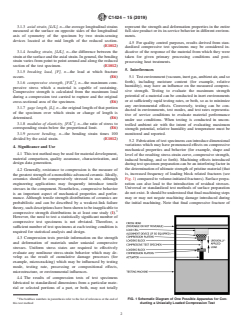
Fig.1)comparedtovolume-initiatedfractures).Surfaceprepa-
ceramics should be compressively stressed in use, although
ration can also lead to the introduction of residual stresses.
engineering applications may frequently introduce tensile
Universal or standardized test methods of surface preparation
stresses in the component. Nonetheless, compressive behavior
donotexist.Itshouldbeunderstoodthatfinalmachiningsteps
is an important aspect of mechanical properties and perfor-
may or may not negate machining damage introduced during
mance.Although tensile strength distributions of ceramics are
the initial machining. Note that final compressive fracture of
probabilistic and can be described by a weakest-link failure
theory,suchdescriptionshavebeenshowntobeinapplicableto
compressive strength distributions in at least one study (1).
However, the need to test a statistically significant number of
compressive test specimens is not obviated. Therefore, a
sufficient number of test specimens at each testing condition is
required for statistical analysis and design.
4.3 Compression tests provide information on the strength
and deformation of materials under uniaxial compressive
stresses. Uniform stress states are required to effectively
evaluate any nonlinear stress-strain behavior which may de-
velop as the result of cumulative damage processes (for
example, microcracking) which may be influenced by testing
mode, testing rate, processing or compositional effects,
microstructure, or environmental influences.
4.4 The results of compression tests of test specimens
fabricated to standardized dimensions from a particular mate-
rial or selected portions of a part, or both, may not totally
The boldface numbers in parenthesis refer to the list of references at the end of FIG. 1 Schematic Diagram of One Possible Apparatus for Con-
this test method ducting a Uniaxially Loaded Compression Test
C1424 − 15 (2019)
advanced ceramics can be attributed to the interaction of large example, platens) attached to the test machine, and (2) loading
numbersofmicrocracksthataregeneratedinthevolumeofthe blockswhicharenon-fixedandactastheinterfacebetweenthe
materialandultimatelyleadtolossofstructuralintegrity (1, 2). compression platens and the test specimen. An assembly
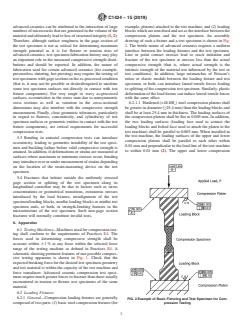
Therefore, although surface roughness in the gage section of drawing of such a fixture and a test specimen is shown in Fig.
the test specimen is not as critical for determining maximum 2. The brittle nature of advanced ceramics requires a uniform
strength potential as it is for flexure or tension tests of interface between the loading fixtures and the test specimen.
advanced ceramics, test specimen fabrication history may play Line or point contact stresses lead to crack initiation and
an important role in the measured compressive strength distri- fracture of the test specimen at stresses less than the actual
butions and should be reported. In addition, the nature of compressive strength (that is, where actual strength is the
fabrication used for certain advanced ceramics (for example, intrinsic strength of the material not influenced by the test or
pressureless sintering, hot pressing) may require the testing of test conditions). In addition, large mismatches of Poisson’s
testspecimenswithgagesectionsintheas-processedcondition ratios or elastic moduli between the loading fixture and test
(that is, it may not be possible or desired/required to machine specimen, or both, can introduce lateral tensile forces leading
some test specimen surfaces not directly in contact with test tosplittingofthecompressiontestspecimen.Similarly,plastic
fixture components). For very rough or wavy as-processed deformationoftheloadfixturecaninducelateraltensileforces
surfaces, eccentricities in the stress state due to nonsymmetric with the same effect.
cross sections as well as variation in the cross-sectional 6.2.1.1 Hardened (>48 HR ) steel compression platens shall
c
dimensions may also interfere with the compressive strength be greater in diameter (≥25.4 mm) than the loading blocks and
measurement. Finally, close geometric tolerances, particularly shall be at least 25.4 mm in thickness. The loading surfaces of
in regard to flatness, concentricity, and cylindricity of test the compression platens shall be flat to 0.005 mm. In addition,
specimen surfaces or geometric entities in contact with the test the two loading surfaces (loading face used to contact the
fixture components), are critical requirements for successful loading blocks and bolted face used to attach the platen to the
compression tests. test machine) shall be parallel to 0.005 mm. When installed in
the test machine, the loading surfaces of the upper and lower
5.3 Bending in uniaxial compression tests can introduce
compression platens shall be parallel to each other within
eccentricity, leading to geometric instability of the test speci-
0.01mm and perpendicular to the load line of the test machine
men and buckling failure before valid compressive strength is
to within 0.01 mm (2). The upper and lower compression
attained.Inaddition,ifdeformationsorstrainsaremeasuredat
surfaces where maximum or minimum stresses occur, bending
mayintroduceoverorundermeasurementofstrainsdepending
on the location of the strain-measuring device on the test
specimen.
5.4 Fractures that initiate outside the uniformly stressed
gage section or splitting of the test specimen along its
longitudinal centerline may be due to factors such as stress
concentrations or geometrical transitions, extraneous stresses
introduced by the load fixtures, misalignment of the test
specimen/loading blocks, nonflat loading blocks or nonflat test
specimen ends, or both, or strength-limiting features in the
microstructure of the test specimen. Such non-gage section
fractures will normally constitute invalid tests.
6. Apparatus
6.1 Testing Machines—Machinesusedforcompressiontest-
ing shall conform to the requirements of Practices E4. The
forces used in determining compressive strength shall be
accurate within 61% at any force within the selected force
range of the testing machine as defined in Practices E4.A
schematicshowingpertinentfeaturesofonepossiblecompres-
sive testing apparatus is shown in Fig. 1. Check that the
expectedbreakingforceforthedesiredtestspecimengeometry
and test material is within the capacity of the test machine and
force transducer. Advanced ceramic compression test speci-
mensrequiremuchgreaterforcestofracturethanthoseusually
encountered in tension or flexure test specimens of the same
material.
6.2 Loading Fixtures:
6.2.1 General—Compression loading fixtures are generally
FIG. 2 Example of Basic Fixturing and Test Specimen for Com-
composedoftwoparts:(1)basicsteelcompressionfixtures(for pression Testing
C1424 − 15 (2019)
platens shall be concentric within 0.005 mm of each other and ν ν
LB S
, (2)
the load line of the test machine. Angular and concentricity E E
LB S
alignments have been achieved with commercial alignment (2)The mean compressive strength of the loading block
¯
material, S , shall be greater than the anticipated mean
devices or by using available hole tolerances in commercial
UC–LB
compression platens in conjunction with shims (2). compression strength of the compression test specimen
¯
material, S , such that:
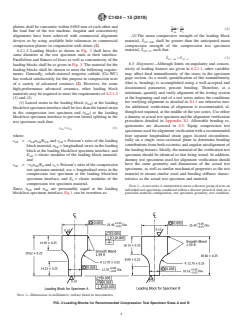
6.2.1.2 Loading blocks as shown in Fig. 3 shall have the
UC–S
same diameter as the test specimen ends at their interface.
¯ ¯
S .S (3)
UC2LB UC2S
Parallelism and flatness of faces as well as concentricity of the
6.3 Alignment—Although limits on angularity and concen-
loading blocks shall be as given in Fig. 3. The material for the
tricity of loading fixtures are given in 6.2.1.1, other variables
loading blocks shall be chosen to meet the following require-
may affect final nonuniformity of the stress in the specimen
ments. Generally, cobalt-sintered tungsten carbide (Co-WC)
gage section. As a result, quantification of this nonuniformity
has worked satisfactorily for this purpose in compression tests
(that is, bending) is accomplished using a well-accepted and
of a variety of advanced ceramics (2). However, for some
documented parameter, percent bending. Therefore, at a
high-performance advanced ceramics, other loading block
minimum, quantify and verify alignment of the testing system
materials may be required to meet the requirements of 6.2.1.2
at the beginning and end of a test series unless the conditions
(1) and (2).
for verifying alignment as detailed in X1.1 are otherwise met.
(1)Lateral strain in the loading block (ε ) at the loading
LB
An additional verification of alignment is recommended, al-
block/testspecimeninterfaceshallbelessthanthelateralstrain
though not required, at the middle of the test series. Use either
in the compression test specimen end (ε ) at the loading
SE
adummyoractualtestspecimenandthealignmentverification
block/test specimen interface to prevent lateral splitting in the
procedures detailed in Appendix X1. Allowable bending re-
test specimen such that:
quirements are discussed in 6.5. Equip compression test
ε ,ε (1)
LB SE
specimensusedforalignmentverificationwitharecommended
where: four separate longitudinal strain gages located circumferen-
tially on a single cross-sectional plane to determine bending
ε =–ν σ /E and ν = Poisson’s ratio of the loading
LB LB LB LB LB
contributions from both eccentric and angular misalignment of
blockmaterial, σ =longitudinalstressintheloading
LB
theloadingfixtures.Ideally,thematerialoftheverificationtest
blockattheloadingblock/testspecimeninterface,and
specimen should be identical to that being tested. In addition,
E = elastic modulus of the loading block material;
LB
dummy test specimens used for alignment verification should
and
have the same geometry and dimensions of the actual test
ε =−ν σ /E and ν =Poisson’sratioofthecompression
SE S SE S S
specimens, as well as similar mechanical properties as the test
test specimen material, σ = longitudinal stress in the
SE
material to ensure similar axial and bending stiffness charac-
compression test specimen at the loading block/test
teristics as the actual test specimen and material.
specimen interface, and E = elastic modulus of the
S
compression test specimen material.
NOTE1—Atestseriesisinterpretedtomeanadiscretegroupoftestson
Since, σ and σ are presumably equal at the loading
LB SE individual test specimens conducted within a discrete period of time on a
block/test specimen interface, Eq 1 can be rewritten as: particular material configuration, test specimen geometry, test condition,
NOTE 1—Dimensions in millimetres; surface finish in micrometres.
FIG. 3 Loading Blocks for Recommended Compression Test Specimen Sizes A and B
C1424 − 15 (2019)
or other uniquely definable qualifier (for example, a test series composed
incidences of bending or eccentricity and, hence, tendency to
of Material A comprising five test specimens of Geometry B tested at a
buckling.Bucklingcanbedetectedwhenthestrainononeside
fixed rate in displacement control to final fracture in ambient air).
ofthetestspecimenreverses(decreases)whilethestrainonthe
6.4 Strain Measurement—Although strain measurements
other side increases rapidly.
are not required in this test method, if measured on the actual
6.5 Allowable Bending—Although the test specimens in
test specimen, determine strain by means of either expendable
Fig. 4 are designed to minimize incidences of force-induced
strain gages attached to the test specimen or noncontacting
buckling (2), axial misalignment or the introduction of
extensometry. Since fracture of test specimens in compression
bending, due either to eccentricity or angular misalignment,
isspectacular,conventionalcontactingextensometerswouldin
will produce a geometric instability in the compressive test
all likelihood be damaged or destroyed and are therefore not
specimen leading to buckling and measured compressive
recommended. If Poisson’s ratio is to be determined, instru-
strengths less than the actual compressive strength. Bending
ment the test specimen to measure strain in both longitudinal
can be measured using either strain gages or other strain
and lateral directions. Stacked, biaxial strain gages are recom-
measurement devices located around the circumference of the
mended for this purpose. Choose the strain gages, surface
testspecimenorcanbeinferredfromevidenceinfracturedtest
preparation, and bonding agents so as to provide adequate
specimens that exhibit vertical cracking (splitting) due to
performance on the subject material without introducing spu-
tensile stresses which develop at the ends leading to chipping
rious surface damage which may affect the test results. In
and cracking of the test specimen.
addition, employ suitable strain gage conditioning and record-
ing equipment. 6.5.1 Actual studies of the effect of bending on the com-
6.4.1 Ifcontactingextensometersareusedtorecordstrainin pressive strength distributions of advanced ceramics do not
theinitial(thatis,linear)partofthestress-straincurve,remove exist,althoughthetestspecimenandfixturetolerancesgivenin
the extensometer prior to test specimen fracture. All this test method are intended to minimize non-uniaxial and
extensometers, whether contacting or noncontacting, shall be nonuniformstresses.Untilsuchinformationisforthcomingfor
in accordance with Practice E83, Class B-1 requirements. advanced ceramics, this test method adopts a conservative
Extensometers shall be calibrated periodically in accordance recommendation of the lowest achievable percent bending for
with Practice E83. For contacting extensometers, the contact compressive testing. Therefore, in this test method the maxi-
should cause no damage to the test specimen surface. In mum allowable percent bending determined either at fracture
additionandifapplicable,supporttheweightoftheextensom- or during an alignment verification is 2.5 (3), although the
eter so as not to introduce bending greater than that allowed in maximum recommended percent is 1. However, it should be
6.5. noted that unless all test specimens are properly strain gaged
6.4.2 Although buckling is minimized when using the and percent bending monitored up to fracture, there will be no
recommended test specimens of this test method, an additional record of percent bending at the onset of fracture for each test
recommendationbutnotrequirementfortheactualtestingisto specimen (although test specimens which exhibit vertical
monitor possible buckling using strain determined directly splitting are good indicators of excessive bending). Therefore,
from strain gages. Four strain gages mounted 90° apart around verify the testing system using a procedure such as the one
the circumference of the test specimen can be used to monitor detailed in Appendix X1 such that percent bending does not
NOTE 1—Dimensions in millimetres; surface finish in micrometres.
FIG. 4 Recommended Compressive Test Specimen Sizes A and B
C1424 − 15 (2019)
exceed 2.5 at the average strain equal to either one half the of advanced ceramics (2-7). Contoured test specimens have
anticipatedstrainatfractureorastrainof–0.0005(thatis,–500 been shown through finite element analyses (4) to have
microstrain), whichever is greater.At a minimum, conduct this uniform stresses in the gage section with minimal stress
verification at the beginning and end of each test series in concentrations at the geometric transitions and are therefore
accordance with 6.3.An additional verification of alignment is recommended in this test method.Although straight-sided test
recommended, although not required, at the middle of the test specimens (right circular cylinders) as recommended in Test
series. Method C773 for whitewares have been shown to produce
nonuniform stresses with subsequent fracture at stresses not
6.6 Data Acquisition—At the minimum, obtain an auto-
representative of actual compressive strengths (3, 6), and are
graphic record of applied force and gage section deformation
therefore not recommended in this test method for advanced
(or strain) versus time. Either analog chart recorders or digital
ceramics, possible configurations for this geometry are dis-
dataacquisitionsystemscanbeusedforthispurpose,although
cussedinAppendixX2.SpecimenBasshowninFig.4canbe
a digital record is recommended for ease of later data analysis.
used when the force capacity of the test machine may be
Ideally, an analog chart recorder or plotter should be used in
exceeded by use of Specimen A.
conjunction with the digital data acquisition system to provide
8.1.2 Contouredtestspecimendimensionsorgeometries (2)
an immediate record of the test as a supplement to the digital
other than those shown in Fig. 4 may be used, however the
record. Recording devices should be accurate to within 61%
effect of any stress concentrations should be considered when
of the selected range for the testing system including readout
developing a compressive test specimen geometry.
unit, as specified in Practices E4, and should have a minimum
data acquisition rate of 10 Hz, with a response of 50 Hz 8.2 Test Specimen Preparation:
deemed more than sufficient.
8.2.1 Application-Matched Machining—Thegagesectionof
6.6.1 Record strain or deformation of the gage section, or
thecompressivetestspecimenwillhavethesamesurface/edge
both,eithersimilarlytotheforceorasindependentvariablesof
preparation as that given to a service component. Unless the
force.Crossheaddisplacementofthetestmachinemayalsobe
process is proprietary, the report shall be specific about the
recorded but should not be used to define displacement or
stagesofmaterialremoval,wheelgrits,wheelbonding,amount
strain in the gage section.
of material removed per pass, and type of coolant used.
Regardless of the application-matched procedure used to
6.7 Dimension-Measuring Devices—Micrometers and other
fabricate the surface of the gage section, the concentricity of
devicesusedformeasuringlineardimensionsshallbeaccurate
the gage section as well as the surface roughness and flatness
and precise to at least one half the smallest unit to which the
of the end faces shall be as specified in Fig. 4. This surface
individual dimension is required to be measured. For the
roughness can be achieved using lapping or a similar type of
purposesofthistestmethod,cross-sectionaldimensionsshould
machining operation.
be measured to within 0.01 mm, requiring dimension-
8.2.2 Customary Practices—Ininstanceswhereacustomary
measuring devices with accuracies of 0.005 mm.
machining procedure has been developed that is completely
satisfactory for a class of materials (that is, it induces no
7. Precautionary Statement
unwanted surface/subsurface damage or residual stresses), this
7.1 Fractures of compressively loaded advanced ceramics
procedure may be used to make the gage section of the
occur at much greater forces and strain energies than in
compression test specimens. Unless the process is proprietary,
tensilely loaded advanced ceramics. Compressive fracture in
the report shall be specific about the stages of material
high-strength advanced ceramics will generate the release of
removal, wheel grits, wheel bonding, amount of material
manyuncontrolledfragments.Thick(6to13mm)polycarbon-
removed per pass, and the type of coolant used. Regardless of
ateshieldingorequivalentisrecommendedforoperatorsafety.
the customary machining procedure used to produce the
7.2 To limit the uncontrolled motion of the compression
surface of the gage section, the concentricity of the gage
fixture parts, temporarily bind the loading blocks to the
sectionaswellasthesurfaceroughnessandflatnessoftheend
compression platen using a strip or strips of adhesive tape
facesshallbeasspecifiedinFig.4.Thissurfaceroughnesscan
around the loading block and adhered to the compression
be achieved using lapping or a similar type of machining
platen (see Fig. 1). Do not place any substance between the
operation.
loading block and the compression platen contact surfaces.
8.2.3 Alternative Procedure—In instances where 8.2.1 or
8.2.2 is not appropriate, 8.2.3.1 – 8.2.3.5 shall apply. The test
7.3 Compression fractures often create fine particles which
report shall be specific about the stages of material removal,
may be a health hazard. Materials containing whiskers, small
wheel grits, wheel bonding, amount of material removed per
fibers, or silica particles may also cause health hazards when
pass, and type of coolant used. Regardless of the alternative
compression tested. For such materials, the operator is advised
procedure used to fabricate the surface of the gage section, the
to consult the material safety data sheet for guidance prior to
concentricity of the gage section as well as the surface
testing. Suitable ventilation or masks may be warranted.
roughness and flatness of the end faces shall be as specified in
8. Test Specimen Fig.4.Thissurfaceroughnesscanbeachievedusinglappingor
a similar type of machining operation.
8.1 Test Specimen Geometries:
8.1.1 Fig. 4 illustrates two contoured, cylindrical test speci-
NOTE 2—Final compressive fracture of advanced ceramics can be
mens similar to those successfully used for compression tests attributed to the interaction of large numbers of microcracks that are
C1424 − 15 (2019)
generated in the volume of the material and ultimately lead to loss of
section, while not valid, may be interpreted as interrupted tests
structuralintegrity (1, 2).Therefore,surfaceroughnessinthegagesection
for the purpose of censored test statistical analyses.
of the test specimen is not as critical for determining maximum compres-
sive strength potential as it is for flexural or tensile tests of advanced
9. Procedure
ceramics.
9.1 Test Specimen Dimensions—Determine the diameter of
8.2.3.1 Performallgrindingorcuttingwithamplesupplyof
thegagesectionofeachtestspecimen.Makemeasurementson
appropriatefilteredcoolanttokeeptheworkpieceandgrinding
at least three different cross-sectional planes in the gage
wheelconstantlyfloodedandparticlesflushed.Grindingcanbe
section. To avoid damage in the critical gage section area, it is
done in at least two stages, ranging from coarse to fine rate of
recommended that these measurements be made either opti-
material removal. All cutting can be done in one stage
cally (for example, an optical comparator) or mechanically
appropriate for the depth of cut.
using a flat, anvil-type micrometer. In either case, the resolu-
8.2.3.2 Stock removal rate shall not exceed 0.03 mm per
tion of the instrument shall be at least as specified in 6.7.
passuptothelast0.06mmofmaterialremovedusingdiamond
Exercise extreme caution to prevent damage to the test
tools that have between 320 and 500 (or 600) grit. Remove
specimen gage section. Ball-tipped or sharp anvil micrometers
equal stock from each surface where applicable.
are not recommended because localized damage (for example,
8.2.3.3 Because of the axial symmetry of the contoured
cracking) can be induced. Record and report the measured
compressive test specimen, fabrication of the test specimens is
dimensions and locations of the measurements for use in the
generally conducted on a lathe-type apparatus. In some in-
calculation of the compressive stress. Use the average of the
stances for tensile test specimens, the bulk of the material is
multiple measurements in the stress calculations.
removed in a circumferential grinding operation and a final,
9.1.1 Conduct periodic, if not 100 %, inspection/
longitudinal grinding operation is then performed in the gage
measurements of all test specimens and test specimen dimen-
section. Such a final longitudinal grinding operation is not
sions to ensure compliance with the drawing specifications.
necessary for compressive test specimens because of the
Genera
...
Questions, Comments and Discussion
Ask us and Technical Secretary will try to provide an answer. You can facilitate discussion about the standard in here.
Loading comments...