

ASTM F3674-24
(Practice)Standard Practice for Additive Manufacturing – Part Grades for Automotive
General Information
- Abstract
SCOPE
1.1 This practice is intended to be used to assign part grade across the automotive industry. For this standard the term classification was changed to grade to avoid confusion with existing classifications in the automotive industry.
1.2 See Practice F3572 for aviation part classifications and NASA-STD-6030 for spaceflight part classifications.
1.3 This practice is applicable to all AM technologies defined in ISO/ASTM 52900 used in automotive.
1.4 This practice is intended to be used to establish a metric for AM parts in downstream documents.
1.5 This practice is not intended to establish criteria for any downstream processes, but rather to establish a metric that these processes can use.
1.6 The part grade metric could be utilized by the engineering, procurement, non-destructive inspection, testing, qualification, or certification processes used for AM automotive parts.
1.7 The grading scheme in this practice establishes a consistent methodology to define and communicate the consequence of failure associated with AM automotive parts.
1.8 The material or process, or both, in general does not affect the consequence of failure of a part, therefore the grading scheme defined in this document may be used outside AM.
1.9 The user of this standard should not assume regulators’ endorsement of this standard as accepted mean of compliance.
1.10 This standard does not purport to address all of the safety concerns, if any, associated with its use. It is the responsibility of the user of this standard to establish appropriate safety, health, and environmental practices and determine the applicability of regulatory limitations prior to use.
1.11 This international standard was developed in accordance with internationally recognized principles on standardization established in the Decision on Principles for the Development of International Standards, Guides and Recommendations issued by the World Trade Organization Technical Barriers to Trade (TBT) Committee.
- Status
- Published
- Publication Date
- 31-Dec-2023
- Technical Committee
- F42 - Additive Manufacturing Technologies
- Drafting Committee
- F42.07 - Applications

Overview
ASTM F3674-24, Standard Practice for Additive Manufacturing – Part Grades for Automotive, provides a structured methodology for grading parts produced using additive manufacturing (AM) within the automotive industry. This practice establishes a consistent approach to communicating the consequence of part failure, supporting risk management, quality assurance, and downstream processes for AM parts. The grading system is designed to clarify risk exposure for AM automotive components, supporting engineering, procurement, inspection, testing, qualification, and certification processes.
Key Topics
Part Grade Definitions
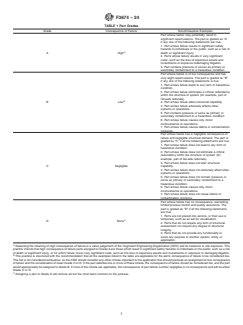
The standard defines four grades (A, B, C, D) for automotive parts manufactured using AM, solely based on the consequence of failure:- Grade A (High): Failure could result in significant safety hazards (such as risk of death or serious injury), major financial costs, or the failure of critical containment.
- Grade B (Low): Failure could lead to hazardous conditions, loss of redundancy, altered structural capability, or minor operational inconvenience.
- Grade C (Negligible): Failure has negligible consequences, does not compromise safety or system redundancy, and poses no contamination risk.
- Grade D (None): Parts not placed in service, used temporarily, or with no impact on safety or structural integrity.
Consistent Communication of Risk
Implementing this grading scheme enables clear and uniform communication of failure consequences across programs, suppliers, and projects.Applicability
ASTM F3674-24 applies to all AM technologies defined in ISO/ASTM 52900 and is designed for broad use within automotive manufacturing. While structured for AM, the methodology can also be applied outside AM where grading by consequence of failure is beneficial.Role of Cognizant Engineering Organization (CEO)
The assignment of part grades rests with the CEO, who is responsible for evaluating consequences based on risk tolerance and application requirements. This ensures that the grading is tailored to the specific needs of each part and organization.
Applications
Automotive Additive Manufacturing
Supports automotive OEMs and suppliers by enabling standardized risk assessment for AM parts. This guides the development of downstream manufacturing, inspection, qualification, and certification documents.Engineering and Quality Management
The grading system helps set appropriate levels of process control and quality assurance, ensuring parts meet safety and functional requirements suitable to their graded consequence of failure.Procurement and Supply Chain
Offers clear guidelines for suppliers regarding the required controls and documentation for AM automotive parts, streamlining sourcing and quality verification.Inspection and Regulatory Support
Provides a risk-based metric that can be referenced when seeking regulatory acceptance or compliance for AM automotive parts, though it does not itself constitute regulatory approval.
Related Standards
ASTM F3572: Practice for Additive Manufacturing – Part Classifications for Parts Used in Aviation.
Provides similar classification for aviation; reference for organizations working across automotive and aerospace sectors.ISO/ASTM 52900: Additive manufacturing - General principles - Fundamentals and vocabulary.
Defines AM technologies and terminology used in the automotive context.NASA-STD-6030: Additive Manufacturing Requirements for Spaceflight Systems.
Reference for AM part grading in spaceflight applications.ASTM F3554 and ASTM 52901: Other supporting standards for specifying AM part properties and requirements.
Conclusion
ASTM F3674-24 empowers the automotive industry to implement a clear, risk-based grading system for additive manufactured parts. This standard assists in aligning engineering, manufacturing, and quality management with a unified metric for consequence of failure, enhancing communication, consistency, and confidence in the use of AM components throughout the automotive value chain. For organizations adopting AM in automotive applications, ASTM F3674-24 is essential for standardizing risk evaluation and supporting seamless integration into standard processes and documentation.
Relations
- Effective Date
- 01-Feb-2024
- Effective Date
- 01-Sep-2023
Frequently Asked Questions
ASTM F3674-24 is a standard published by ASTM International. Its full title is "Standard Practice for Additive Manufacturing – Part Grades for Automotive". This standard covers: SCOPE 1.1 This practice is intended to be used to assign part grade across the automotive industry. For this standard the term classification was changed to grade to avoid confusion with existing classifications in the automotive industry. 1.2 See Practice F3572 for aviation part classifications and NASA-STD-6030 for spaceflight part classifications. 1.3 This practice is applicable to all AM technologies defined in ISO/ASTM 52900 used in automotive. 1.4 This practice is intended to be used to establish a metric for AM parts in downstream documents. 1.5 This practice is not intended to establish criteria for any downstream processes, but rather to establish a metric that these processes can use. 1.6 The part grade metric could be utilized by the engineering, procurement, non-destructive inspection, testing, qualification, or certification processes used for AM automotive parts. 1.7 The grading scheme in this practice establishes a consistent methodology to define and communicate the consequence of failure associated with AM automotive parts. 1.8 The material or process, or both, in general does not affect the consequence of failure of a part, therefore the grading scheme defined in this document may be used outside AM. 1.9 The user of this standard should not assume regulators’ endorsement of this standard as accepted mean of compliance. 1.10 This standard does not purport to address all of the safety concerns, if any, associated with its use. It is the responsibility of the user of this standard to establish appropriate safety, health, and environmental practices and determine the applicability of regulatory limitations prior to use. 1.11 This international standard was developed in accordance with internationally recognized principles on standardization established in the Decision on Principles for the Development of International Standards, Guides and Recommendations issued by the World Trade Organization Technical Barriers to Trade (TBT) Committee.
SCOPE 1.1 This practice is intended to be used to assign part grade across the automotive industry. For this standard the term classification was changed to grade to avoid confusion with existing classifications in the automotive industry. 1.2 See Practice F3572 for aviation part classifications and NASA-STD-6030 for spaceflight part classifications. 1.3 This practice is applicable to all AM technologies defined in ISO/ASTM 52900 used in automotive. 1.4 This practice is intended to be used to establish a metric for AM parts in downstream documents. 1.5 This practice is not intended to establish criteria for any downstream processes, but rather to establish a metric that these processes can use. 1.6 The part grade metric could be utilized by the engineering, procurement, non-destructive inspection, testing, qualification, or certification processes used for AM automotive parts. 1.7 The grading scheme in this practice establishes a consistent methodology to define and communicate the consequence of failure associated with AM automotive parts. 1.8 The material or process, or both, in general does not affect the consequence of failure of a part, therefore the grading scheme defined in this document may be used outside AM. 1.9 The user of this standard should not assume regulators’ endorsement of this standard as accepted mean of compliance. 1.10 This standard does not purport to address all of the safety concerns, if any, associated with its use. It is the responsibility of the user of this standard to establish appropriate safety, health, and environmental practices and determine the applicability of regulatory limitations prior to use. 1.11 This international standard was developed in accordance with internationally recognized principles on standardization established in the Decision on Principles for the Development of International Standards, Guides and Recommendations issued by the World Trade Organization Technical Barriers to Trade (TBT) Committee.
ASTM F3674-24 has the following relationships with other standards: It is inter standard links to ASTM E1316-24, ASTM E1316-23b. Understanding these relationships helps ensure you are using the most current and applicable version of the standard.
ASTM F3674-24 is available in PDF format for immediate download after purchase. The document can be added to your cart and obtained through the secure checkout process. Digital delivery ensures instant access to the complete standard document.
Standards Content (Sample)
This international standard was developed in accordance with internationally recognized principles on standardization established in the Decision on Principles for the
Development of International Standards, Guides and Recommendations issued by the World Trade Organization Technical Barriers to Trade (TBT) Committee.
Designation: F3674 − 24
Standard Practice for
Additive Manufacturing – Part Grades for Automotive
This standard is issued under the fixed designation F3674; the number immediately following the designation indicates the year of
original adoption or, in the case of revision, the year of last revision. A number in parentheses indicates the year of last reapproval. A
superscript epsilon (´) indicates an editorial change since the last revision or reapproval.
INTRODUCTION
The use of additive manufacturing (AM) technology allows designs that may not be achieved with
traditional manufacturing methods. It is important to understand the risk associated with the AM usage
by understanding the consequence of failure (including the loss of intended function) of the usage.
Such information can be beneficial in establishing consistent manufacturing, inspection, or qualifi-
cation processes relative to a defined risk scale, which can serve as supporting data when seeking
regulatory approval of an AM part. A part grading scheme based on a part’s consequence of failure can
provide a consistent risk metric. Without carefully defined part grades, the ability to accurately gauge
the consequence of failure associated with additively manufactured automotive parts within and across
programs, projects, and suppliers becomes exceedingly difficult, resulting in mitigations that are either
not commensurate or inconsistent. The part grading scheme documented here does not affect a part’s
functional requirements, but rather is used to group additive manufacturing automotive parts into
categories which can be used in downstream standards. For example, this grading scheme can be used
in material and process specifications to determine the appropriate levels of process control, thermal
post processing, qualification, and inspection to ensure AM parts meet their application requirements.
This grading scheme does not specify how the grading is used in any downstream processes. The use
of the grade shall be left to the cognizant engineering organization (CEO) or production entities, or
downstream documents which reference this standard.
1. Scope 1.6 The part grade metric could be utilized by the
engineering, procurement, non-destructive inspection, testing,
1.1 This practice is intended to be used to assign part grade
qualification, or certification processes used for AM automo-
across the automotive industry. For this standard the term
tive parts.
classification was changed to grade to avoid confusion with
existing classifications in the automotive industry.
1.7 The grading scheme in this practice establishes a con-
sistent methodology to define and communicate the conse-
1.2 See Practice F3572 for aviation part classifications and
quence of failure associated with AM automotive parts.
NASA-STD-6030 for spaceflight part classifications.
1.3 This practice is applicable to all AM technologies 1.8 The material or process, or both, in general does not
defined in ISO/ASTM 52900 used in automotive. affect the consequence of failure of a part, therefore the grading
scheme defined in this document may be used outside AM.
1.4 This practice is intended to be used to establish a metric
for AM parts in downstream documents.
1.9 The user of this standard should not assume regulators’
endorsement of this standard as accepted mean of compliance.
1.5 This practice is not intended to establish criteria for any
downstream processes, but rather to establish a metric that
1.10 This standard does not purport to address all of the
these processes can use.
safety concerns, if any, associated with its use. It is the
responsibility of the user of this standard to establish appro-
priate safety, health, and environmental practices and deter-
mine the applicability of regulatory limitations prior to use.
This test method is under the jurisdiction of ASTM Committee F42 on Additive
Manufacturing Technologies and is the direct responsibility of Subcommittee
1.11 This international standard was developed in accor-
F42.07 on Applications.
dance with internationally recognized principles on standard-
Current edition approved Jan. 1, 2024. Published February 2024. DOI: 10.1520/
F3674-24. ization established in the Decision on Principles for the
Copyright © ASTM International, 100 Barr Harbor Drive, PO Box C700, West Conshohocken, PA 19428-2959. United States
F3674 − 24
Development of International Standards, Guides and Recom- 4. Part Grade Designations
mendations issued by the World Trade Organization Technical
4.1 Grades—All automotive parts produced using AM shall
Barriers to Trade (TBT) Committee.
be graded in accordance with the part grades defined in Table
1.
2. Referenced Documents
4.2 Applicability:
2.1 ASTM Standards:
4.2.1 The Cognizant Engineering Organization (CEO) shall
E1316 Terminology for Nondestructive Examinations
be responsible for assigning each part a grade. This standard
F3572 Practice for Additive Manufacturing – General Prin-
adapts the levels of control from most stringent to least
ciples – Part Classifications for Additive Manufactured
stringent across four grades, Grade A to D respectively.
Parts Used in Aviation
Interpretation guidance is given for assistance in assigning part
grade; however, the CEO may assign any grade to the part that
2.2 ISO/ASTM Standard:
52900 Additive manufacturing — General principles — suits the risk tolerance and desired levels of control for
production of the part. This standard does not purport to
Fundamentals and vocabulary
address all the necessary requirements and controls for parts
2.3 NASA Standard:
of any given grade.
NASA-STD-6030 ADDITIVE MANUFACTURING RE-
QUIREMENTS FOR SPACEFLIGHT SYSTEMS NOTE 1—Determining the characteristics of grade based on conse-
quence of failure, end effects, and criticality analyses requires close
examination by the CEO. Every application, product, or process may be
3. Terminology
weighted and assessed differently by independent organizations seeking to
3.1 Terminology relating to additive manufacturing in ISO/ use this standard. The CEO is responsible to establish threshold limits and
required part acceptance criteria when determining part grade. CEO
ASTM 52900 shall apply.
determinations of part grades are only applicable to the CEO’s organiza-
3.2 Terminology relating to Cognizant Engineering Organi-
tion for each specific part.
zation (CEO) in Terminology E1316 shall
...