

ASTM C1882/C1882M-24
(Specification)Standard Specification for Anti-washout Admixtures for Concrete
General Information
- Abstract
SCOPE
1.1 This specification covers the qualification of materials for use as anti-washout admixtures to be added to hydraulic-cement concrete mixtures for the purpose of minimizing washout of cement and other fine fractions of materials from concrete being placed underwater.
1.2 The results of the tests stipulated in this specification are to be used for the purpose of qualifying a material as an anti-washout admixture, and not for determination of dosage for specific applications.
1.3 This specification provides for three levels of testing.
1.3.1 Level 1—Initial proof of admixture compliance with the requirements of this specification (see 4.1).
1.3.2 Level 2—Limited retesting demonstrates continued conformity of the admixture with the requirements of the specification (see 4.2).
1.3.3 Level 3—If specified by the purchaser for acceptance of a lot, or for measuring uniformity within or between lots (see 4.3).
1.4 The text of this standard refers to notes and footnotes that provide explanatory material. These notes and footnotes (excluding those in tables and figures) shall not be considered as requirements of the standard.
1.5 The values stated in either SI units or inch-pound units are to be regarded separately as standard. The values stated in each system are not necessarily exact equivalents; therefore, to ensure conformance with the standard, each system shall be used independently of the other, and values from the two systems shall not be combined. Some values have only SI units because the inch-pound equivalents are not used in practice.
1.6 The following precautionary caveat pertains only to test method Sections 10-15 of this specification: This standard does not purport to address all of the safety concerns, if any, associated with its use. It is the responsibility of the user of this standard to establish appropriate safety, health, and environmental practices and determine the applicability of regulatory limitations prior to use. Warning—Fresh hydraulic cementitious mixtures are caustic and may cause chemical burns to skin and tissue upon prolonged exposure.2
1.7 This international standard was developed in accordance with internationally recognized principles on standardization established in the Decision on Principles for the Development of International Standards, Guides and Recommendations issued by the World Trade Organization Technical Barriers to Trade (TBT) Committee.
- Status
- Published
- Publication Date
- 29-Feb-2024
- Technical Committee
- C09 - Concrete and Concrete Aggregates
- Drafting Committee
- C09.23 - Chemical Admixtures
Overview
ASTM C1882/C1882M-24 is the internationally recognized standard specification for anti-washout admixtures for concrete. Developed by ASTM International, this standard supports the qualification of materials designed to reduce the washout of cement and other fines during underwater concrete placement. By providing clear criteria for product qualification and ongoing conformity, ASTM C1882/C1882M ensures that anti-washout admixtures meet rigorous performance benchmarks, supporting reliable, stable, and quality underwater concrete construction.
Key Topics
Purpose of Anti-washout Admixtures
Anti-washout admixtures are formulated to minimize the loss of cement and fine particles from fresh concrete when it is placed underwater. This is critical for maintaining the integrity, strength, and uniformity of concrete structures constructed in submerged environments.Three Levels of Testing
The standard provides for three levels of testing:- Level 1: Initial compliance – ensures that the admixture meets performance requirements.
- Level 2: Limited retesting – demonstrates continued conformity of the admixture.
- Level 3: Additional testing if requested by the purchaser, confirming lot acceptance or product uniformity.
Performance and Uniformity Requirements
ASTM C1882/C1882M outlines procedures for verifying the anti-washout efficiency of admixtures, including reduction in washout percentage, maintenance of compressive strength, and air content in concrete. Uniformity and equivalence testing help ensure that different lots or batches maintain consistent properties.Reporting and Safety
The standard specifies the data required for test reports and includes safety guidance for handling potentially caustic hydraulic cement mixtures.
Applications
Underwater Concrete Placement
Anti-washout admixtures qualified according to this standard are used in underwater construction projects, such as bridges, piers, marine structures, and foundations, where concrete must be placed directly into water without significant material loss.Civil Infrastructure and Marine Construction
These admixtures improve workability and cohesion, supporting the durability and longevity of infrastructure built in challenging environments, including tunnels, dams, ports, and offshore platforms.Quality Assurance in Construction
Compliance with ASTM C1882/C1882M provides owners, specifiers, and contractors with confidence in the selection and performance of admixtures used in critical concrete applications.
Related Standards
For a comprehensive quality assurance framework in concrete construction, ASTM C1882/C1882M references and aligns with several key standards, including:
- ASTM C33/C33M: Specification for Concrete Aggregates
- ASTM C150/C150M: Specification for Portland Cement
- ASTM C494/C494M: Specification for Chemical Admixtures for Concrete
- ASTM C143/C143M: Test Method for Slump of Hydraulic-Cement Concrete
- ASTM C39/C39M: Test Method for Compressive Strength of Cylindrical Concrete Specimens
- ASTM C192/C192M: Practice for Making and Curing Concrete Test Specimens in the Laboratory
Practical Value
- Enhances durability and reduces material loss in underwater concrete applications
- Ensures reliable admixture performance through multi-level testing and retesting
- Supports construction best practices by standardizing quality criteria
- Facilitates international trade and procurement by harmonizing requirements
ASTM C1882/C1882M-24 is an essential specification for anyone involved in underwater concrete placement, guaranteeing product performance, safety, and compliance with recognized industry benchmarks.
Keywords: ASTM C1882, anti-washout admixtures, underwater concrete, concrete admixture standards, ASTM International, hydraulic-cement, marine construction, concrete durability, construction quality assurance
Relations
- Effective Date
- 01-Jun-2022
- Refers
ASTM C39/C39M-21 - Standard Test Method for Compressive Strength of Cylindrical Concrete Specimens - Effective Date
- 01-Mar-2021
Frequently Asked Questions
ASTM C1882/C1882M-24 is a technical specification published by ASTM International. Its full title is "Standard Specification for Anti-washout Admixtures for Concrete". This standard covers: SCOPE 1.1 This specification covers the qualification of materials for use as anti-washout admixtures to be added to hydraulic-cement concrete mixtures for the purpose of minimizing washout of cement and other fine fractions of materials from concrete being placed underwater. 1.2 The results of the tests stipulated in this specification are to be used for the purpose of qualifying a material as an anti-washout admixture, and not for determination of dosage for specific applications. 1.3 This specification provides for three levels of testing. 1.3.1 Level 1—Initial proof of admixture compliance with the requirements of this specification (see 4.1). 1.3.2 Level 2—Limited retesting demonstrates continued conformity of the admixture with the requirements of the specification (see 4.2). 1.3.3 Level 3—If specified by the purchaser for acceptance of a lot, or for measuring uniformity within or between lots (see 4.3). 1.4 The text of this standard refers to notes and footnotes that provide explanatory material. These notes and footnotes (excluding those in tables and figures) shall not be considered as requirements of the standard. 1.5 The values stated in either SI units or inch-pound units are to be regarded separately as standard. The values stated in each system are not necessarily exact equivalents; therefore, to ensure conformance with the standard, each system shall be used independently of the other, and values from the two systems shall not be combined. Some values have only SI units because the inch-pound equivalents are not used in practice. 1.6 The following precautionary caveat pertains only to test method Sections 10-15 of this specification: This standard does not purport to address all of the safety concerns, if any, associated with its use. It is the responsibility of the user of this standard to establish appropriate safety, health, and environmental practices and determine the applicability of regulatory limitations prior to use. Warning—Fresh hydraulic cementitious mixtures are caustic and may cause chemical burns to skin and tissue upon prolonged exposure.2 1.7 This international standard was developed in accordance with internationally recognized principles on standardization established in the Decision on Principles for the Development of International Standards, Guides and Recommendations issued by the World Trade Organization Technical Barriers to Trade (TBT) Committee.
SCOPE 1.1 This specification covers the qualification of materials for use as anti-washout admixtures to be added to hydraulic-cement concrete mixtures for the purpose of minimizing washout of cement and other fine fractions of materials from concrete being placed underwater. 1.2 The results of the tests stipulated in this specification are to be used for the purpose of qualifying a material as an anti-washout admixture, and not for determination of dosage for specific applications. 1.3 This specification provides for three levels of testing. 1.3.1 Level 1—Initial proof of admixture compliance with the requirements of this specification (see 4.1). 1.3.2 Level 2—Limited retesting demonstrates continued conformity of the admixture with the requirements of the specification (see 4.2). 1.3.3 Level 3—If specified by the purchaser for acceptance of a lot, or for measuring uniformity within or between lots (see 4.3). 1.4 The text of this standard refers to notes and footnotes that provide explanatory material. These notes and footnotes (excluding those in tables and figures) shall not be considered as requirements of the standard. 1.5 The values stated in either SI units or inch-pound units are to be regarded separately as standard. The values stated in each system are not necessarily exact equivalents; therefore, to ensure conformance with the standard, each system shall be used independently of the other, and values from the two systems shall not be combined. Some values have only SI units because the inch-pound equivalents are not used in practice. 1.6 The following precautionary caveat pertains only to test method Sections 10-15 of this specification: This standard does not purport to address all of the safety concerns, if any, associated with its use. It is the responsibility of the user of this standard to establish appropriate safety, health, and environmental practices and determine the applicability of regulatory limitations prior to use. Warning—Fresh hydraulic cementitious mixtures are caustic and may cause chemical burns to skin and tissue upon prolonged exposure.2 1.7 This international standard was developed in accordance with internationally recognized principles on standardization established in the Decision on Principles for the Development of International Standards, Guides and Recommendations issued by the World Trade Organization Technical Barriers to Trade (TBT) Committee.
ASTM C1882/C1882M-24 has the following relationships with other standards: It is inter standard links to ASTM C231/C231M-22, ASTM C39/C39M-21. Understanding these relationships helps ensure you are using the most current and applicable version of the standard.
ASTM C1882/C1882M-24 is available in PDF format for immediate download after purchase. The document can be added to your cart and obtained through the secure checkout process. Digital delivery ensures instant access to the complete standard document.
Standards Content (Sample)
This international standard was developed in accordance with internationally recognized principles on standardization established in the Decision on Principles for the
Development of International Standards, Guides and Recommendations issued by the World Trade Organization Technical Barriers to Trade (TBT) Committee.
Designation: C1882/C1882M − 24
Standard Specification for
Anti-washout Admixtures for Concrete
This standard is issued under the fixed designation C1882/C1882M; the number immediately following the designation indicates the
year of original adoption or, in the case of revision, the year of last revision. A number in parentheses indicates the year of last
reapproval. A superscript epsilon (´) indicates an editorial change since the last revision or reapproval.
1. Scope limitations prior to use. Warning—Fresh hydraulic cementi-
tious mixtures are caustic and may cause chemical burns to
1.1 This specification covers the qualification of materials
skin and tissue upon prolonged exposure.
for use as anti-washout admixtures to be added to hydraulic-
1.7 This international standard was developed in accor-
cement concrete mixtures for the purpose of minimizing
dance with internationally recognized principles on standard-
washout of cement and other fine fractions of materials from
ization established in the Decision on Principles for the
concrete being placed underwater.
Development of International Standards, Guides and Recom-
1.2 The results of the tests stipulated in this specification are
mendations issued by the World Trade Organization Technical
to be used for the purpose of qualifying a material as an
Barriers to Trade (TBT) Committee.
anti-washout admixture, and not for determination of dosage
for specific applications.
2. Referenced Documents
1.3 This specification provides for three levels of testing.
2.1 ASTM Standards:
1.3.1 Level 1—Initial proof of admixture compliance with
C33/C33M Specification for Concrete Aggregates
the requirements of this specification (see 4.1).
C39/C39M Test Method for Compressive Strength of Cylin-
1.3.2 Level 2—Limited retesting demonstrates continued
drical Concrete Specimens
conformity of the admixture with the requirements of the
C125 Terminology Relating to Concrete and Concrete Ag-
specification (see 4.2).
gregates
1.3.3 Level 3—If specified by the purchaser for acceptance
C127/C127M Test Method for Relative Density (Specific
of a lot, or for measuring uniformity within or between lots
Gravity) and Absorption of Coarse Aggregate
(see 4.3).
C128/C128M Test Method for Relative Density (Specific
1.4 The text of this standard refers to notes and footnotes
Gravity) and Absorption of Fine Aggregate
that provide explanatory material. These notes and footnotes
C136/C136M Test Method for Sieve Analysis of Fine and
(excluding those in tables and figures) shall not be considered
Coarse Aggregates
as requirements of the standard.
C143/C143M Test Method for Slump of Hydraulic-Cement
1.5 The values stated in either SI units or inch-pound units
Concrete
are to be regarded separately as standard. The values stated in
C150/C150M Specification for Portland Cement
each system are not necessarily exact equivalents; therefore, to
C192/C192M Practice for Making and Curing Concrete Test
ensure conformance with the standard, each system shall be
Specimens in the Laboratory
used independently of the other, and values from the two
C231/C231M Test Method for Air Content of Freshly Mixed
systems shall not be combined. Some values have only SI units
Concrete by the Pressure Method
because the inch-pound equivalents are not used in practice.
C403/C403M Test Method for Time of Setting of Concrete
1.6 The following precautionary caveat pertains only to test Mixtures by Penetration Resistance
method Sections 10-15 of this specification: This standard does C494/C494M Specification for Chemical Admixtures for
not purport to address all of the safety concerns, if any, Concrete
associated with its use. It is the responsibility of the user of this C595/C595M Specification for Blended Hydraulic Cements
standard to establish appropriate safety, health, and environ- E178 Practice for Dealing With Outlying Observations
mental practices and determine the applicability of regulatory
See Section on Safety Precautions, Manual of Aggregate and Concrete Testing,
This test method is under the jurisdiction of ASTM Committee C09 on Annual Book of ASTM Standards, Vol. 04.02
Concrete and Concrete Aggregates and is the direct responsibility of Subcommittee For referenced ASTM standards, visit the ASTM website, www.astm.org, or
C09.23 on Chemical Admixtures. contact ASTM Customer Service at service@astm.org. For Annual Book of ASTM
Current edition approved March 1, 2024. Published March 2024. DOI: 10.1520/ Standards volume information, refer to the standard’s Document Summary page on
C1882_C1882M–24 the ASTM website.
Copyright © ASTM International, 100 Barr Harbor Drive, PO Box C700, West Conshohocken, PA 19428-2959. United States
C1882/C1882M − 24
3. Terminology 5. Uniformity and Equivalence Requirements
3.1 Definitions: 5.1 If specified by the purchaser, the uniformity of a lot, or
the equivalence of different lots from the same source shall be
3.1.1 For definitions of terms used in this specification, refer
established by complying with the requirements in Specifica-
to Terminology C125.
tion C494/C494M.
3.2 Definitions of Terms Specific to This Standard:
3.2.1 anti-washout admixture, n—an admixture that reduces
6. Packaging and Marking
the loss of fine material from fresh concrete when placed in
6.1 If the admixture is delivered in packages or containers,
water.
the proprietary name of the admixture and the net mass or
volume shall be plainly marked thereon. Similar information
4. General Requirements
shall be provided in the shipping form accompanying packaged
4.1 Level 1—During the initial approval stage, proof of
or bulk shipments of admixtures.
compliance with the performance requirements defined in
Table 1 demonstrates that the admixture meets the require-
7. Storage
ments of this specification. This testing compares critical
7.1 The admixture shall be stored in such a manner as to
properties of concrete containing the anti-washout admixture,
permit easy access for inspection and identification of each
dosed at levels determined by the manufacturer to establish
shipment, and in an environment that will protect the admix-
compliance with this specification, with the same properties of
ture from dampness and freezing.
the reference concrete. Tests for uniformity and equivalence
referenced in Section 16, shall be made on the initial sample
8. Sampling and Inspection
and the results retained for reference and comparison with the
results of tests of samples taken from elsewhere within the lot
8.1 The purchaser shall be provided the opportunity for
or subsequent lots of admixture supplied for use in the work. sampling and inspection. Samples shall be obtained and stored
according to Specification C494/C494M.
NOTE 1—If the reference concrete does not achieve at least 10 %
washout, changes to the concrete mixture will be needed, such as changing
9. Rejection
the fine/total aggregate ratio, or using a slightly coarser sand.
9.1 For initial compliance testing, the purchaser has the
4.2 Level 2—The purchaser is allowed to require limited
retesting to confirm current compliance of the admixture to right to reject the admixture if it fails to conform to the
requirements of this specification.
specification requirements. The limited retesting will cover
physical properties and performance of the admixture.
9.2 For limited retesting, the purchaser has the right to reject
4.2.1 Retesting of the physical properties shall consist of the
the admixture if it fails to meet the uniformity and equivalence
uniformity and equivalence tests in Section 16. The manufac-
requirements in Specification C494/C494M and the strength
turer shall state in writing that the infrared analysis spectrum,
and air content requirements in Table 1.
residue by oven drying, and relative density (specific gravity)
9.3 An admixture stored at the point of manufacture for
of the admixture are within the limits in Section 5 when
more than 6 months before shipment, or an admixture in local
compared to the initial sample tested under this specification.
storage by the vendor for more than 6 months, after completion
4.2.2 The performance retesting shall consist of air content
of initial testing tests, shall be tested for uniformity and
of fresh concrete and compressive strength at 7 and 28 days.
equivalence if requested by the purchaser. The purchaser has
4.3 Level 3—If specified by the purchaser for acceptance of
the right to reject the admixture if it fails to conform to the
a lot or for measuring uniformity within or between lots, the
uniformity and equivalence requirements.
uniformity and equivalence tests referenced in Section 16 shall
TEST METHODS
be used. At the request of the purchaser, the manufacturer shall
NOTE 2—These tests are based on arbitrary stipulations which make
state in writing that the infrared analysis spectrum, residue by
possible standardized testing in the laboratory and are not intended to
oven drying, and relative density (specific gravity) of the
simulate actual job conditions. Refer to Specification C494/C494M,
admixture supplied are within the limits in Section 5 when
Appendix X1 for a discussion of the required testing program and how test
compared to the initial sample tested under this specification. results are evaluated.
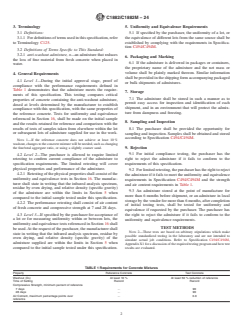
TABLE 1 Requirements for Concrete Mixtures
Property Reference Concrete Test Concrete
Washout (D ) At least 10 % At least 50 % reduction of reference
Time of Setting Record Record
Compressive Strength, minimum percent of reference
7 days . 90
28 days . 90
Air Content, maximum percentage points over . 3.0
reference
C1882/C1882M − 24
10. Materials 11. Proportioning of Concrete Mixtures
10.1 Cement—The cement in any series of tests shall 11.1 Proportions—The reference concrete and test concrete
comply with Specification C150/C150M Type I or II, or shall be proportioned to conform to the requirements in Table
Specification C595/C595M Type IL. If the cement used results 2. The reference concrete shall result in a washout of at least
in an air content of the reference concrete greater than 3.5 %, 10 % when tested in accordance with 14.6.4.
select a different cement, so that the air content of the reference
11.2 Mixture Categories—Prepare concrete mixtures both
concrete will not exceed 3.5 %.
with and without the admixture under test. The mixture without
10.2 Aggregates—Fine and coarse aggregates used in any the anti-washout admixture is the reference concrete. The
series of tests shall come from single lots that conform to the mixture with the anti-washout admixture is the test concrete.
grading requirements of Specification C33/C33M, except that Add the admixture in the manner recommended by the
the aggregates shall conform to the requirements of 10.2.2 and manufacturer and in the amount necessary to comply with the
10.2.3. requirements for anti-washout performance. If there is no
10.2.1 Physical Properties—Determine the relative density recommended time of addition for the admixture, add the
and absorption of the coarse aggregate in accordance with Test admixture with the first increment of mixing water added to the
Method C127/C127M and of the fine aggregate in accordance mixer.
with Test Method C128/C128M.
NOTE 5—The time of addition of the admixture may affect washout and
10.2.2 Fine Aggregate Grading—The fine aggregate shall
time of setting.
be an uncrushed natural sand meeting the grading requirements
12. Mixing
in Specification C33/C33M.
10.2.3 Coarse Aggregate Grading—The coarse aggregate
12.1 Machine mix the concrete as prescribed in Practice
shall meet the requirements for size number 67 of Specification
C192/C192M.
C33/C33M.
13. Preparation of Test Specimens
10.2.4 Coarse Aggregate Preparation—Prepare at least
three sets of coarse aggregate in accordance with the procedure 13.1 Make at least three batches of the test concrete and at
least three batches of the reference concrete. The volume of
in Specification C494/C494M.
each batch shall be sufficient to produce one specimen for each
NOTE 3—A set refers to the quantity of aggregate required to make one
type of test and test age. Table 3 shows the tests and minimum
batch of reference concrete, one batch of test concrete, and perform a sieve
number of test specimens required for the evaluation. On a
analysis. One or more spare sets may be needed in case any sets need to
be discarded due to not being within desired grading tolerance, or concrete given day, make at least one specimen for each test and test age
batches need to be discarded due to not meeting desired fresh concrete
from each concrete category. If desired, the preparation of all
properties.
specimens can be completed in one, two, or three days of
10.2.5 Verification of Grading—Test the coarse aggregate
mixing, provided the same number of batches of test concrete
samples representing each set in accordance with Test Method
and the reference concrete are made on the same day.
C136/C136M. Discard any set for which the sample does not
14. Test of Freshly Mixed Concrete and Specimen
comply with size 67 requirements of Specification C33/C33M.
Preparation
NOTE 4—The results required for demonstrating compliance under this
14.1 Samples of freshly mixed concrete from at least three
specification are dependent on the uniformity of the aggregate quantities
separate batches for each category of concrete shall be tested in
prepared and used.
accordance with the methods described in 14.2 through 14.6.
10.3 Preparation and Batching—Prepare all material and
make all mass determinations as prescribed in Practice C192/ 14.2 Slump—Determine slump according to Test Method
C192M. C143/C143M.
TABLE 2
P
...