








Announcements
Introducing the Engineering Workplace
Mark up any standard, right in the browser. Highlight clauses, sketch redlines, drop text notes, and add comments to your highlights — autosaved, page-accurate, restored every time you reopen the document.
On a team subscription, publish annotations to your colleagues in one click. Keep work-in-progress private, share the finished review.
Stop buying standards one at a time
Ongoing access to entire body catalogues - or focused ICS scopes - for a flat monthly or annual price. Unlimited reads, multi-seat for the whole team, volume discounts that scale.
Includes the Engineering Workplace markup tools on every standard, so reviews and audits become a team activity.

Need a standard once? Rent it. Need an answer? Ask the AI.
Read any standard for the period you actually need — a fraction of the purchase price, full in-browser access, no commitment.
Add the optional AI Chat to ask questions about the standard in plain English and get answers grounded in the document. Find the right clause in seconds, not minutes.
Standards Packages
iTeh together with SIST has developed and compiled a comprehensive collection of standard packages to support your standard requirements. Our packages cover an array of content that includes quality management, risk management, road vehicles, machine safety, and much more. With over 200 packages to choose from, you are sure to find a collection to suit your standard needs.
Latest Posts






Latest Standards
- Amendment8 pagesEnglish languagee-Library read for1 day
This document describes the typical accessories used for Large Power Transformers.
- Standard9 pagesEnglish languagee-Library read for1 day
This document describes a test that determines the rate of leakage of ambient (cold) and medium (warm) temperature smoke from one side of door and shutter assemblies to the other under the specified test conditions. This test method is applicable to door and shutter assemblies and self-closing operable glazed elements of different configurations intended for the purpose of controlling the passage of smoke in case of fire. Wherever door and shutter assemblies are referred to in this document, it also applies to self-closing glazed elements. The fire resistance of glazed elements is determined by tests in accordance with ISO 3009.
The acceptable leakage rates for different situations are not addressed in this document, but rather are specified by the regulations of the controlling authorities.
- Standard28 pagesEnglish languagee-Library read for1 day
- Standard23 pagesEnglish languagesale 15% off
This document specifies methods for the determination of seam maximum force of sewn seams when the force is applied perpendicularly to the seam. It describes the method known as the grab test.
The method defined in this document is applicable to woven textile fabrics, including fabrics which exhibit stretch characteristics imparted by the presence of an elastomeric fibre, mechanical or chemical treatment. It can be applicable to fabrics produced by other techniques. It is normally not applicable to geotextiles, nonwovens, coated fabrics, textile-glass woven fabrics and fabrics made from carbon fibres or polyolefin tape yarns.[2], [3], [4]
This method is applicable to straight seams only (obtained from previously sewn articles or prepared from fabric samples) and not to curved seams (see Annex B for considerations on seams).
The method is restricted to the use of constant-rate-of-extension (CRE) testing machines.
- Standard21 pagesEnglish languagee-Library read for1 day
This document is applicable to all electronic equipment for control, regulation, protection, diagnostic, energy supply installed on railway vehicles and any relevant elements of rolling stock subsystems (e.g. external doors, On-Board ETCS functionality, wheel slide protection).
For the purpose of this document, electronic equipment is defined as equipment composed of electronic components (e.g. resistors, capacitors, transistors, diodes, integrated circuits, hybrids, application specific integrated circuits, wound components and relays), and recognized associated components (e.g. connectors, mechanical parts). These components are mainly mounted on printed circuit boards.
Sensors (e.g. current, voltage, speed) and semiconductor drive units for power electronic devices are covered by this document. Complete semiconductor drive units and power converters are covered by EN 61287 1.
This document covers the requirements for operating conditions, design, documentation, testing and integration of electronic equipment, as well as hardware and software requirements considered necessary for compliant and reliable equipment.
Specific requirements related to practices necessary to ensure defined safety integrity level or functional safety are not covered by this document. Nevertheless, this document is applicable to the hardware of all rolling stock electronic equipment or systems performing safety-related functions.
The software development requirements for on-board railway equipment are specified by EN 50716.
- Standard112 pagesEnglish languagee-Library read for1 day
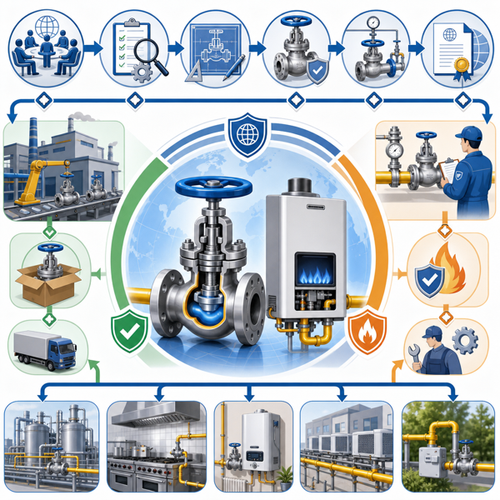
This document is applicable to ventilation systems in commercial kitchens, associated areas and other installations processing foodstuffs intended for commercial use. Kitchens and associated areas are special rooms in which meals are prepared, where tableware and equipment are washed and cleaned, food is stored, and food waste areas.
This document specifies requirements and gives recommendations for the configuration, installation, testing, maintenance and safety of fixed kitchen fire extinguishing systems within the design of commercial kitchens in buildings. It is applicable for fire extinguishing systems providing appliance-specific protection as well as overlapping zone protection.
This document provides the guidelines to install fixed fire extinguishing systems to protect against grease fires on the cooking appliances in the extract ventilation system. This document includes recommendations for the certification of system hardware, as well as design, installation and maintenance of the system.
NOTE It is possible that there are additional or alternative local national regulations on installation, appliance requirements and inspection, maintenance and operation.
This document is applicable to kitchen ventilation systems excluding those in domestic kitchens.
- Standard14 pagesEnglish languagee-Library read for1 day
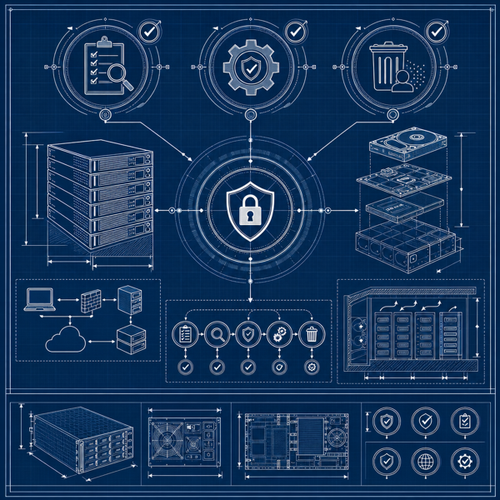
This document specifies processes for the management and operation of data centres. The primary focus of this document is the processes necessary to deliver the expected level of resilience, availability, risk management, risk mitigation, capacity planning, security and resource and energy efficiency.
The secondary focus is on organization and data centre management to align the actual and future demands. Only processes specific for data centres are in the scope of this document.
Business processes like people management, financial management, etc. are out of scope.
- Standard70 pagesEnglish languagee-Library read for1 day
This document specifies the digital measurement method for the determination of the anti-contamination of fabrics. This method is applicable to woven fabrics which have or have not been given an anti-contamination to particulate matter finish. It is especially suitable for measuring apparel fabrics. It is not intended for use in fabrics that react to UV light or allow particulate matter to penetrate into the structure of the fabric. It is not applied to fabrics for personal protective equipment. NOTE 1 Particulate matter (PM) is solid particles suspended in ambient air defined in ISO 16890-1. NOTE 2 In woven fabrics, particulate matter (PM) adheres to the fabric surface due to electrostatic or surface properties. In knitted and nonwoven fabrics, PM penetrates into the fabric structure, following a different mechanism. The conditions and procedures outlined in this test method are designed to ensure reproducibility and precision specifically when applied to woven fabrics.
- Standard8 pagesEnglish languagesale 15% off
This document is applicable to products that emit laser radiation for the purpose of free space optical data transmission. This document does not apply to laser products designed for the purposes of transmitting optical power for applications such as material processing or medical treatment. This document also does not apply to the use of laser products in explosive atmospheres (see IEC 60079-0). Light-emitting diodes employed by free space optical communication systems, used for the purpose of free space optical data transmission, do not fall into the scope of this document. NOTE If the laser product incorporates an optical fibre that extends from the confinements of the enclosure, the requirements in IEC 60825-2 applies.
- Draft50 pagesEnglish languagee-Library read for1 day
This document gives guidance and requirements for the assessment of conformity of formulations, products and assemblies in accordance with EN 1329-1:2026 intended to be included in the manufacturer’s quality plan as part of the quality management system and for the establishment of certification procedures.
NOTE 1 A basic test matrix provides an overview of the testing scheme in Annex A, Table A.1.
NOTE 2 If certification is involved, the certification body operating in accordance with EN ISO/IEC 17065[1] and EN ISO/IEC 17020[2] is considered to be competent.
- Technical specification22 pagesEnglish languagee-Library read for1 day
This document provides a workflow comprising experimental procedures and flaw detection algorithms aimed at locating flaws in parts produced during the powder bed fusion-laser-based (PBF-LB) process of metals. It emphasizes the use of coaxial photodiode-based in-situ monitoring and statistical and clustering machine learning algorithms, particularly for detecting lack of fusion-induced flaws. The workflow delineates setting thresholds for statistical detection and determining the number of clusters for machine learning algorithms, utilizing intentional seeded flaws in parts. Validation procedures are provided through computed tomography scanner data. Hardware limitations and considerations for multi-laser processes are addressed, with attention to potential issues.
- Technical report25 pagesEnglish languagesale 15% off
IEC 62820-1-1 specifies the technical requirements for the composition, functions, performance, and test methods of general building intercom systems.
This document is applicable to the general intercom systems for building entry in residential or commercial buildings.
Door-Entry-System (DES) is a simple kind of convenient Building-Intercom-System (BIS) mainly for user’s comfort. This document has classified the general building intercom systems into two grades in IEC 62820-1-1. Grade 1 adopts lower requirements to cover DES not used for relevant security applications while grade 2 adopts higher requirements for building intercom systems for security applications. Each grade can adopt different functional and performance requirements, test methods and normative references.
NOTE The different requirements between grade 1 and grade 2 are summarized in Table C.1 of Annex C.
- Standard47 pagesEnglish languagee-Library read for1 day
This document specifies general methods, with suitable test conditions, for the determination of the ash of a range of plastics. The particular conditions chosen can be included in the specifications for the plastic material in question. Particular conditions applicable to poly(alkylene terephthalate) materials, unplasticized cellulose acetate, polyamides and poly(vinyl chloride) plastics, including some specific filled, glass-fibre-reinforced and flame-retarded materials, are specified in ISO 3451-2, ISO 3451-3, ISO 3451-4 and ISO 3451-5.
- Standard10 pagesEnglish languagesale 15% off
- Standard11 pagesFrench languagesale 15% off
This document specifies fundamental concepts of the reference model for textual documents and provides guidance to support long-term preservation from the perspectives of its five layers. It defines: the layers that constitute the reference model for textual documents; the types of elements incorporated within textual documents; property types associated with textual documents; classifications of properties by type; and properties inherent to textual documents relevant to long-term preservation. This document does not cover: specific technical methods for checking whether the properties exist within a specific textual document; specific technical methods for analysing particular textual document format (e.g. DOC, DOCX, ODT, TXT, PDF); specific metadata items for the long-term preservation of textual documents; processes, procedures, or management practices related to long-term preservation or records management.
- Standard22 pagesEnglish languagesale 15% off
This document specifies the general requirements relating to the design of ballastless track systems, including configuration of ballastless track system, subsystems and components requirements, and other related interfaces.
- Standard33 pagesEnglish languagesale 15% off
- Standard34 pagesFrench languagesale 15% off
This document, published jointly by IEC and ISO, provides, in combination with IEC 81346‑1 and IEC 81346‑2, rules and recommendations on the structuring of systems and the information on systems of manufacturing systems. It also provides additional classification schemes to those of IEC 81346‑2 for use in reference designations within manufacturing systems. It is published as a double logo standard. The structuring principles and the classes of objects are intended to provide a clear identification and localization of the objects, and for use in their labelling in the manufacturing plant, for their designation in technical documents and for the designation of the technical documents as well. The requirements in this document apply for processing, transportation and storage of products, as well as for systems to support the manufacturing process such as electrical systems, management systems and waste disposal systems. This document applies to different areas within the manufacturing industry such as light industry, electrical and optical industry, chemical industry, material industry and heavy industry. This document is not applicable for designations related to product individuals (e.g. inventory number, serial number) nor to the products manufactured. This document is also a horizontal publication intended for use by technical committees in preparation of publications related to reference designations in accordance with the principles laid down in IEC Guide 108.
- Standard28 pagesEnglish languagesale 15% off
- Standard31 pagesFrench languagesale 15% off
This document provides test methods and test requirements for design either qualification or acceptance, or both of small spacecraft or units. It provides the minimum test requirements and test methods to qualify the design and manufacturing methods of commercial small spacecraft and their units and to accept the final products. This document is applicable to satellites whose development methods are different from the ones used for traditional satellites that have little room for risk tolerance. The scope of this document encompasses different categories of small spacecraft, so-called mini-, micro-, nano-, pico- and femto spacecraft. This document includes CubeSat, as long as it is developed with the untraditional processes. This document does not cover satellite deployment mechanisms, such as picosatellite orbital deployer (POD), as the verification requirements are defined in the interface control document (ICD) with the launcher, such as ISO 26869[1]. This document does not cover software testing, although some tests such as functional test, mission test and end-to-end test are inherently used to test the software installed in the hardware being tested. General requirements and processes of satellite software testing can be found in various references, such as ECSS-E-ST40[2]. This document does not cover requirements regarding safety nor debris mitigation. Appropriate documents such as ISO 14620-1[3] or ISO 24113[4] can be referred to. Other common requirements for small spacecraft can be found in ISO 20991[5].
- Standard92 pagesEnglish languagesale 15% off
IEC 60947-6-1:2026 is available as IEC 60947-6-1:2026 RLV which contains the International Standard and its Redline version, showing all changes of the technical content compared to the previous edition. IEC 60947-6-1:2026 applies to transfer switching equipment (TSE), to be used in power systems for ensuring the continuity of the supply and allowing the energy management of the installation, by transferring a load between power supply sources, the rated voltage of which does not exceed 1 000 V AC or 1 500 V DC. Specific requirements for bypass/isolation transfer switch equipment are given in Annex C, ATSE having closed transition capability are given in Annex D, stand-alone ATS controllers are given in Annex E, and TSE for electric driven fire pump controllers are given in Annex F. It covers: - manually operated transfer switching equipment (MTSE); - remotely operated transfer switching equipment (RTSE); - automatic transfer switching equipment (ATSE), including the controller; - stand-alone ATS controllers; - bypass/isolation transfer switch equipment (BTSE); - ATSE having closed transition capability; - fire pump TSE. It does not cover: - TSE configurations that are not fully manufacturer type tested or marked according to this document as a complete transfer switch; - auxiliary contacts (for guidance, see IEC 60947-5-1); - transfer switches used in explosive atmospheres (for guidance, see IEC 60079 (all parts)); - embedded software design (for guidance, see IEC TR 63201); - cybersecurity aspects (for guidance, see IEC 63208); - TSE rated for direct-on-line starting asynchronous motor of design NE and HE, according to IEC 60034-12. (for guidance, see AC-3e utilisation category according to IEC 60947 4 1); - other types of TSE under consideration including overlapping neutral TSE, multi-source TSE (i.e. TSE with more than two sources of supply), TSE with load-shedding functions, bus-tie TSE, and hybrid TSE; - static transfer switches covered by IEC 62310 series. This fourth edition cancels and replaces the third edition published in 2021. This edition constitutes a technical revision. This edition includes the following significant technical changes with respect to the previous edition: - clarification of scope; - clarification of terms and definitions; - Annex C for Bypass/Isolation Transfer Switch Equipment; - Annex D for ATSE having closed transition capability; - Annex E for Stand-alone ATS controller; - Annex F for TSE used with electric driven fire pump control equipment.
- Draft100 pagesEnglish languagee-Library read for1 day
This document: gives an overview of the ISO 17978 series; specifies rules and basic principles for the service-oriented vehicle diagnostics (SOVD), conforming to the extended vehicle (ExVe) methodology, as specified in the ISO 20077 series; defines general terms.
- Standard13 pagesEnglish languagesale 15% off
Benefits

Full Standards Solution
Our catalog includes not only latest standards but also full meta information about related standardization project lifecycle.

Cost Effective
Our PRICE MATCH GUARANTEE policy with multi-level volume discounts gives our clients the best option in the market. In addition, you can get access to the standards for 3, 10, or 30 days.

Stay Notified
Get alerted to the latest revisions and new standards in the Weekly Newsletter. Standards are constantly changing. Don’t miss a revision that can impact your business.
Frequently Asked Questions
While can’t speak to your particular circumstance generally no. You get the same standard at a cheaper price!
We provide licenses to standards documents adopted by Slovenian Institute for Standardization (SIST). These are exactly the same as original works but are preceded by cover pages acknowledging their adoption. For instance, the international standard document ISO 8601:2013 is adopted by European Committee for Standardization (CEN) as the European Standard document EN ISO 3166-1:2014 and subsequently adopted by SIST as Slovenian Standard document SIST EN ISO 8601-1:2014.
Yes, the intended recipient for which a license has been granted may print documents for their personal use. No other persons may print, receive, inspect, duplicate, or otherwise consume printed material.
Documents are licensed to individuals and must not be made accessible to any person who the license was not purchased for (including the purchaser). This would preclude posting the documents in any manner that would allow distribution. This includes but not exclusively public or private network shares, wikis, FTP, messaging services, etc.
A license grants 1 persons exclusive access to purchased document in perpetuity. Licenses are not transferable. If for instance you have team of five individuals that need access to a document then five licenses must be purchased, one for each member. If a new team member is added regardless of the departure of any existing member a new license must be acquired for that individual. If you know you will need multiple licenses, consider purchasing several at one time as we offer volume discounts. See: Do you offer discounts?
iTeh Standards already offers substantial discounts in most cases in comparison to original publishing organizations. Furthermore, we offer volume discounts for buying multiple licenses. Simply multiply the price of the publication according to the relevant discount.
- 2-3 licenses - 15% discount
- 4-5 licenses - 30% discount
- 6-10 licenses - 50% discount
- more than 10 licenses - 60% discount
About Us
Standards work, redesigned for the way teams actually work.
iTeh builds the digital infrastructure of the standards industry. Together with the Slovenian Institute for Standardization (SIST) and a growing network of publishers and certification partners, we run standards.iteh.ai — where engineers, procurement teams, compliance officers and standardization institutes find, buy, read, annotate and reuse the standards their work depends on. Our platform turns a static catalog into a workplace your team will actually open every day.
Advantage
- AI-first. Ask any standard a question. Search the catalog semantically. Connect ChatGPT, Claude, Perplexity or your own agents through our MCP endpoints.
- Engineering Workplace. Highlight, draw, comment and share — page-accurate, saved automatically, publishable to your whole team in one click.
- Company-wide licensing. One account, every employee, controlled by your administrator — no more chasing PDFs across inboxes.
- e-Library. Subscription access to live standards collections — pay for the shelf, not for every single document.
- Always on, always current. Continuous platform updates, 24/7 support, no version-upgrade projects.