

ASTM D4814-24
(Specification)Standard Specification for Automotive Spark-Ignition Engine Fuel
General Information
- Abstract
ABSTRACT
This specification describes the various characteristics and requirements of automotive fuels for use over a wide range of operating conditions in ground vehicles equipped with spark-ignition engines. It provides for a variation of the volatility and water tolerance of automotive fuel in accordance with seasonal climatic changes at the locality where the fuel is used. This specification neither necessarily includes all types of fuels that are satisfactory for automotive vehicles, nor necessarily excludes fuels that can perform unsatisfactorily under certain operating conditions or in certain equipment. The spark-ignition engine fuels covered here are gasoline and its blends with oxygenates, such as alcohols and ethers, and not fuels that contain an oxygenate as the primary component, such as fuel methanol (M85). This specification does not address the emission characteristics of reformulated spark-ignition engine fuel. However, in addition to the legal requirements, reformulated spark-ignition engine fuel should meet the performance requirements as well.
SCOPE
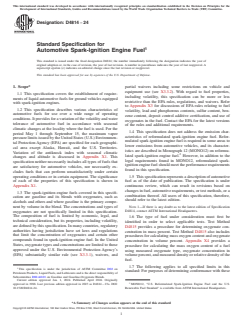
1.1 This specification covers the establishment of requirements of liquid automotive fuels for ground vehicles equipped with spark-ignition engines.
1.2 This specification describes various characteristics of automotive fuels for use over a wide range of operating conditions. It provides for a variation of the volatility and water tolerance of automotive fuel in accordance with seasonal climatic changes at the locality where the fuel is used. For the period May 1 through September 15, the maximum vapor pressure limits issued by the United States (U.S.) Environmental Protection Agency (EPA) are specified for each geographical area except Alaska, Hawaii, and the U.S. Territories. Variation of the antiknock index with seasonal climatic changes and altitude is discussed in Appendix X1. This specification neither necessarily includes all types of fuels that are satisfactory for automotive vehicles, nor necessarily excludes fuels that can perform unsatisfactorily under certain operating conditions or in certain equipment. The significance of each of the properties of this specification is shown in Appendix X1.
1.3 The spark-ignition engine fuels covered in this specification are gasoline and its blends with oxygenates, such as alcohols and ethers and where gasoline is the primary component by volume in the blend. The concentrations and types of oxygenates are not specifically limited in this specification. The composition of fuel is limited by economic, legal, and technical consideration, but its properties, including volatility, are defined by this specification. In many countries, regulatory authorities having jurisdiction have set laws and regulations that limit the concentration of oxygenates and certain other compounds found in spark-ignition engine fuel. In the United States, oxygenate types and concentrations are limited to those approved under the U.S. Environmental Protection Agency's (EPA) substantially similar rule (see X3.3.1), waivers, and partial waivers including some restrictions on vehicle and equipment use (see X3.3.2). With regard to fuel properties, including volatility, this specification can be more or less restrictive than the EPA rules, regulations, and waivers. Refer to Appendix X3 for discussions of EPA rules relating to fuel volatility, lead and phosphorous contents, sulfur content, benzene content, deposit control additive certification, and use of oxygenates in the fuel. Contact the EPA for the latest versions of the rules and additional requirements.
1.4 This specification does not address the emission characteristics of reformulated spark-ignition engine fuel. Reformulated spark-ignition engine fuel is required in some areas to lower emissions from automotive vehicles, and its characteristics are described in Monograph 12 (MONO12) on reformulated spark-ignition engine fuel.2 However, in addition to the legal requi...
- Status
- Published
- Publication Date
- 31-Dec-2023
- Technical Committee
- D02 - Petroleum Products, Liquid Fuels, and Lubricants
- Drafting Committee
- D02.A0.01 - Gasoline and Gasoline-Oxygenate Blends
Buy Documents
ASTM D4814-24 - Standard Specification for Automotive Spark-Ignition Engine Fuel
REDLINE ASTM D4814-24 - Standard Specification for Automotive Spark-Ignition Engine Fuel
Overview
ASTM D4814-24 is the internationally recognized standard specification for automotive spark-ignition engine fuel, primarily gasoline and its blends with oxygenates such as alcohols and ethers. Developed by ASTM International, this standard establishes the fundamental requirements for liquid automotive fuels used in ground vehicles equipped with spark-ignition engines. It provides specifications that account for a wide range of operating conditions and climate variations. Compliance with ASTM D4814 ensures the quality, performance, and reliability of gasoline and gasoline-blended fuels, supporting regulatory requirements and industry best practices in fuel manufacturing, distribution, and sales.
Key Topics
- Fuel Scope: Covers gasoline and gasoline blends with oxygenates, where gasoline remains the major component by volume. Pure oxygenate fuels, like M85, are not included.
- Volatility and Water Tolerance: Specifies requirements for fuel volatility and water tolerance, which adjust seasonally and geographically to ensure engine performance in various climates.
- Antiknock Index: Addresses the octane rating standard, which is impacted by local climate and altitude.
- Regulatory Integration: Aligns with U.S. EPA maximum vapor pressure limits and considers additional legal, economic, and technical boundaries.
- Test Methods: Recommends appropriate ASTM test methods for properties like vapor pressure, sulfur content, lead and manganese content, and water tolerance.
- Driveability: Defines driveability requirements to ensure optimal vehicle performance under various operating conditions (cold starts, acceleration, idling, etc.).
- Oxygenate Content: Provides criteria for classifying gasoline-oxygenate blends, but recognizes that local regulations may impose stricter limits.
Applications
ASTM D4814-24 is widely used across the automotive fuel supply chain, supporting:
- Fuel Manufacturing: Oil refiners and blending facilities use the standard to produce gasoline and gasoline-oxygenate blends that meet both performance and regulatory requirements.
- Distribution and Storage: Ensures that fuels retain their specified properties throughout the storage and distribution process, adapting volatility classes seasonally to support safe, efficient vehicle operation.
- Retail Fuel Sales: Guides compliant fuel sales at terminals, retail outlets, and other dispensing locations, providing transparency and confidence for end users.
- Regulatory Compliance: Assists fuel suppliers and regulators in meeting the legal requirements for vapor pressure, sulfur, lead, and additive content, particularly under U.S. EPA regulations.
- Testing and Quality Assurance: Establishes standardized test methods (ASTM D5191, D5599, D4953, and others) for measuring key fuel parameters, facilitating consistent quality control across markets.
Related Standards
- ASTM D4806: Specification for denatured fuel ethanol for blending with gasoline.
- ASTM D4815: Methods for determining oxygenate content in gasoline.
- ASTM D86/D7345: Test methods for distillation of petroleum products and fuels.
- EPA 40 CFR Part 1090: U.S. federal regulations governing fuel composition and quality.
- ASTM Monograph 12 (MONO12): Provides additional requirements for reformulated spark-ignition engine fuel to reduce emissions.
- ASTM D4953: Vapor pressure determination for gasoline.
- ASTM D5599: Determination of oxygenates in gasoline using gas chromatography.
Practical Value
By specifying critical performance and compositional parameters for gasoline and gasoline blends, ASTM D4814-24 helps ensure:
- Consistent fuel quality and driveability for consumers.
- Safe and efficient operation of spark-ignition engines in all climates.
- Adherence to local and national environmental regulations.
- Streamlined fuel testing and certification across jurisdictions.
- Compatibility of fuels with modern engine technologies and emission requirements.
Adopting ASTM D4814-24 in fuel procurement, production, and distribution processes protects engine performance, consumer safety, and environmental health, while supporting regulatory and market-based requirements for spark-ignition engine fuels.
Relations
- Effective Date
- 01-Jan-2024
- Effective Date
- 01-Mar-2024
- Effective Date
- 01-Mar-2024
- Effective Date
- 01-Dec-2023
- Refers
ASTM D2699-23b - Standard Test Method for Research Octane Number of Spark-Ignition Engine Fuel - Effective Date
- 01-Nov-2023
- Effective Date
- 01-Nov-2023
- Effective Date
- 01-Mar-2023
- Effective Date
- 01-Apr-2018
- Effective Date
- 01-Jan-2024
- Effective Date
- 01-Jan-2024
- Effective Date
- 01-Jan-2024
- Effective Date
- 01-Jan-2024
- Effective Date
- 01-Jan-2024
- Effective Date
- 01-Jan-2024
- Effective Date
- 01-Jan-2024
Buy Documents
ASTM D4814-24 - Standard Specification for Automotive Spark-Ignition Engine Fuel
REDLINE ASTM D4814-24 - Standard Specification for Automotive Spark-Ignition Engine Fuel
Get Certified
Connect with accredited certification bodies for this standard

Element Materials Technology
Materials testing and product certification.

ABS Group Brazil
ABS Group certification services in Brazil.

ABS Quality Evaluations Inc.
American Bureau of Shipping quality certification.
Sponsored listings
Frequently Asked Questions
ASTM D4814-24 is a technical specification published by ASTM International. Its full title is "Standard Specification for Automotive Spark-Ignition Engine Fuel". This standard covers: ABSTRACT This specification describes the various characteristics and requirements of automotive fuels for use over a wide range of operating conditions in ground vehicles equipped with spark-ignition engines. It provides for a variation of the volatility and water tolerance of automotive fuel in accordance with seasonal climatic changes at the locality where the fuel is used. This specification neither necessarily includes all types of fuels that are satisfactory for automotive vehicles, nor necessarily excludes fuels that can perform unsatisfactorily under certain operating conditions or in certain equipment. The spark-ignition engine fuels covered here are gasoline and its blends with oxygenates, such as alcohols and ethers, and not fuels that contain an oxygenate as the primary component, such as fuel methanol (M85). This specification does not address the emission characteristics of reformulated spark-ignition engine fuel. However, in addition to the legal requirements, reformulated spark-ignition engine fuel should meet the performance requirements as well. SCOPE 1.1 This specification covers the establishment of requirements of liquid automotive fuels for ground vehicles equipped with spark-ignition engines. 1.2 This specification describes various characteristics of automotive fuels for use over a wide range of operating conditions. It provides for a variation of the volatility and water tolerance of automotive fuel in accordance with seasonal climatic changes at the locality where the fuel is used. For the period May 1 through September 15, the maximum vapor pressure limits issued by the United States (U.S.) Environmental Protection Agency (EPA) are specified for each geographical area except Alaska, Hawaii, and the U.S. Territories. Variation of the antiknock index with seasonal climatic changes and altitude is discussed in Appendix X1. This specification neither necessarily includes all types of fuels that are satisfactory for automotive vehicles, nor necessarily excludes fuels that can perform unsatisfactorily under certain operating conditions or in certain equipment. The significance of each of the properties of this specification is shown in Appendix X1. 1.3 The spark-ignition engine fuels covered in this specification are gasoline and its blends with oxygenates, such as alcohols and ethers and where gasoline is the primary component by volume in the blend. The concentrations and types of oxygenates are not specifically limited in this specification. The composition of fuel is limited by economic, legal, and technical consideration, but its properties, including volatility, are defined by this specification. In many countries, regulatory authorities having jurisdiction have set laws and regulations that limit the concentration of oxygenates and certain other compounds found in spark-ignition engine fuel. In the United States, oxygenate types and concentrations are limited to those approved under the U.S. Environmental Protection Agency's (EPA) substantially similar rule (see X3.3.1), waivers, and partial waivers including some restrictions on vehicle and equipment use (see X3.3.2). With regard to fuel properties, including volatility, this specification can be more or less restrictive than the EPA rules, regulations, and waivers. Refer to Appendix X3 for discussions of EPA rules relating to fuel volatility, lead and phosphorous contents, sulfur content, benzene content, deposit control additive certification, and use of oxygenates in the fuel. Contact the EPA for the latest versions of the rules and additional requirements. 1.4 This specification does not address the emission characteristics of reformulated spark-ignition engine fuel. Reformulated spark-ignition engine fuel is required in some areas to lower emissions from automotive vehicles, and its characteristics are described in Monograph 12 (MONO12) on reformulated spark-ignition engine fuel.2 However, in addition to the legal requi...
ABSTRACT This specification describes the various characteristics and requirements of automotive fuels for use over a wide range of operating conditions in ground vehicles equipped with spark-ignition engines. It provides for a variation of the volatility and water tolerance of automotive fuel in accordance with seasonal climatic changes at the locality where the fuel is used. This specification neither necessarily includes all types of fuels that are satisfactory for automotive vehicles, nor necessarily excludes fuels that can perform unsatisfactorily under certain operating conditions or in certain equipment. The spark-ignition engine fuels covered here are gasoline and its blends with oxygenates, such as alcohols and ethers, and not fuels that contain an oxygenate as the primary component, such as fuel methanol (M85). This specification does not address the emission characteristics of reformulated spark-ignition engine fuel. However, in addition to the legal requirements, reformulated spark-ignition engine fuel should meet the performance requirements as well. SCOPE 1.1 This specification covers the establishment of requirements of liquid automotive fuels for ground vehicles equipped with spark-ignition engines. 1.2 This specification describes various characteristics of automotive fuels for use over a wide range of operating conditions. It provides for a variation of the volatility and water tolerance of automotive fuel in accordance with seasonal climatic changes at the locality where the fuel is used. For the period May 1 through September 15, the maximum vapor pressure limits issued by the United States (U.S.) Environmental Protection Agency (EPA) are specified for each geographical area except Alaska, Hawaii, and the U.S. Territories. Variation of the antiknock index with seasonal climatic changes and altitude is discussed in Appendix X1. This specification neither necessarily includes all types of fuels that are satisfactory for automotive vehicles, nor necessarily excludes fuels that can perform unsatisfactorily under certain operating conditions or in certain equipment. The significance of each of the properties of this specification is shown in Appendix X1. 1.3 The spark-ignition engine fuels covered in this specification are gasoline and its blends with oxygenates, such as alcohols and ethers and where gasoline is the primary component by volume in the blend. The concentrations and types of oxygenates are not specifically limited in this specification. The composition of fuel is limited by economic, legal, and technical consideration, but its properties, including volatility, are defined by this specification. In many countries, regulatory authorities having jurisdiction have set laws and regulations that limit the concentration of oxygenates and certain other compounds found in spark-ignition engine fuel. In the United States, oxygenate types and concentrations are limited to those approved under the U.S. Environmental Protection Agency's (EPA) substantially similar rule (see X3.3.1), waivers, and partial waivers including some restrictions on vehicle and equipment use (see X3.3.2). With regard to fuel properties, including volatility, this specification can be more or less restrictive than the EPA rules, regulations, and waivers. Refer to Appendix X3 for discussions of EPA rules relating to fuel volatility, lead and phosphorous contents, sulfur content, benzene content, deposit control additive certification, and use of oxygenates in the fuel. Contact the EPA for the latest versions of the rules and additional requirements. 1.4 This specification does not address the emission characteristics of reformulated spark-ignition engine fuel. Reformulated spark-ignition engine fuel is required in some areas to lower emissions from automotive vehicles, and its characteristics are described in Monograph 12 (MONO12) on reformulated spark-ignition engine fuel.2 However, in addition to the legal requi...
ASTM D4814-24 is classified under the following ICS (International Classification for Standards) categories: 75.160.20 - Liquid fuels. The ICS classification helps identify the subject area and facilitates finding related standards.
ASTM D4814-24 has the following relationships with other standards: It is inter standard links to ASTM D4814-23a, ASTM D2700-24, ASTM D2699-24, ASTM D86-23ae1, ASTM D2699-23b, ASTM D2700-23b, ASTM D86-23, ASTM D3231-18, ASTM D8011-19, ASTM F2207-06(2023), ASTM D5983-21, ASTM D7619-22, ASTM D7464-20, ASTM D2885-21, ASTM D8076-21b. Understanding these relationships helps ensure you are using the most current and applicable version of the standard.
ASTM D4814-24 is available in PDF format for immediate download after purchase. The document can be added to your cart and obtained through the secure checkout process. Digital delivery ensures instant access to the complete standard document.
Standards Content (Sample)
This international standard was developed in accordance with internationally recognized principles on standardization established in the Decision on Principles for the
Development of International Standards, Guides and Recommendations issued by the World Trade Organization Technical Barriers to Trade (TBT) Committee.
Designation: D4814 − 24
Standard Specification for
Automotive Spark-Ignition Engine Fuel
This standard is issued under the fixed designation D4814; the number immediately following the designation indicates the year of
original adoption or, in the case of revision, the year of last revision. A number in parentheses indicates the year of last reapproval. A
superscript epsilon (´) indicates an editorial change since the last revision or reapproval.
This standard has been approved for use by agencies of the U.S. Department of Defense.
1. Scope* partial waivers including some restrictions on vehicle and
equipment use (see X3.3.2). With regard to fuel properties,
1.1 This specification covers the establishment of require-
including volatility, this specification can be more or less
ments of liquid automotive fuels for ground vehicles equipped
restrictive than the EPA rules, regulations, and waivers. Refer
with spark-ignition engines.
to Appendix X3 for discussions of EPA rules relating to fuel
1.2 This specification describes various characteristics of
volatility, lead and phosphorous contents, sulfur content, ben-
automotive fuels for use over a wide range of operating
zene content, deposit control additive certification, and use of
conditions. It provides for a variation of the volatility and water
oxygenates in the fuel. Contact the EPA for the latest versions
tolerance of automotive fuel in accordance with seasonal
of the rules and additional requirements.
climatic changes at the locality where the fuel is used. For the
1.4 This specification does not address the emission char-
period May 1 through September 15, the maximum vapor
acteristics of reformulated spark-ignition engine fuel. Refor-
pressure limits issued by the United States (U.S.) Environmen-
mulated spark-ignition engine fuel is required in some areas to
tal Protection Agency (EPA) are specified for each geographi-
lower emissions from automotive vehicles, and its character-
cal area except Alaska, Hawaii, and the U.S. Territories.
istics are described in Monograph 12 (MONO12) on reformu-
Variation of the antiknock index with seasonal climatic
lated spark-ignition engine fuel. However, in addition to the
changes and altitude is discussed in Appendix X1. This
legal requirements found in MONO12, reformulated spark-
specification neither necessarily includes all types of fuels that
ignition engine fuel should meet the performance requirements
are satisfactory for automotive vehicles, nor necessarily ex-
found in this specification.
cludes fuels that can perform unsatisfactorily under certain
operating conditions or in certain equipment. The significance 1.5 This specification represents a description of automotive
of each of the properties of this specification is shown in fuel as of the date of publication. The specification is under
Appendix X1. continuous review, which can result in revisions based on
changes in fuel, automotive requirements, or test methods, or a
1.3 The spark-ignition engine fuels covered in this specifi-
combination thereof. All users of this specification, therefore,
cation are gasoline and its blends with oxygenates, such as
should refer to the latest edition.
alcohols and ethers and where gasoline is the primary compo-
nent by volume in the blend. The concentrations and types of
NOTE 1—If there is any doubt as to the latest edition of Specification
D4814, contact ASTM International Headquarters.
oxygenates are not specifically limited in this specification.
The composition of fuel is limited by economic, legal, and
1.6 The type of fuel under consideration must first be
technical consideration, but its properties, including volatility,
identified in order to select applicable tests. Test Method
are defined by this specification. In many countries, regulatory
D4815 provides a procedure for determining oxygenate con-
authorities having jurisdiction have set laws and regulations
centration in mass percent. Test Method D4815 also includes
that limit the concentration of oxygenates and certain other
procedures for calculating mass oxygen content and oxygenate
compounds found in spark-ignition engine fuel. In the United
concentration in volume percent. Appendix X4 provides a
States, oxygenate types and concentrations are limited to those
procedure for calculating the mass oxygen content of a fuel
approved under the U.S. Environmental Protection Agency’s
using measured oxygenate type, oxygenate concentration in
(EPA) substantially similar rule (see X3.3.1), waivers, and
volume percent, and measured density or relative density of the
fuel.
1.7 The following applies to all specified limits in this
This specification is under the jurisdiction of ASTM Committee D02 on
standard: For purposes of determining conformance with these
Petroleum Products, Liquid Fuels, and Lubricants and is the direct responsibility of
Subcommittee D02.A0.01 on Gasoline and Gasoline-Oxygenate Blends.
Current edition approved Jan. 1, 2024. Published April 2024. Originally
approved in 1988. Last previous edition approved in 2023 as D4814 – 23a. DOI: MONO12, “U.S. Reformulated Spark-Ignition Engine Fuel and the U.S.
10.1520/D4814-24. Renewable Fuel Standard” is available from ASTM International Headquarters.
*A Summary of Changes section appears at the end of this standard
Copyright © ASTM International, 100 Barr Harbor Drive, PO Box C700, West Conshohocken, PA 19428-2959. United States
D4814 − 24
A
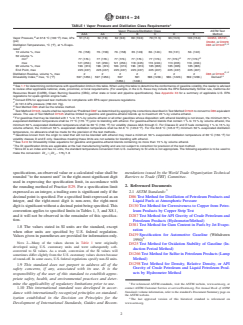
TABLE 1 Vapor Pressure and Distillation Class Requirements
Vapor Pressure/Distillation Class ASTM Test
AAA AA A B C D E Method
B
Vapor Pressure, at 37.8 °C (100 °F) max, kPa 51 (7.4) 54 (7.8) 62 (9.0) 69 (10.0) 79 (11.5) 93 (13.5) 103 (15.0) D4953, D5191,
(psi)
D5482, or D6378
D, E
Distillation Temperatures, °C (°F), at % Evapo- D86 or D7345
C
rated
10 volume %, max 70. (158) 70. (158) 70. (158) 65 (149) 60. (140.) 55 (131) 50. (122)
50 volume %
F G G
min 77 (170.) 77 (170.) 77 (170.) 77 (170.) 77 (170.) 77 (170.) 77 (170.)
max 121 (250.) 121 (250.) 121 (250.) 118 (245) 116 (240.) 113 (235) 110. (230.)
90 volume %, max 190. (374) 190. (374) 190. (374) 190. (374) 185 (365) 185 (365) 185 (365)
End Point, max 225 (437) 225 (437) 225 (437) 225 (437) 225 (437) 225 (437) 225 (437)
D, E
Distillation Residue, volume %, max 2 2 2 2 2 2 2 D86 or D7345
H I,J
Driveability Index, max, °C (°F) 597 (1250.) 597 (1250.) 597 591 586 (1230.) 580. (1220.) 569 (1200.) Derived
(1250.) (1240.)
A
See 1.7 for determining conformance with specification limits in this table. When using this table to determine the conformance of gasoline volatility, the reader is advised
to review other applicable national, state, provincial, or local requirements. (For example, in the U.S. these may include the EPA Substantially Similar rule, California Air
Resources Board (CARB), Clean Burning Gasoline (CBG), other state or local and pipeline specifications). See Appendix X3 for a summary of applicable U.S. EPA
regulations for spark-ignition engine fuels.
B
Consult EPA for approved test methods for compliance with EPA vapor pressure regulations.
C
At 101.3 kPa pressure (760 mm Hg).
D
Test Method D86 shall be the referee method.
E
Test Method D7345, results shall be reported as “Predicted D86” as determined by applying the corrections described in Test Method D7345 to convert to D86 equivalent
values. The use of Test Method D7345 shall be limited to gasoline and gasoline-ethanol blends up to maximum 20 % by volume ethanol.
F
For gasolines that may be blended with 1 % to 15 % by volume ethanol or all other gasolines whose disposition with ethanol blending is not known, the minimum 50 %
evaporated distillation temperature shall be 77 °C (170. °F) prior to blending with ethanol. For gasoline-ethanol blends that contain 1 % to 15 % by volume ethanol, the
minimum 50 % evaporated distillation temperature shall be 66 °C (150. °F) for volatility classes AAA through C. For Classes D and E fuels containing 1 % to 15 % by
volume ethanol, the minimum 50 % evaporated distillation temperature shall be 62.8 °C (145.0 °F). For the 62.8 °C (145.0 °F) minimum 50 % evaporated distillation
temperature, no allowance shall be made for the precision of the test methods.
G
Gasolines known from the origin to retail that will not be blended with ethanol may meet a minimum 50 % evaporated distillation temperature of 66 °C (150. °F) for
volatility classes D and E only. Gasolines meeting these limits are not suitable for blending with ethanol.
H
See 5.2.6 for Driveability Index equations for gasoline and gasoline-ethanol blends containing no more than 15 % by volume ethanol.
I
The DI specification limits are applicable at the fuel manufacturing facility and are not subject to correction for precision of the test method.
J
Since DI is an index and has no units, the standard temperature conversion from U.S. customary to SI units is not appropriate. The following equation is to be used to
make the conversion: DI 5sDI 2176d/1.8
°C °F
specifications, an observed value or a calculated value shall be mendations issued by the World Trade Organization Technical
rounded “to the nearest unit” in the right-most significant digit Barriers to Trade (TBT) Committee.
used in expressing the specification limit, in accordance with
2. Referenced Documents
the rounding method of Practice E29. For a specification limit
expressed as an integer, a trailing zero is significant only if the
2.1 ASTM Standards:
decimal point is specified. For a specified limit expressed as an D86 Test Method for Distillation of Petroleum Products and
integer, and the right-most digit is non-zero, the right-most
Liquid Fuels at Atmospheric Pressure
digit is significant without a decimal point being specified. This D130 Test Method for Corrosiveness to Copper from Petro-
convention applies to specified limits in Tables 1, 3, and X8.1, leum Products by Copper Strip Test
and it will not be observed in the remainder of this specifica- D287 Test Method for API Gravity of Crude Petroleum and
tion. Petroleum Products (Hydrometer/Method)
D381 Test Method for Gum Content in Fuels by Jet Evapo-
1.8 The values stated in SI units are the standard, except
ration
when other units are specified by U.S. federal regulation.
D439 Specification for Automotive Gasoline (Withdrawn
Values given in parentheses are provided for information only.
1990)
NOTE 2—Many of the values shown in Table 1 were originally
D525 Test Method for Oxidation Stability of Gasoline (In-
developed using U.S. customary units and were subsequently soft-
duction Period Method)
converted to SI values. As a result, conversion of the SI values will
D1266 Test Method for Sulfur in Petroleum Products (Lamp
sometimes differ slightly from the U.S. customary values shown because
Method)
of round-off. In some cases, U.S. federal regulations specify non-SI units.
D1298 Test Method for Density, Relative Density, or API
1.9 This standard does not purport to address all of the
Gravity of Crude Petroleum and Liquid Petroleum Prod-
safety concerns, if any, associated with its use. It is the
ucts by Hydrometer Method
responsibility of the user of this standard to establish appro-
priate safety, health, and environmental practices and deter-
mine the applicability of regulatory limitations prior to use.
For referenced ASTM standards, visit the ASTM website, www.astm.org, or
contact ASTM Customer Service at service@astm.org. For Annual Book of ASTM
1.10 This international standard was developed in accor-
Standards volume information, refer to the standard’s Document Summary page on
dance with internationally recognized principles on standard-
the ASTM website.
ization established in the Decision on Principles for the
The last approved version of this historical standard is referenced on
Development of International Standards, Guides and Recom- www.astm.org.
D4814 − 24
D2622 Test Method for Sulfur in Petroleum Products by D5599 Test Method for Determination of Oxygenates in
Wavelength Dispersive X-ray Fluorescence Spectrometry Gasoline by Gas Chromatography and Oxygen Selective
D2699 Test Method for Research Octane Number of Spark- Flame Ionization Detection
Ignition Engine Fuel D5842 Practice for Sampling and Handling of Fuels for
D2700 Test Method for Motor Octane Number of Spark- Volatility Measurement
Ignition Engine Fuel D5845 Test Method for Determination of MTBE, ETBE,
D2885 Test Method for Determination of Octane Number of TAME, DIPE, Methanol, Ethanol and tert-Butanol in
Spark-Ignition Engine Fuels by On-Line Direct Compari- Gasoline by Infrared Spectroscopy
son Technique D5854 Practice for Mixing and Handling of Liquid Samples
D3120 Test Method for Trace Quantities of Sulfur in Light of Petroleum and Petroleum Products
Liquid Petroleum Hydrocarbons by Oxidative Microcou- D6122 Practice for Validation of the Performance of Multi-
lometry variate Online, At-Line, Field and Laboratory Infrared
D3231 Test Method for Phosphorus in Gasoline Spectrophotometer, and Raman Spectrometer Based Ana-
D3237 Test Method for Lead in Gasoline by Atomic Absorp- lyzer Systems
tion Spectroscopy D6299 Practice for Applying Statistical Quality Assurance
D3341 Test Method for Lead in Gasoline—Iodine Mono- and Control Charting Techniques to Evaluate Analytical
chloride Method (Withdrawn 2022) Measurement System Performance
D3831 Test Method for Manganese in Gasoline By Atomic D6300 Practice for Determination of Precision and Bias
Absorption Spectroscopy Data for Use in Test Methods for Petroleum Products,
D4052 Test Method for Density, Relative Density, and API Liquid Fuels, and Lubricants
Gravity of Liquids by Digital Density Meter D6304 Test Method for Determination of Water in Petro-
D4057 Practice for Manual Sampling of Petroleum and leum Products, Lubricating Oils, and Additives by Cou-
Petroleum Products lometric Karl Fischer Titration
D4175 Terminology Relating to Petroleum Products, Liquid D6378 Test Method for Determination of Vapor Pressure
Fuels, and Lubricants (VP ) of Petroleum Products, Hydrocarbons, and
X
D4176 Test Method for Free Water and Particulate Contami- Hydrocarbon-Oxygenate Mixtures (Triple Expansion
nation in Distillate Fuels (Visual Inspection Procedures) Method)
D4177 Practice for Automatic Sampling of Petroleum and D6469 Guide for Microbial Contamination in Fuels and Fuel
Petroleum Products Systems
D4306 Practice for Aviation Fuel Sample Containers for D7039 Test Method for Sulfur in Gasoline, Diesel Fuel, Jet
Tests Affected by Trace Contamination Fuel, Kerosine, Biodiesel, Biodiesel Blends, and
D4806 Specification for Denatured Fuel Ethanol for Blend- Gasoline-Ethanol Blends by Monochromatic Wavelength
ing with Gasolines for Use as Automotive Spark-Ignition Dispersive X-ray Fluorescence Spectrometry
Engine Fuel D7220 Test Method for Sulfur in Automotive, Heating, and
D4815 Test Method for Determination of MTBE, ETBE, Jet Fuels by Monochromatic Energy Dispersive X-ray
TAME, DIPE, tertiary-Amyl Alcohol and C to C Alco- Fluorescence Spectrometry
1 4
hols in Gasoline by Gas Chromatography D7345 Test Method for Distillation of Petroleum Products
D4953 Test Method for Vapor Pressure of Gasoline and and Liquid Fuels at Atmospheric Pressure (Micro Distil-
Gasoline-Oxygenate Blends (Dry Method) lation Method)
D5059 Test Methods for Lead and Manganese in Gasoline D7667 Test Method for Determination of Corrosiveness to
by X-Ray Fluorescence Spectroscopy Silver by Automotive Spark-Ignition Engine Fuel—Thin
D5188 Test Method for Vapor-Liquid Ratio Temperature Silver Strip Method
Determination of Fuels (Evacuated Chamber and Piston D7671 Test Method for Corrosiveness to Silver by Automo-
Based Method) tive Spark–Ignition Engine Fuel–Silver Strip Method
D5191 Test Method for Vapor Pressure of Petroleum Prod- D7757 Test Method for Silicon in Gasoline and Related
ucts and Liquid Fuels (Mini Method) Products by Monochromatic Wavelength Dispersive
D5453 Test Method for Determination of Total Sulfur in X-ray Fluorescence Spectrometry
Light Hydrocarbons, Spark Ignition Engine Fuel, Diesel D7923 Test Method for Water in Ethanol and Hydrocarbon
Engine Fuel, and Engine Oil by Ultraviolet Fluorescence Blends by Karl Fischer Titration
D5482 Test Method for Vapor Pressure of Petroleum Prod- D8148 Test Method for Spectroscopic Determination of
ucts and Liquid Fuels (Mini Method—Atmospheric) Haze in Fuels
D5500 Test Method for Vehicle Evaluation of Unleaded D8340 Practice for Performance-Based Qualification of
Automotive Spark-Ignition Engine Fuel for Intake Valve Spectroscopic Analyzer Systems
Deposit Formation E29 Practice for Using Significant Digits in Test Data to
D5598 Test Method for Evaluating Unleaded Automotive Determine Conformance with Specifications
Spark-Ignition Engine Fuel for Electronic Port Fuel Injec- E691 Practice for Conducting an Interlaboratory Study to
tor Fouling Determine the Precision of a Test Method
D4814 − 24
2.2 Government Regulations: 3.2.5.1 Discussion—Types of blending facilities include, but
United States Code of Federal Regulations, Title 16 Part are not limited to, terminals, storage tanks, plants, tanker
306—Automotive Fuel Ratings, Certification and Posting trucks, retail outlets, and marine vessels.
United States Code of Federal Regulations, Title 40
3.2.6 fuel manufacturing facility, n—any facility where fuels
United States Code of Federal Regulations, Title 40 Part
are produced, imported, or recertified.
3.2.6.1 Discussion—Fuel manufacturing facilities include
Federal Register Vol. 73, April 25, 2008, pp. 22281
refineries, fuel blending facilities, transmix processing
Federal Register Vol. 84, June 10, 2019, pp. 26980
facilities, import facilities, and any facility where fuel is
California Code of Regulations, Title 17, §60100 – §60114
recertified.
2.3 Other Documents:
3.2.7 gasoline, n—a volatile mixture of liquid
API Recommended Practice 1640 Product Quality in Light
7 hydrocarbons, generally containing small amounts of
Product Storage and Handling Operations
additives, suitable for use as a fuel in spark-ignition, internal
CRC Report No. 638 Intermediate-Temperature Volatility
8 combustion engines.
Program, 2003
3.2.8 gasoline-alcohol blend, n—a fuel consisting primarily
CRC Report No. 666 Intermediate-Temperature E15 Cold-
start and Warm-up Vehicle Driveability Program, 2013 of gasoline along with a substantial amount (more than 0.35 %
by mass oxygen, or more than 0.15 % by mass oxygen if
CRC Report No. 667 Diesel Fuel Storage and Handling
Guide, September 2014 methanol is the only oxygenate) of one or more alcohols.
Monograph 12 (MONO12) U.S. Reformulated Spark-
3.2.9 gasoline-ethanol blend, n—a fuel consisting primarily
Ignition Engine Fuel and the U.S. Renewable Fuel Stan-
of gasoline along with a substantial amount (more than 0.35 %
dard
by mass oxygen) of ethanol. D4806
3.2.10 gasoline-ether blend, n—a fuel consisting primarily
3. Terminology
of gasoline along with a substantial amount (more than 0.35 %
3.1 For general terminology, refer to Terminology D4175.
by mass oxygen) of one or more ethers.
3.2 Definitions:
3.2.11 gasoline-oxygenate blend, n—a fuel consisting pri-
3.2.1 antiknock index, n—the arithmetic average of the
marily of gasoline along with a substantial amount (more than
Research octane number (RON) and Motor octane number
0.35 % by mass oxygen, or more than 0.15 % by mass oxygen
(MON), that is, (RON + MON) ⁄2.
if methanol is the only oxygenate) of one or more oxygenates.
3.2.2 driveability, n—in vehicles equipped with internal
3.2.12 oxygenate, n—a molecule composed solely of
combustion engines, the quality of a vehicle’s performance
carbon, hydrogen, and oxygen.
characteristics under a range of conditions as perceived by the
3.2.12.1 Discussion—The fuel described in this standard
operator.
may contain oxygenates.
3.2.2.1 Discussion—The operating conditions may include
3.2.12.2 Discussion—In this standard, the oxygenates are
cold starting and warm-up, acceleration, idling, and hot start.
low molecular weight alcohols or ethers.
The performance characteristics may include engine hesitation,
3.2.13 refinery, n—a facility where fuels are produced from
stumble, and stall.
feedstocks, including crude oil or renewable feedstocks,
3.2.3 dry vapor pressure equivalent (DVPE), n—value cal-
through physical or chemical processing equipment.
culated by a defined correlation equation that is expected to be
3.2.14 water tolerance, n—the ability to absorb small quan-
comparable to the vapor pressure value obtained by Test
Method D4953, Procedure A. D4953 tities of water without creating a separate phase in the fuel.
3.2.14.1 Discussion—Improved water tolerance is the abil-
3.2.4 finished fuel, n—a homogeneous mixture of blend-
ity to absorb larger quantities of water without phase separa-
stocks and fuel additives meeting all specification and regula-
tion.
tory requirements for its intended use at the location where
sold.
3.3 Applicability—To determine when a fuel contains a
3.2.5 fuel blending facility, n—any facility, other than a substantial amount of an oxygenate, a gasoline-oxygenate
refinery or transmix processing facility where fuel is produced blend is defined as a fuel that contains more than 0.35 % by
by combining blendstocks or by combining blendstocks with mass oxygen, or more than 0.15 % by mass oxygen if methanol
fuel. is the only oxygenate. The definitions in this section do not
apply to fuels that contain an oxygenate as the primary
component; for example, fuel methanol (M85).
Available from U.S. Government Printing Office, Superintendent of
NOTE 3—The criteria in 3.3 were selected with consideration given to
Documents, 732 N. Capitol St., NW, Mail Stop: SDE, Washington, DC 20401.
current oxygenate levels in the marketplace, state labeling practices, and
Available from Barclays, 50 California Street, San Francisco, CA 94111.
7 consistency with U.S. federal legislation and regulations.
Available from American Petroleum Institute (API), 1220 L. St., NW,
NOTE 4—Refer to Test Method D4815 to calculate the mass oxygen
Washington, DC 20005-4070, http://www.api.org/pubs.
content of a fuel using oxygenate concentration in percent by mass. Refer
Available from Coordinating Research Council (CRC), 5755 North Point Pkwy
#265, Alpharetta, GA 30022, http://www.crcao.org. to Appendix X4 to calculate mass oxygen content of a fuel using
Available from ASTM International Headquarters. oxygenate concentration in percent by volume.
D4814 − 24
A,B
TABLE 2 Detailed Requirements for all Volatility Classes
Property Limit ASTM Test Method
C
Lead content, max, g/L (g/U.S. gal) 0.013 (0.05) D3237 or D5059
D1266, D2622, D3120,
Sulfur, max, % by mass 0.0080
D5453, D7039, or D7220
D E
Manganese content, max, mg/L (mg/U.S. gal) See 6.3 D3831
Copper strip corrosion, max No. 1 D130
Silver strip corrosion, max No. 1 D7667 or D7671
Solvent-washed gum content, mg/100 mL, max 5 D381
Oxidation stability, minimum, minutes 240. D525
A
See Appendix X1 for information on Antiknock Index.
B
See X3.7 for information on U.S. Environmental Protection Agency regulations for benzene in gasoline.
C
See Appendix X3 for U.S. EPA maximum limits for lead and phosphorus contents in motor vehicle fuel (X3.2.1). Since many jurisdictions outside the U.S. have a different
maximum lead content, the reader is advised to review other applicable national, state, provincial, or local requirements.
D
See X3.8 for information on U.S. EPA and California Air Resources Board regulations for manganese in gasoline.
E
See Note 8.
4. Ordering Information expectation that the 6 h minimum temperature will be below
th
this value during a month. The 90 percentile 1 h maximum
4.1 The purchasing agency shall:
temperature is the highest temperature expected during 90 % of
4.1.1 State the antiknock index as agreed upon with the
the days and provides information relative to peak vehicle
seller (see 5.3),
operating temperatures during warm and hot weather.
4.1.2 Indicate the season and locality in which the fuel is to
th
5.2.1.1 For areas above sea level, the 10 percentile 6 h
be used (see 5.2 and Table 4),
minimum temperature should be increased by 3.6 °C ⁄1000 m
4.1.3 Indicate the lead level required (Table 2), and
th
(2 °F ⁄1000 ft) of altitude, and the 90 percentile 1 h maximum
4.1.4 State the concentration and types of oxygenates pres-
should be increased by 4.4 °C ⁄1000 m (2.4 °F ⁄1000 ft) of
ent as agreed upon with the seller.
altitude before comparing them to the sea level temperature.
These corrections compensate for changes in fuel volatility
5. Performance Requirements
caused by changes in barometric pressure due to altitude.
5.1 Some requirements and test methods applicable to
5.2.2 Table 4 Development —This volatility schedule was
automotive spark-ignition engine fuel depend on whether the
th
developed based on two decades (1996 – 2015) of 90 percen-
fuel is a gasoline, or a gasoline-oxygenate blend. Test Methods
tile 1 h maximum and 6 h minimum temperatures from ap-
D4815 and D5599, gas chromatographic test methods, are the
proximately 300 weather stations and adjusted for altitude. The
recommended procedures to detect the types and amounts of
th th
90 percentile 1 h maximum temperature and 10 percentile
oxygenates. Once the type of fuel is known, the appropriate
6 h minimum altitude adjusted temperatures were used to
requirements and test methods can be identified by reference to
define the volatility classes (vapor pressure class and tempera-
Table 1, Table 3, and Section 7.
ture for a Vapor/Liquid Ratio of 20) for a state or area within
5.2 Volatility of fuels is varied for seasonal climatic changes
a state for each month. While this table was designed for the
and conformance to U.S. EPA volatility regulations by provid-
U.S., the approach utilized can be applied to other geographical
ing seven vapor pressure/distillation classes and six vapor lock
areas for seasonal gasoline volatility adjustments.
protection classes for fuel. Volatility of fuel is specified by an
5.2.2.1 In addition to the ambient temperature
alphanumeric designation that uses a letter from Table 1 and a
determinations, other factors that were considered included,
number from Table 3.
but were not limited to, governmental regulations, geographic
5.2.1 The seasonal and geographic distribution of the com-
proximity, altitude correction in accordance with 5.2.1.1, and
bined vapor pressure/distillation-vapor lock classes is shown in
regional supply concerns. These recommended classes were
Table 4. For sea-level areas outside of the United States, the
then reviewed by a panel of experts to determine if the
following ambient temperatures are for guidance in selecting
infrastructure and distribution systems could support the rec-
the appropriate alphanumeric designation:
ommended class. Adjustments were made when necessary.
th th
Alphanumeric 10 Percentile 90 Percentile 5.2.3 Table 4 Application—In the U.S., spark-ignition en-
Volatility 6 h Minimum 1 h Maximum
gine fuel volatility shall meet the schedule and limits in Table
Designation Daily Temperature, °C (°F) Daily Temperature, °C (°F)
3 and Table 4 on the first day of the month at the point of bulk
A-1 >16 (60.) $43 (110.)
B-2 >10. (50.) <43 (110.) distribution intended for sale to sites dispensing fuel to the end
C-3 >4 (40.) <36 (97)
user during the month. For example, terminals loading tanker
D-4 > –7 (20.) <29 (85)
trucks should be dispensing fuel in conformance with the
E-5 # –7 (20.) <21 (69)
in-month volatility requirements on the first day of the month.
The 6 h minimum temperature is the highest temperature of
the six coldest consecutive hourly temperature readings of a
24 h day. The 6 h minimum temperature provides information
For additional information on the development of Table 4, see TR4-EB,
on the cold-soak temperature experienced by a vehicle. The
Methodology Used to Update the Gasoline Volatility Schedule for US Seasonal and
th
10 percentile of this temperature statistic indicates a 10 % Geographic Classes, available from ASTM International.
D4814 − 24
A, B, C
TABLE 3 Vapor Lock Protection Class Requirements
Vapor Lock Protection Class
ASTM Test Method
1 2 3 4 5 6
Temperature, °C (°F) for a Vapor- 54 (129) 50. (122) 47 (116) 42 (107) 39 (102) 35 (95) D5188
Liquid Ratio of 20, min
Special Requirements for Area V 54 (129) 50. (122) 47 (116) 47 (116) 41 (105) 35 (95) D5188
of D4814 Temperature, °C (°F) for
a Vapor-Liquid Ratio of 20, min
A
See 1.7 for determining conformance with numerical specification limits in this table. When using this table to determine the conformance of the temperature for a
vapor-liquid ratio of 20, the reader is advised to review other applicable national, state, provincial, or local requirements (for example, EPA’s “Substantially Similar” rule,
CARB regulations, and other state and local regulations).
B
Gasoline, or blend of oxygenate and gasoline as sold to the consumer, shall meet these limits. Certain gasolines meeting these limits of this table may not be suitable
for blending with ethanol.
C
Gasolines and gasoline-oxygenate blends sold at retail sites located in Area V shown in Fig. X1.2 (generally high elevations) shall use the special limits shown in Row
2 of this table, regardless of ethanol content.
Refiners, importers, shippers, and distributors should anticipate classes a blend of volatility classes is to be expected. However,
this schedule for conformance with this specification. for demonstrating conformance with this standard for bulk
5.2.3.1 At sites dispensing fuel to the end user, including fuel, a single volatility grade’s limits shall be used, not a
retail locations, conformance with the in-month volatility combination of limits from several classes.
th
requirements shall occur no later than the 16 day of the month 5.2.5 Tables 5-7 contain specific geographic requirements.
st
(see below for summer exceptions in the U.S.). From the 1 Consult U.S. EPA regulations under 40 CFR Part 1090 for
th
through the 15 day of the month, the prior or current month Federal 7.8 psi vapor pressure areas, RFG covered areas, and
volatility properties may be used (see exception for U.S. Federally approved SIP areas.
summertime below). This recognizes the variable turnover 5.2.6 Driveability Index (DI) is intended to provide control
time needed for supplies to the end user to be depleted and of distillation parameters and ethanol content that influence
replenished. cold start and warm-up driveability. It is a function of the 10 %,
5.2.3.2 The 1.0 psi vapor pressure waiver for gasoline- 50 %, and 90 % evaporated distillation temperatures measured
ethanol blends is not incorporated into Specification D4814. by Test Methods D86 or D7345 and the ethanol content
Many states provide a 1.0 psi vapor pressure waiver for measured by the test methods shown in 7.1.9. Equations are
gasoline-ethanol blends; however, vapor pressure limits for provided for gasoline and gasoline-ethanol blends containing
gasoline-ethanol blends vary among states and in areas with up to 10 % by volume ethanol and for gasoline-ethanol blends
Federally approved State Implementation Plans (SIPs). Contact containing greater than 10 % by volume and no more than
specific states to determine their vapor pressure limits for 15 % by volume ethanol when distillation temperatures are
gasoline-ethanol blends. determined in Celsius or Fahrenheit degrees.
5.2.3.3 Summer Exceptions—U.S. EPA limits vapor pres- 5.2.6.1 For fuels containing 0 % to 10 % by volume ethanol:
sure for gasoline for the regulatory control period of May 1 - For degrees Celsius:
September 15 at the refinery and terminal level and from June
Driveability Index ~DI ! 5 1.5 T 13.0 T 1 1.0 T
C 10 50 90
1 – September 15 at retail. Refer to 40 CFR 1090 for specific
11.33× Ethanol % by Volume (1)
~ !
requirements including, but not limited to, timing, gasoline-
ethanol blend vapor pressure waivers, and various volatility For degrees Fahrenheit:
limits for different gasoline or geographical areas. See Appen-
Driveability Index ~DI ! 5 1.5 T 13.0 T 1 1.0 T
F 10 50 90
dix X3 for a summary of U.S. EPA volatility and other fuel
12.4 × ~Ethanol % by Volume! (2)
quality regulations.
5.2.6.2 For fuels greater than 10 % and no more than 15 %
5.2.4 Multi-Class Designation—Multi-class volatility desig-
by volume ethanol:
nations are created to allow for transitioning or anticipating the
For degrees Celsius:
transition for seasonal and geographical volatility changes.
Allowance is made for the fuel distribution system to use up
Driveability Index ~DI ! 5 1.5 T 13.0 T 11.0 T 1
C 10 50 90
the prior month’s volatility class fuel. This depletion of liquid
~1.33 1 @~Ethanol % by Volume
inventory is facilitated by a multi-class option for a month with
2 10 ⁄5 × 5.26
! # ~
a volatility change from the prior month. For months where
2 1.33 × Ethanol % by Volume (3)
!! ~ !
non-adjacent multi-class volatility designation are listed, either
listed class or intermediate class designation are acceptable.
For degrees Fahrenheit:
The option may be exercised by the seller, but bulk inventories
Driveability Index ~DI ! 5 1.5 T 13.0 T 11.0 T 1
F 10 50 90
must still meet the required volatility at the first of the month.
2.4 1 Ethanol % by Volume
~ @~
For example, in Table 4, the volatility for April in Alabama
2 10 ⁄5 × 9.49
shows C-3/A-3 which means either a C-3, B-3, or A-3 volatility ! # ~
class is allowed. For March, which is D-4/C-3, either volatility
2 2.4!! × ~Ethanol % by Volume! (4)
class is acceptable. As storage is transitioned between different
D4814 − 24
A
TABLE 4 Schedule of U.S. Seasonal and Geographical Volatility Classes
NOTE 1—See 5.2 for information on the development and use of the table.
Sept. Sept.
B
State Jan. Feb. Mar. Apr. May June July Aug. Oct. Nov. Dec.
1–15 16–30
Alabama D-4 D-4 D-4/C-3 C-3/A-3 A-3 (C-3) A-3 A-2 A-2 A-3 A-3/C-3 C-3 C-3/D-4 D-4
Alaska E-6 E-6 E-6 E-6 E-6/D-4 D-4 D-4 D-4 D-4 D-4/E-6 E-6 E-6 E-6
C
Arizona:
N 34° D-4 D-4/C-3 C-3 C-3/A-2 A-2 (B-2) A-1 A-1 A-2 A-2 A-2/B-2 B-2/C-3 C-3/D-4 D-4
Latitude and
E111°
Longitude
C C C C
Remainder of D-4 D-4/C-3 C-3/B-2 B-2/A-2 A-2 (B-2) A-1 A-1 A-1 A-2 A-2 A-2/B-2 B-2/C-3 C-3/D-4
State
Arkansas E-5/D-4 D-4 D-4/C-3 C-3/A-3 A-3 (C-3) A-3 A-2 A-2 A-3 A-3/C-3 C-3 C-3/D-4 D-4/E-5
C ,D
California:
C C C C
North Coast E-5/D-4 D-4 D-4 D-4/A-3 A-3 (C-3) A-2 A-2 A-2 A-2 A-2/B-2 B-2/C-3 C-3/D-4 D-4/E-5
C C C C
South Coast D-4 D-4 D-4/C-3 C-3/A-3 A-3 (C-3) A-2 A-2 A-2 A-2 A-2/B-2 B-2/C-3 C-3/D-4 D-4
C C C C
Southeast D-4 D-4/C-3 C-3/B-2 B-2/A-2 A-2 (B-2) A-1 A-1 A-1 A-1 A-1 A-1/B-2 B-2/C-3 C-3/D-4
C C C C
Interior E-5/D-4 D-4 D-4/C-3 C-3/A-3 A-3 (C-3) A-2 A-2 A-2 A-2 A-2/B-2 B-2/C-3 C-3/D-4 D-4/E-5
C C C C
Colorado D-4 D-4/C-3 C-3 C-3/A-3 A-2 (C-3) A-1 A-1 A-2 A-2 A-2/B-2 B-2/C-3 C-3/D-4 D-4
C C C C
Connecticut E-5 E-5 E-5/D-4 D-4/A-4 A-4 (D-4) A-3 A-3 A-3 A-3 A-3/D-4 D-4 D-4/E-5 E-5
C C C C
Delaware E-5 E-5 E-5/D-4 D-4/A-4 A-4 (D-4) A-3 A-3 A-3 A-3 A-3/C-3 C-3/D-4 D-4/E-5 E-5
C C C C
District of Columbia E-5 E-5/D-4 D-4 D-4/A-3 A-3 (C-3) A-3 A-3 A-3 A-3 A-3/C-3 C-3/D-4 D-4 D-4/E-5
Florida D-4 D-4 D-4/C-3 C-3/A-3 A-3 (C-3) A-2 A-2 A-3 A-3 A-3/C-3 C-3 C-3/D-4 D-4
Georgia D-4 D-4 D-4/C-3 C-3/A-3 A-3 (C-3) A-2 A-2 A-2 A-3 A-3/C-3 C-3 C-3/D-4 D-4
Hawaii C-3 C-3 C-3 C-3 C-3 C-3 C-3 C-3 C-3 C-3 C-3 C-3 C-3
Idaho:
N 46° E-5 E-5 E-5/D-4 D-4/A-3 A-3 (C-3) A-3 A-2 A-2 A-2 A-2/C-3 C-3/D-4 D-4/E-5 E-5
Latitude
S 46° E-5 E-5/D-4 D-4 D-4/A-3 A-3 (C-3) A-2 A-2 A-2 A-2 A-2/B-2 B-2/D-4 D-4/E-5 E-5
Latitude
Illinois:
C C C C
N 40° E-5 E-5 E-5/D-4 D-4/A-3 A-3 (C-3) A-3 A-3 A-3 A-3 A-3/C-3 C-3/D-4 D-4/E-5 E-5
Latitude
C C C C
S 40° E-5 E-5/D-4 D-4 D-4/A-3 A-3 (C-3) A-3 A-3 A-3 A-3 A-3/C-3 C-3/D-4 D-4 D-4/E-5
Latitude
C C C C C
Indiana E-5 E-5/D-4 D-4 D-4/A-3 A-3 (C-3) A-3 A-3 A-3 A-3 A-3/C-3 C-3/D-4 D-4/E-5 E-5
Iowa E-5 E-5/D-4 D-4 D-4/A-3 A-3 (C-3) A-3 A-3 A-3 A-3 A-3/C-3 C-3/D-4 D-4/E-5 E-5
C C C C C
Kansas E-5 E-5/D-4 D-4/C-3 C-3/A-2 A-2 (C-3) A-2 A-2 A-2 A-2 A-2/B-2 B-2/C-3 C-3/D-4 D-4/E-5
C C C C
Kentucky E-5 E-5/D-4 D-4 D-4/A-3 A-3 (C-3) A-3 A-3 A-2 A-3 A-3/C-3 C-3/D-4 D-4 D-4/E-5
Louisiana D-4 D-4 D-4/C-3 C-3/A-3 A-3 (C-3) A-2 A-2 A-2 A-3 A-3/C-3 C-3 C-3/D-4 D-4
Maine E-5 E-5 E-5 E-5/A-4 A-4 (D-4) A-3 A-3 A-3 A-3 A-4/D-4 D-4 D-4/E-5 E-5
C C C C
Maryland E-5 E-5/D-4 D-4 D-4/A-4 A-3 (D-4) A-3 A-3 A-3 A-3 A-3/C-3 C-3/D-4 D-4/E-5 E-5
C C C C
Massachusetts E-5 E-5 E-5/D-4 D-4/A-4 A-4 (D-4) A-3 A-3 A-3 A-3 A-3/D-4 D-4 D-4/E-5 E-5
C
Michigan E-5 E-5 E-5/D-4 D-4/A-4 A-4 (D-4) A-3 A-3 A-3 A-3 A-3/D-4 D-4 D-4/E-5 E-5
Minnesota E-5 E-5 E-5/D-4 D-4/A-4 A-4 (D-4) A-3 A-3 A-3 A-3 A-3/C-3 C-3/D-4 D-4/E-5 E-5
Mississippi D-4 D-4 D-4/C-3 C-3/A-3 A-3 (C-3) A-3 A-2 A-2 A-3 A-3/C-3 C-3 C-3/D-4 D-4
C C C C C
Missouri E-5 E-5/D-4 D-4 D-4/A-3 A-3 (C-3) A-3 A-2 A-2 A-3 A-3/C-3 C-3/D-4 D-4 D-4/E-5
Montana E-5 E-5/D-4 D-4 D-4/A-3 A-3 (C-3) A-3 A-2 A-2 A-2 A-2/C-3 C-3/D-4 D-4/E-5 E-5
Nebraska E-5 E-5 E-5/D-4 D-4/A-3 A-3 (C-3) A-2 A-2 A-2 A-2 A-2/B-2 B-2/C-3 C-3/D-4 D-4/E-5
Nevada:
C C C C
N 38° Latitude E-5/D-4 D-4 D-4 D-4/A-3 A-2 (C-3) A-2 A-1 A-2 A-2 A-2/B-2 B-2/C-3 C-3/D-4 D-4/E-5
S 38° Latitude D-4 D-4/C-3 C-3 C-3/A-2 A-2 (B-2) A-1 A-1 A-1 A-2 A-2/B-2 B-2/C-3 C-3/D-4 D-4
C C C C
New Hampshire E-5 E-5 E-5/D-4 D-4/A-4 A-4 (D-4) A-3 A-3 A-3 A-4 A-4/D-4 D-4 D-4/E-5 E-5
C C C C
New Jersey E-5 E-5 E-5/D-4 D-4/A-4 A-3 (D-4) A-3 A-3 A-3 A-3 A-3/D-4 D-4 D-4/E-5 E-5
New Mexico:
N 34° Latitude D-4 D-4/C-3 C-3 C-3/A-2 A-2 (B-2) A-1 A-1 A-2 A-2 A-2/B-2 B-2/C-3 C-3/D-4 D-4
S 34° Latitude D-4/C-3 C-3 C-3/B-2 B-2/A-2 A-2 (B-2) A-1 A-1 A-1 A-2 A-2/B-2 B-2/C-3 C-3 C-3/D-4
C C C C
New York E-5 E-5 E-5/D-4 D-4/A-4 A-4 (D-4) A-3 A-3 A-3 A-3 A-3/D-4 D-4 D-4/E-5 E-5
North Carolina D-4 D-4 D-4 D-4/A-3 A-3 (C-3) A-2 A-3 A-3 A-3 A-3/C-3 C-3/D-4 D-4 D-4
North Dakota E-5 E-5 E-5/D-4 D-4/A-4 A-4 (D-4) A-3 A-2 A-2 A-3 A-3/C-3 C-3/D-4 D-4/E-5 E-5
Ohio E-5 E-5/D-4 D-4 D-4/A-4 A-3 (D-4) A-3 A-3 A-3 A-3 A-3/C-3 C-3/D-4 D-4/E-5 E-5
Oklahoma E-5/D-4 D-4 D-4/C-3 C-3/A-3 A-2 (C-3) A-2 A-2 A-2 A-2 A-2/B-2 B-2/C-3 C-3/D-4 D-4/E-5
Oregon:
E122° Longitude E-5 E-5/D-4 D-4 D-4/A-4 A-3 (D-4) A-2 A-2 A-2 A-2 A-2/C-3 C-3/D-4 D-4/E-5 E-5
C C C C
W 122° Longitude E-5 E-5/D-4 D-4 D-4/A-4 A-3 (D-4) A-3 A-2 A-2 A-2 A-3/C-3 C-3/D-4 D-4/E-5 E-5
C C C
Pennsylvania E-5 E-5 E-5/D-4 D-4/A-3 A-3 (D-4) A-3 A-3 A-3 A-3 A-3/D-4 D-4 D-4/E-5 E-5
C C C
Rhode Island E-5 E-5 E-5/D-4 D-4/A-4 A-4 (D-4) A-3 A-3 A-3 A-4 A-4/D-4 D-4 D-4/E-5 E-5
South Carolina D-4 D-4 D-4/C-3 C-3/A-3 A-3 (C-3) A-2 A-2 A-3 A-3 A-3/C-3 C-3/D-4 D-4 D-4
South Dakota E-5 E-5 E-5/D-4 D-4/A-3 A-3 (C-3) A-2 A-2 A-2 A-2 A-2/B-2 B-2/C-3 C-3/D-4 D-4/E-5
Tennessee E-5/D-4 D-4 D-4 D-4/A-3 A-3 (C-3) A-3 A-2 A-2 A-3 A-3/C-3 C-3 C-3/D-4 D-4/E-5
C
Texas:
C C C C
E 99° Longitude D-4 D-4/C-3 C-3 C-3/A-2 A-2 (C-3) A-2 A-2 A-2 A-2 A-2/B-2 B-2/C-3 C-3/D-4 D-4
C C C C
W 99° Longitude D-4 D-4/C-3 C-3/B-2 B-2/A-2 A-2 (B-2) A-1 A-2 A-2 A-2 A-2/B-2 B-2/C-3 C-3 C-3/D-4
C C C C
Utah E-5/D-4 D-4 D-4 D-4/A-3 A-2 (C-3) A-1 A-1 A-2 A-2 A-2/B-2 B-2/C-3 C-3/D-4 D-4/E-5
D4814 − 24
TABLE 4 Continued
Sept. Sept.
B
State Jan. Feb. Mar. Apr. May June July Aug. Oct. Nov. Dec.
1–15 16–30
Vermont E-5 E-5 E-5/D-4 D-4/A-4 A-4 (D-4) A-3 A-3 A-3 A-4 A-4/D-4 D-4 D-4/E-5 E-5
C C C C
Virginia E-5 E-5/D-4 D-4 D-4/A-3 A-3 (C-3) A-3 A-3 A-3 A-3 A-3/C-3 C-3/D-4 D-4 D-4/E-5
Washington:
E 122° Longitude E-5 E-5 E-5/D-4 D-4/A-4 A-3 (D-4) A-3 A-2 A-2 A-3 A-3/C-3 C-3/D-4 D-4/E-5 E-5
W 122° Longitude E-5 E-5 E-5/D-4 D-4/A-4 A-4 (D-4) A-4 A-3 A-3 A-4 A-4/D-4 D-4 D-4/E-5 E-5
West Virginia E-5 E-5/D-4 D-4 D-4/A-4 A-3 (D-4) A-3 A-3 A-3 A-3 A-3/C-3 C-3/D-4 D-4/E-5 E-5
C C C C
Wisconsin E-5 E-5 E-5/D-4 D-4/A-4 A-4 (D-4) A-3 A-3 A-3 A-3 A-3/C-3 C-3/D-4 D-4/E-5 E-5
Wyoming E-5 E-5/D-4 D-4 D-4/A-3 A-3 (C-3) A-2 A-2 A-2 A-2 A-2/B-2 B-2/C-3 C-3/D-4 D-4/E-5
A
For the period May 1 through September 15, the specified vapor pressure classes shall meet U.S. EPA volatility regulations. Reformulated gasoline is limited to a
maximum vapor pressure of 7.4 psi during the summer EPA regulatory control period. Under EPA regulations at 40 CFR 1090.215(b), from May 1 through September 15,
certain gasoline-ethanol blends in conventional gasoline areas are allowed a 1.0 psi higher vapor pressure. Other requirements apply to the ethanol waiver. See Appendix
X3 for additional U.S. federal volatility and other regulations. The 1.0 psi vapor pressure waiver for gasoline-ethanol blends is not incorporated into Specification D4814.
Many states provide a 1.0 psi vapor pressure waiver for gasoline-ethanol blends; however, vapor pressure limits for gasoline-ethanol blends vary among states and in
areas with Federally approved State Implementation Plans (SIPs). Contact specific states to determine their vapor pressure limits for gasoline-ethanol blends.
B
Values in parentheses are permitted for retail stations and other end users.
C
See Tables 5-7 for specific area requirements. Consult U.S. Environmental Protection Agency regulations under 40 CFR Part 1090 for Federal 7.8 psi vapor pressure
areas, RFG covered areas, and Federally approved SIP areas.
D
Details of State Climatological Division by CARB air basin and county as indicated (Descriptions of the California Air Basins are found in the California Code of
Regulations):
California, North Coast—CARB North Coast, Lake County, San Francisco Bay Area, and North Central Coast Air Basins (Alameda, Contra Costa, Del Norte, Humboldt,
Lake, Marin, Mendocino, Monterey, Napa, San Benito, San Francisco, San Mateo, Santa Clara, Santa Cruz, Solano, Sonoma, and Trinity Counties and part of Solano
County).
California, interior—CARB Northeast Plateau, Sacramento Valley, Mountain Counties, Lake Tahoe, and San Joaquin Valley Air Basins (Amador, Butte, Calaveras,
Colusa, El Dorado, Fresno, Glenn, Kings, Lassen, Madera, Mariposa, Merced, Modoc, Nevada, Placer, Plumas, Sacramento, San Joaquin, Shasta, Sierra, Siskiyou,
Stanislaus, Sutter, Tehama, Tulare, Tuolumne, Yolo, and Yuba Counties, and parts of Kern and Solano Counties).
California, South Coast—CARB South Central Coast, San Diego, and South Coast Air Basins (Los Angeles, Orange, San Diego, San Luis Obispo, Santa Barbara, and
Ventura Counties, and parts of Riverside and San Bernardino Counties).
California, Southeast—CARB Great Basin Valleys, Salton Sea, and Mojave Desert Air Basins (Alpine, Imperial, Inyo, and Mono Counties, and parts of Kern, Los Angeles,
Riverside, San Bernardino Counties).
A
TABLE 5 U.S. Ozone Nonattainment Areas Requiring Volatility Class AA
NOTE 1—See 40 CFR Part 1090.215(a)(2) for Federal 7.8 psi vapor pressure areas during the summer EPA regulatory control period.
Colorado—Adams, Arapahoe, Boulder, Broomfield, Denver, Douglas, Jefferson,
Larimer (part), and Weld (part) Counties
Nevada—Washoe County
Oregon—Clackamas (part), Marion (part), Multnomah (part), Polk (part), and
Washington (part) counties
Texas—Hardin, Jefferson, and Orange Counties
Utah—Davis and Salt Lake Counties
A
Refer to Tables 3 and 4 for Vapor Lock Protection Requirements.
D4814 − 24
TABLE 6 U.S. Federal RFG Areas Requiring Volatility TABLE 7 U.S. Federally Approved State Implementation Plan
A, B
Class AAA
Areas Requiring More Restrictive Maximum Vapor Pressure
A
Limits
NOTE 1—See 40 CFR Part 1090.285 for RFG covered areas.
Arizona—Maricopa County, Pinal(part), and Yavapai (part)–48.2 kPa (7.0 psi)
NOTE 2—No waiver for gasoline-ethanol blends in RFG areas during
max June 1 - Sept. 30, 62.0 kPa (9.0 psi) max Oct. 1 - Mar. 31 and May,
B(Apr. only),C
69.0 kPa (10.0 psi) max Apr.
the summer EPA regulatory control period.
California—48.26 kPa (7.00 psi) max April 1, May 1, or June 1 - Sept. 30 or
California—El Dorado (part), Fresno, Kern, Kings, Los Angeles, Madera,
D
Oct. 31 depending on air basin
Merced, Orange, Placer (part), Riverside (part), Sacramento, San Bernardino
Indiana—Clark and Floyd counties area – 53.8 kPa (7.8 psi) max May 1
(part), San Diego, San Joaquin, Solano (part), Stanislaus, Sutter (part),
B
terminal/June 1 retail - Sept. 15
Tulare, Ventura, and Yolo Counties
Michigan—Lenawee, Livingston, Macomb, Monroe, Oakland, Saint Clair,
Colorado—Adams, Arapahoe, Boulder, Broomfield, Denver, Douglas, Jefferson,
Washtenaw, and Wayne counties
...
This document is not an ASTM standard and is intended only to provide the user of an ASTM standard an indication of what changes have been made to the previous version. Because
it may not be technically possible to adequately depict all changes accurately, ASTM recommends that users consult prior editions as appropriate. In all cases only the current version
of the standard as published by ASTM is to be considered the official document.
Designation: D4814 − 23a D4814 − 24
Standard Specification for
Automotive Spark-Ignition Engine Fuel
This standard is issued under the fixed designation D4814; the number immediately following the designation indicates the year of
original adoption or, in the case of revision, the year of last revision. A number in parentheses indicates the year of last reapproval. A
superscript epsilon (´) indicates an editorial change since the last revision or reapproval.
This standard has been approved for use by agencies of the U.S. Department of Defense.
1. Scope*
1.1 This specification covers the establishment of requirements of liquid automotive fuels for ground vehicles equipped with
spark-ignition engines.
1.2 This specification describes various characteristics of automotive fuels for use over a wide range of operating conditions. It
provides for a variation of the volatility and water tolerance of automotive fuel in accordance with seasonal climatic changes at
the locality where the fuel is used. For the period May 1 through September 15, the maximum vapor pressure limits issued by the
United States (U.S.) Environmental Protection Agency (EPA) are specified for each geographical area except Alaska, Hawaii, and
the U.S. Territories. Variation of the antiknock index with seasonal climatic changes and altitude is discussed in Appendix X1. This
specification neither necessarily includes all types of fuels that are satisfactory for automotive vehicles, nor necessarily excludes
fuels that can perform unsatisfactorily under certain operating conditions or in certain equipment. The significance of each of the
properties of this specification is shown in Appendix X1.
1.3 The spark-ignition engine fuels covered in this specification are gasoline and its blends with oxygenates, such as alcohols and
ethers and where gasoline is the primary component by volume in the blend. The concentrations and types of oxygenates are not
specifically limited in this specification. The composition of fuel is limited by economic, legal, and technical consideration, but
its properties, including volatility, are defined by this specification. In many countries, regulatory authorities having jurisdiction
have set laws and regulations that limit the concentration of oxygenates and certain other compounds found in spark-ignition
engine fuel. In the United States, oxygenate types and concentrations are limited to those approved under the U.S. Environmental
Protection Agency’s (EPA) substantially similar rule (see X3.3.1), waivers, and partial waivers including some restrictions on
vehicle and equipment use (see X3.3.2). With regard to fuel properties, including volatility, this specification can be more or less
restrictive than the EPA rules, regulations, and waivers. Refer to Appendix X3 for discussions of EPA rules relating to fuel
volatility, lead and phosphorous contents, sulfur content, benzene content, deposit control additive certification, and use of
oxygenates in the fuel. Contact the EPA for the latest versions of the rules and additional requirements.
1.4 This specification does not address the emission characteristics of reformulated spark-ignition engine fuel. Reformulated
spark-ignition engine fuel is required in some areas to lower emissions from automotive vehicles, and its characteristics are
described in Monograph 12 (MONO12) on reformulated spark-ignition engine fuel. However, in addition to the legal
requirements found in MONO12, reformulated spark-ignition engine fuel should meet the performance requirements found in this
specification.
This specification is under the jurisdiction of ASTM Committee D02 on Petroleum Products, Liquid Fuels, and Lubricants and is the direct responsibility of Subcommittee
D02.A0.01 on Gasoline and Gasoline-Oxygenate Blends.
Current edition approved Dec. 1, 2023Jan. 1, 2024. Published December 2023April 2024. Originally approved in 1988. Last previous edition approved in 2023 as
D4814 – 23.D4814 – 23a. DOI: 10.1520/D4814-23A.10.1520/D4814-24.
MONO12, “U.S. Reformulated Spark-Ignition Engine Fuel and the U.S. Renewable Fuel Standard” is available from ASTM International Headquarters.
*A Summary of Changes section appears at the end of this standard
Copyright © ASTM International, 100 Barr Harbor Drive, PO Box C700, West Conshohocken, PA 19428-2959. United States
D4814 − 24
A
TABLE 1 Vapor Pressure and Distillation Class Requirements
Vapor Pressure/Distillation Class ASTM Test
AAA AA A B C D E Method
B
Vapor Pressure, at 37.8 °C (100 °F) max, kPa 51 (7.4) 54 (7.8) 62 (9.0) 69 (10.0) 79 (11.5) 93 (13.5) 103 (15.0) D4953, D5191,
(psi)
D5482, or D6378
D, E
Distillation Temperatures, °C (°F), at % Evapo- D86 or D7345
C
rated
10 volume %, max 70. (158) 70. (158) 70. (158) 65 (149) 60. (140.) 55 (131) 50. (122)
50 volume %
F G G
min 77 (170.) 77 (170.) 77 (170.) 77 (170.) 77 (170.) 77 (170.) 77 (170.)
max 121 (250.) 121 (250.) 121 (250.) 118 (245) 116 (240.) 113 (235) 110. (230.)
90 volume %, max 190. (374) 190. (374) 190. (374) 190. (374) 185 (365) 185 (365) 185 (365)
End Point, max 225 (437) 225 (437) 225 (437) 225 (437) 225 (437) 225 (437) 225 (437)
D, E
Distillation Residue, volume %, max 2 2 2 2 2 2 2 D86 or D7345
H I,J
Driveability Index, max, °C (°F) 597 (1250.) 597 (1250.) 597 591 586 (1230.) 580. (1220.) 569 (1200.) Derived
(1250.) (1240.)
A
See 1.7 for determining conformance with specification limits in this table. When using this table to determine the conformance of gasoline volatility, the reader is advised
to review other applicable national, state, provincial, or local requirements. (For example, in the U.S. these may include the EPA Substantially Similar rule, California Air
Resources Board (CARB), Clean Burning Gasoline (CBG), other state or local and pipeline specifications). See Appendix X3 for a summary of applicable U.S. EPA
regulations for spark-ignition engine fuels.
B
Consult EPA for approved test methods for compliance with EPA vapor pressure regulations.
C
At 101.3 kPa pressure (760 mm Hg).
D
Test Method D86 shall be the referee method.
E
Test Method D7345, results shall be reported as “Predicted D86” as determined by applying the corrections described in Test Method D7345 to convert to D86 equivalent
values. The use of Test Method D7345 shall be limited to gasoline and gasoline-ethanol blends up to maximum 20 % by volume ethanol.
F
Gasolines For gasolines that may be blended with 1 % to 15 % by volume ethanol or all other gasolines whose disposition with ethanol blending is not known shall meet
a known, the minimum 50 % evaporated distillation temperature of shall be 77 °C (170. °F) prior to blending with ethanol. Gasoline-ethanol For gasoline-ethanol blends
that contain 1 % to 15 % by volume ethanol shall meet a ethanol, the minimum 50 % evaporated distillation temperature shall be 66 °C (150. °F) for volatility classes AAA
through C. For Classes D and E fuels containing 1 % to 15 % by volume ethanol, the minimum 50 % evaporated distillation temperature of 66 °C (150. °F) after
blending.shall be 62.8 °C (145.0 °F). For the 62.8 °C (145.0 °F) minimum 50 % evaporated distillation temperature, no allowance shall be made for the precision of the
test methods.
G
Gasolines known from the origin to retail that will not be blended with ethanol may meet a minimum 50 % evaporated distillation temperature of 66 °C (150. °F) for
volatility classes D and E only. Gasolines meeting these limits are not suitable for blending with ethanol.
H
See 5.2.25.2.6 for Driveability Index equations for gasoline and gasoline-ethanol blends containing no more than 15 % by volume ethanol.
I
The DI specification limits are applicable at the fuel manufacturing facility and are not subject to correction for precision of the test method.
J
Since DI is an index and has no units, the standard temperature conversion from U.S. customary to SI units is not appropriate. The following equation is to be used to
make the conversion: DI 5 DI 2176 /1.8
s d
°C °F
1.5 This specification represents a description of automotive fuel as of the date of publication. The specification is under
continuous review, which can result in revisions based on changes in fuel, automotive requirements, or test methods, or a
combination thereof. All users of this specification, therefore, should refer to the latest edition.
NOTE 1—If there is any doubt as to the latest edition of Specification D4814, contact ASTM International Headquarters.
1.6 The type of fuel under consideration must first be identified in order to select applicable tests. Test Method D4815 provides
a procedure for determining oxygenate concentration in mass percent. Test Method D4815 also includes procedures for calculating
mass oxygen content and oxygenate concentration in volume percent. Appendix X4 provides a procedure for calculating the mass
oxygen content of a fuel using measured oxygenate type, oxygenate concentration in volume percent, and measured density or
relative density of the fuel.
1.7 The following applies to all specified limits in this standard: For purposes of determining conformance with these
specifications, an observed value or a calculated value shall be rounded “to the nearest unit” in the right-most significant digit used
in expressing the specification limit, in accordance with the rounding method of Practice E29. For a specification limit expressed
as an integer, a trailing zero is significant only if the decimal point is specified. For a specified limit expressed as an integer, and
the right-most digit is non-zero, the right-most digit is significant without a decimal point being specified. This convention applies
to specified limits in Tables 1, 3, and X8.1, and it will not be observed in the remainder of this specification.
1.8 The values stated in SI units are the standard, except when other units are specified by U.S. federal regulation. Values given
in parentheses are provided for information only.
NOTE 2—Many of the values shown in Table 1 were originally developed using U.S. customary units and were subsequently soft-converted to SI values.
As a result, conversion of the SI values will sometimes differ slightly from the U.S. customary values shown because of round-off. In some cases, U.S.
federal regulations specify non-SI units.
D4814 − 24
1.9 This standard does not purport to address all of the safety concerns, if any, associated with its use. It is the responsibility
of the user of this standard to establish appropriate safety, health, and environmental practices and determine the applicability of
regulatory limitations prior to use.
1.10 This international standard was developed in accordance with internationally recognized principles on standardization
established in the Decision on Principles for the Development of International Standards, Guides and Recommendations issued
by the World Trade Organization Technical Barriers to Trade (TBT) Committee.
2. Referenced Documents
2.1 ASTM Standards:
D86 Test Method for Distillation of Petroleum Products and Liquid Fuels at Atmospheric Pressure
D130 Test Method for Corrosiveness to Copper from Petroleum Products by Copper Strip Test
D287 Test Method for API Gravity of Crude Petroleum and Petroleum Products (Hydrometer/Method)
D381 Test Method for Gum Content in Fuels by Jet Evaporation
D439 Specification for Automotive Gasoline (Withdrawn 1990)
D525 Test Method for Oxidation Stability of Gasoline (Induction Period Method)
D1266 Test Method for Sulfur in Petroleum Products (Lamp Method)
D1298 Test Method for Density, Relative Density, or API Gravity of Crude Petroleum and Liquid Petroleum Products by
Hydrometer Method
D2622 Test Method for Sulfur in Petroleum Products by Wavelength Dispersive X-ray Fluorescence Spectrometry
D2699 Test Method for Research Octane Number of Spark-Ignition Engine Fuel
D2700 Test Method for Motor Octane Number of Spark-Ignition Engine Fuel
D2885 Test Method for Determination of Octane Number of Spark-Ignition Engine Fuels by On-Line Direct Comparison
Technique
D3120 Test Method for Trace Quantities of Sulfur in Light Liquid Petroleum Hydrocarbons by Oxidative Microcoulometry
D3231 Test Method for Phosphorus in Gasoline
D3237 Test Method for Lead in Gasoline by Atomic Absorption Spectroscopy
D3341 Test Method for Lead in Gasoline—Iodine Monochloride Method (Withdrawn 2022)
D3831 Test Method for Manganese in Gasoline By Atomic Absorption Spectroscopy
D4052 Test Method for Density, Relative Density, and API Gravity of Liquids by Digital Density Meter
D4057 Practice for Manual Sampling of Petroleum and Petroleum Products
D4175 Terminology Relating to Petroleum Products, Liquid Fuels, and Lubricants
D4176 Test Method for Free Water and Particulate Contamination in Distillate Fuels (Visual Inspection Procedures)
D4177 Practice for Automatic Sampling of Petroleum and Petroleum Products
D4306 Practice for Aviation Fuel Sample Containers for Tests Affected by Trace Contamination
D4806 Specification for Denatured Fuel Ethanol for Blending with Gasolines for Use as Automotive Spark-Ignition Engine Fuel
D4815 Test Method for Determination of MTBE, ETBE, TAME, DIPE, tertiary-Amyl Alcohol and C to C Alcohols in
1 4
Gasoline by Gas Chromatography
D4953 Test Method for Vapor Pressure of Gasoline and Gasoline-Oxygenate Blends (Dry Method)
D5059 Test Methods for Lead and Manganese in Gasoline by X-Ray Fluorescence Spectroscopy
D5188 Test Method for Vapor-Liquid Ratio Temperature Determination of Fuels (Evacuated Chamber and Piston Based
Method)
D5191 Test Method for Vapor Pressure of Petroleum Products and Liquid Fuels (Mini Method)
D5453 Test Method for Determination of Total Sulfur in Light Hydrocarbons, Spark Ignition Engine Fuel, Diesel Engine Fuel,
and Engine Oil by Ultraviolet Fluorescence
D5482 Test Method for Vapor Pressure of Petroleum Products and Liquid Fuels (Mini Method—Atmospheric)
D5500 Test Method for Vehicle Evaluation of Unleaded Automotive Spark-Ignition Engine Fuel for Intake Valve Deposit
Formation
D5598 Test Method for Evaluating Unleaded Automotive Spark-Ignition Engine Fuel for Electronic Port Fuel Injector Fouling
D5599 Test Method for Determination of Oxygenates in Gasoline by Gas Chromatography and Oxygen Selective Flame
Ionization Detection
D5842 Practice for Sampling and Handling of Fuels for Volatility Measurement
D5845 Test Method for Determination of MTBE, ETBE, TAME, DIPE, Methanol, Ethanol and tert-Butanol in Gasoline by
Infrared Spectroscopy
For referenced ASTM standards, visit the ASTM website, www.astm.org, or contact ASTM Customer Service at service@astm.org. For Annual Book of ASTM Standards
volume information, refer to the standard’s Document Summary page on the ASTM website.
The last approved version of this historical standard is referenced on www.astm.org.
D4814 − 24
D5854 Practice for Mixing and Handling of Liquid Samples of Petroleum and Petroleum Products
D6122 Practice for Validation of the Performance of Multivariate Online, At-Line, Field and Laboratory Infrared
Spectrophotometer, and Raman Spectrometer Based Analyzer Systems
D6299 Practice for Applying Statistical Quality Assurance and Control Charting Techniques to Evaluate Analytical Measure-
ment System Performance
D6300 Practice for Determination of Precision and Bias Data for Use in Test Methods for Petroleum Products, Liquid Fuels, and
Lubricants
D6304 Test Method for Determination of Water in Petroleum Products, Lubricating Oils, and Additives by Coulometric Karl
Fischer Titration
D6378 Test Method for Determination of Vapor Pressure (VP ) of Petroleum Products, Hydrocarbons, and Hydrocarbon-
X
Oxygenate Mixtures (Triple Expansion Method)
D6469 Guide for Microbial Contamination in Fuels and Fuel Systems
D7039 Test Method for Sulfur in Gasoline, Diesel Fuel, Jet Fuel, Kerosine, Biodiesel, Biodiesel Blends, and Gasoline-Ethanol
Blends by Monochromatic Wavelength Dispersive X-ray Fluorescence Spectrometry
D7220 Test Method for Sulfur in Automotive, Heating, and Jet Fuels by Monochromatic Energy Dispersive X-ray Fluorescence
Spectrometry
D7345 Test Method for Distillation of Petroleum Products and Liquid Fuels at Atmospheric Pressure (Micro Distillation
Method)
D7667 Test Method for Determination of Corrosiveness to Silver by Automotive Spark-Ignition Engine Fuel—Thin Silver Strip
Method
D7671 Test Method for Corrosiveness to Silver by Automotive Spark–Ignition Engine Fuel–Silver Strip Method
D7757 Test Method for Silicon in Gasoline and Related Products by Monochromatic Wavelength Dispersive X-ray Fluorescence
Spectrometry
D7923 Test Method for Water in Ethanol and Hydrocarbon Blends by Karl Fischer Titration
D8148 Test Method for Spectroscopic Determination of Haze in Fuels
D8340 Practice for Performance-Based Qualification of Spectroscopic Analyzer Systems
E29 Practice for Using Significant Digits in Test Data to Determine Conformance with Specifications
E691 Practice for Conducting an Interlaboratory Study to Determine the Precision of a Test Method
2.2 Government Regulations:
United States Code of Federal Regulations, Title 16 Part 306—Automotive Fuel Ratings, Certification and Posting
United States Code of Federal Regulations, Title 40
United States Code of Federal Regulations, Title 40 Part 1090
Federal Register Vol. 73, April 25, 2008, pp. 22281
Federal Register Vol. 84, June 10, 2019, pp. 26980
California Code of Regulations, Title 17, §60100 – §60114
2.3 Other Documents:
API Recommended Practice 1640 Product Quality in Light Product Storage and Handling Operations
CRC Report No. 638 Intermediate-Temperature Volatility Program, 2003
CRC Report No. 666 Intermediate-Temperature E15 Cold-start and Warm-up Vehicle Driveability Program, 2013
CRC Report No. 667 Diesel Fuel Storage and Handling Guide, September 2014
Monograph 12 (MONO12) U.S. Reformulated Spark-Ignition Engine Fuel and the U.S. Renewable Fuel Standard
3. Terminology
3.1 For general terminology, refer to Terminology D4175.
3.2 Definitions:
3.2.1 antiknock index, n—the arithmetic average of the Research octane number (RON) and Motor octane number (MON), that
is, (RON + MON) ⁄2.
3.2.2 driveability, n—in vehicles equipped with internal combustion engines, the quality of a vehicle’s performance characteristics
under a range of conditions as perceived by the operator.
Available from U.S. Government Printing Office, Superintendent of Documents, 732 N. Capitol St., NW, Mail Stop: SDE, Washington, DC 20401.
Available from Barclays, 50 California Street, San Francisco, CA 94111.
Available from American Petroleum Institute (API), 1220 L. St., NW, Washington, DC 20005-4070, http://www.api.org/pubs.
Available from Coordinating Research Council (CRC), 5755 North Point Pkwy #265, Alpharetta, GA 30022, http://www.crcao.org.
Available from ASTM International Headquarters.
D4814 − 24
3.2.2.1 Discussion—
The operating conditions may include cold starting and warm-up, acceleration, idling, and hot start. The performance
characteristics may include engine hesitation, stumble, and stall.
3.2.3 dry vapor pressure equivalent (DVPE), n—value calculated by a defined correlation equation that is expected to be
comparable to the vapor pressure value obtained by Test Method D4953, Procedure A. D4953
3.2.4 finished fuel, n—a homogeneous mixture of blendstocks and fuel additives meeting all specification and regulatory
requirements for its intended use at the location where sold.
3.2.5 fuel blending facility, n—any facility, other than a refinery or transmix processing facility where fuel is produced by
combining blendstocks or by combining blendstocks with fuel.
3.2.5.1 Discussion—
Types of blending facilities include, but are not limited to, terminals, storage tanks, plants, tanker trucks, retail outlets, and marine
vessels.
3.2.6 fuel manufacturing facility, n—any facility where fuels are produced, imported, or recertified.
3.2.6.1 Discussion—
Fuel manufacturing facilities include refineries, fuel blending facilities, transmix processing facilities, import facilities, and any
facility where fuel is recertified.
3.2.7 gasoline, n—a volatile mixture of liquid hydrocarbons, generally containing small amounts of additives, suitable for use as
a fuel in spark-ignition, internal combustion engines.
3.2.8 gasoline-alcohol blend, n—a fuel consisting primarily of gasoline along with a substantial amount (more than 0.35 % by
mass oxygen, or more than 0.15 % by mass oxygen if methanol is the only oxygenate) of one or more alcohols.
3.2.9 gasoline-ethanol blend, n—a fuel consisting primarily of gasoline along with a substantial amount (more than 0.35 % by
mass oxygen) of ethanol. D4806
3.2.10 gasoline-ether blend, n—a fuel consisting primarily of gasoline along with a substantial amount (more than 0.35 % by mass
oxygen) of one or more ethers.
3.2.11 gasoline-oxygenate blend, n—a fuel consisting primarily of gasoline along with a substantial amount (more than 0.35 % by
mass oxygen, or more than 0.15 % by mass oxygen if methanol is the only oxygenate) of one or more oxygenates.
3.2.12 oxygenate, n—a molecule composed solely of carbon, hydrogen, and oxygen.
3.2.12.1 Discussion—
The fuel described in this standard may contain oxygenates.
3.2.12.2 Discussion—
In this standard, the oxygenates are low molecular weight alcohols or ethers.
3.2.13 refinery, n—a facility where fuels are produced from feedstocks, including crude oil or renewable feedstocks, through
physical or chemical processing equipment.
3.2.14 water tolerance, n—the ability to absorb small quantities of water without creating a separate phase in the fuel.
3.2.14.1 Discussion—
Improved water tolerance is the ability to absorb larger quantities of water without phase separation.
3.3 Applicability—To determine when a fuel contains a substantial amount of an oxygenate, a gasoline-oxygenate blend is defined
as a fuel that contains more than 0.35 % by mass oxygen, or more than 0.15 % by mass oxygen if methanol is the only oxygenate.
The definitions in this section do not apply to fuels that contain an oxygenate as the primary component; for example, fuel methanol
(M85).
D4814 − 24
A,B
TABLE 2 Detailed Requirements for all Volatility Classes
Property Limit ASTM Test Method
C
Lead content, max, g/L (g/U.S. gal) 0.013 (0.05) D3237 or D5059
D1266, D2622, D3120,
Sulfur, max, % by mass 0.0080
D5453, D7039, or D7220
D E
Manganese content, max, mg/L (mg/U.S. gal) See 6.3 D3831
Copper strip corrosion, max No. 1 D130
Silver strip corrosion, max No. 1 D7667 or D7671
Solvent-washed gum content, mg/100 mL, max 5 D381
Oxidation stability, minimum, minutes 240. D525
A
See Appendix X1 for information on Antiknock Index.
B
See X3.7 for information on U.S. Environmental Protection Agency regulations for benzene in gasoline.
C
See Appendix X3 for U.S. EPA maximum limits for lead and phosphorus contents in motor vehicle fuel (X3.2.1). Since many jurisdictions outside the U.S. have a different
maximum lead content, the reader is advised to review other applicable national, state, provincial, or local requirements.
D
See X3.8 for information on U.S. EPA and California Air Resources Board regulations for manganese in gasoline.
E
See Note 8.
NOTE 3—The criteria in 3.3 were selected with consideration given to current oxygenate levels in the marketplace, state labeling practices, and consistency
with U.S. federal legislation and regulations.
NOTE 4—Refer to Test Method D4815 to calculate the mass oxygen content of a fuel using oxygenate concentration in percent by mass. Refer to Appendix
X4 to calculate mass oxygen content of a fuel using oxygenate concentration in percent by volume.
4. Ordering Information
4.1 The purchasing agency shall:
4.1.1 State the antiknock index as agreed upon with the seller,seller (see 5.3),
4.1.2 Indicate the season and locality in which the fuel is to be used, used (see 5.2 and Table 4),
4.1.3 Indicate the lead level required (Table 2), and
4.1.4 State the concentration and types of oxygenates present as agreed upon with the seller.
5. Performance Requirements
5.1 Some requirements and test methods applicable to automotive spark-ignition engine fuel depend on whether the fuel is a
gasoline, or a gasoline-oxygenate blend. Test Methods D4815 and D5599, gas chromatographic test methods, are the recommended
procedures to detect the types and amounts of oxygenates. Once the type of fuel is known, the appropriate requirements and test
methods can be identified by reference to Table 1, Table 3, and Section 7.
5.2 Volatility of fuels is varied for seasonal climatic changes in the United States for and conformance to U.S. EPA volatility
regulations by providing seven vapor pressure/distillation classes and six vapor lock protection classes for fuel. Volatility of fuel
is specified by an alphanumeric designation that uses a letter from Table 1 and a number from Table 3.
5.2.1 The seasonal and geographic distribution of the combined vapor pressure/distillation-vapor lock classes is shown in Table
4. For sea-level areas outside of the United States, the following ambient temperatures are for guidance in selecting the appropriate
alphanumeric designation:
Alphanumeric 10th Percentile 90th Percentile
Volatility 6 h Minimum Maximum
Designation Daily Temperature, °C (°F) Daily Temperature, °C (°F)
th th
Alphanumeric 10 Percentile 90 Percentile
Volatility 6 h Minimum 1 h Maximum
Designation Daily Temperature, °C (°F) Daily Temperature, °C (°F)
A-1 >16 (60.) $43 (110.)
B-2 >10. (50.) <43 (110.)
C-3 >4 (40.) <36 (97)
D-4 > –7 (20.) <29 (85)
E-5 # –7 (20.) <21 (69)
D4814 − 24
A, B, C
TABLE 3 Vapor Lock Protection Class Requirements
Vapor Lock Protection Class
ASTM Test Method
1 2 3 4 5 6
Temperature, °C (°F) for a Vapor- 54 (129) 50. (122) 47 (116) 42 (107) 39 (102) 35 (95) D5188
Liquid Ratio of 20, min
Special Requirements for Area V 54 (129) 50. (122) 47 (116) 47 (116) 41 (105) 35 (95) D5188
of D4814 Temperature, °C (°F) for
a Vapor-Liquid Ratio of 20, min
A
See 1.7 for determining conformance with numerical specification limits in this table. When using this table to determine the conformance of the temperature for a
vapor-liquid ratio of 20, the reader is advised to review other applicable national, state, provincial, or local requirements (for example, EPA’s “Substantially Similar” rule,
CARB regulations, and other state and local regulations).
B
Gasoline, or blend of oxygenate and gasoline as sold to the consumer, shall meet these limits. Certain gasolines meeting these limits of this table may not be suitable
for blending with ethanol.
C
Gasolines and gasoline-oxygenate blends sold at retail sites located in Area V shown in Fig. X1.2 (generally high elevations) shall use the special limits shown in Row
2 of this table, regardless of ethanol content.
The 6 h 6 h minimum temperature is the highest temperature of the six coldest consecutive hourly temperature readings of a 24 h
th
day. The 6 h minimum temperature provides information on the cold-soak temperature experienced by a vehicle. The 10th10
percentile of this temperature statistic indicates a 10 % 10 % expectation that the 6 h 6 h minimum temperature will be below this
th
value during a month. The 90th90 percentile 1 h maximum temperature is the highest temperature expected during 90 % 90 %
of the days,days and provides information relative to peak vehicle operating temperatures during warm and hot weather. For areas
above sea level, the 10th percentile 6 h minimum temperature should be increased by 3.6 °C⁄1000 m (2 °F⁄1000 ft) of altitude, and
the 90th percentile maximum should be increased by 4.4 °C⁄1000 m (2.4 °F⁄1000 ft) of altitude before comparing them to the sea
level temperature. These corrections compensate for changes in fuel volatility caused by changes in barometric pressure due to
altitude.
th
5.2.1.1 For areas above sea level, the 10 percentile 6 h minimum temperature should be increased by 3.6 °C ⁄1000 m (2 °F
th
⁄1000 ft) of altitude, and the 90 percentile 1 h maximum should be increased by 4.4 °C ⁄1000 m (2.4 °F ⁄1000 ft) of altitude before
comparing them to the sea level temperature. These corrections compensate for changes in fuel volatility caused by changes in
barometric pressure due to altitude.
10 th
5.2.2 Table 4 Development —This volatility schedule was developed based on two decades (1996 – 2015) of 90 percentile 1 h
th
maximum and 6 h minimum temperatures from approximately 300 weather stations and adjusted for altitude. The 90 percentile
th
1 h maximum temperature and 10 percentile 6 h minimum altitude adjusted temperatures were used to define the volatility classes
(vapor pressure class and temperature for a Vapor/Liquid Ratio of 20) for a state or area within a state for each month. While this
table was designed for the U.S., the approach utilized can be applied to other geographical areas for seasonal gasoline volatility
adjustments.
5.2.2.1 In addition to the ambient temperature determinations, other factors that were considered included, but were not limited
to, governmental regulations, geographic proximity, altitude correction in accordance with 5.2.1.1, and regional supply concerns.
These recommended classes were then reviewed by a panel of experts to determine if the infrastructure and distribution systems
could support the recommended class. Adjustments were made when necessary.
5.2.3 Table 4 Application—In the U.S., spark-ignition engine fuel volatility shall meet the schedule and limits in Table 3 and Table
4 on the first day of the month at the point of bulk distribution intended for sale to sites dispensing fuel to the end user during the
month. For example, terminals loading tanker trucks should be dispensing fuel in conformance with the in-month volatility
requirements on the first day of the month. Refiners, importers, shippers, and distributors should anticipate this schedule for
conformance with this specification.
5.2.3.1 At sites dispensing fuel to the end user, including retail locations, conformance with the in-month volatility requirements
th st th
shall occur no later than the 16 day of the month (see below for summer exceptions in the U.S.). From the 1 through the 15
day of the month, the prior or current month volatility properties may be used (see exception for U.S. summertime below). This
recognizes the variable turnover time needed for supplies to the end user to be depleted and replenished.
5.2.3.2 The 1.0 psi vapor pressure waiver for gasoline-ethanol blends is not incorporated into Specification D4814. Many states
provide a 1.0 psi vapor pressure waiver for gasoline-ethanol blends; however, vapor pressure limits for gasoline-ethanol blends
For additional information on the development of Table 4, see TR4-EB, Methodology Used to Update the Gasoline Volatility Schedule for US Seasonal and Geographic
Classes, available from ASTM International.
D4814 − 24
vary among states and in areas with Federally approved State Implementation Plans (SIPs). Contact specific states to determine
their vapor pressure limits for gasoline-ethanol blends.
5.2.3.3 Summer Exceptions—U.S. EPA limits vapor pressure for gasoline for the regulatory control period of May 1 - September
15 at the refinery and terminal level and from June 1 – September 15 at retail. Refer to 40 CFR 1090 for specific requirements
including, but not limited to, timing, gasoline-ethanol blend vapor pressure waivers, and various volatility limits for different
gasoline or geographical areas. See Appendix X3 for a summary of U.S. EPA volatility and other fuel quality regulations.
5.2.4 Multi-Class Designation—Multi-class volatility designations are created to allow for transitioning or anticipating the
transition for seasonal and geographical volatility changes. Allowance is made for the fuel distribution system to use up the prior
month’s volatility class fuel. This depletion of liquid inventory is facilitated by a multi-class option for a month with a volatility
change from the prior month. For months where non-adjacent multi-class volatility designation are listed, either listed class or
intermediate class designation are acceptable. The option may be exercised by the seller, but bulk inventories must still meet the
required volatility at the first of the month. For example, in Table 4, the volatility for April in Alabama shows C-3/A-3 which means
either a C-3, B-3, or A-3 volatility class is allowed. For March, which is D-4/C-3, either volatility class is acceptable. As storage
is transitioned between different classes a blend of volatility classes is to be expected. However, for demonstrating conformance
with this standard for bulk fuel, a single volatility grade’s limits shall be used, not a combination of limits from several classes.
5.2.5 Tables 5-7 contain specific geographic requirements. Consult U.S. EPA regulations under 40 CFR Part 1090 for Federal
7.8 psi vapor pressure areas, RFG covered areas, and Federally approved SIP areas.
5.2.6 Driveability Index (DI) is intended to provide control of distillation parameters and ethanol content that influence cold start
and warm-up driveability. It is a function of the 10 %, 50 %, and 90 % evaporated distillation temperatures measured by Test
Methods D86 or D7345 and the ethanol content measured by the test methods shown in 7.1.9. Equations are provided for gasoline
and gasoline-ethanol blends containing up to 10 % by volume ethanol and for gasoline-ethanol blends containing greater than 10
% by volume and no more than 15 % by volume ethanol when distillation temperatures are determined in Celsius or Fahrenheit
degrees.
5.2.6.1 For fuels containing 0 % to 10 % by volume ethanol:
For degrees Celsius:
Driveability Index DI 5 1.5T 13.0T 11.0T 11.33× Ethanol % by Volume (1)
~ ! ~ !
C 10 50 90
For degrees Fahrenheit:
Driveability Index ~DI !5 1.5T 13.0T 11.0T 12.4 ×~Ethanol % by Volume! (2)
F 10 50 90
5.2.6.2 For fuels greater than 10 % and no more than 15 % by volume ethanol:
For degrees Celsius:
Driveability Index ~DI !5 1.5 T 13.0 T 11.0 T 1
C 10 50 90
~1.33 1 @~Ethanol % by Volume 2 10!⁄5# ×~5.26 2 1.33!! ×~Ethanol % by Volume! (3)
For degrees Fahrenheit:
Driveability Index ~DI !5 1.5 T 13.0 T 11.0 T 1
F 10 50 90
~2.4 1 @~Ethanol % by Volume 2 10!⁄5# ×~9.49 2 2.4!! ×~Ethanol % by Volume! (4)
D4814 − 24
A
TABLE 4 Schedule of U.S. Seasonal and Geographical Volatility Classes
NOTE 1—See 5.2 for information on the development and use of the table.
Sept. Sept.
B
State Jan. Feb. Mar. Apr. May June July Aug. Oct. Nov. Dec.
1–15 16–30
Alabama D-4 D-4 D-4/C-3 C-3/A-3 A-3 (C-3) A-3 A-2 A-2 A-3 A-3/C-3 C-3 C-3/D-4 D-4
Alaska E-6 E-6 E-6 E-6 E-6/D-4 D-4 D-4 D-4 D-4 D-4/E-6 E-6 E-6 E-6
C
Arizona:
N 34° D-4 D-4/C-3 C-3 C-3/A-2 A-2 (B-2) A-1 A-1 A-2 A-2 A-2/B-2 B-2/C-3 C-3/D-4 D-4
Latitude and
E 111°
Longitude
C C C C
Remainder of D-4 D-4/C-3 C-3/B-2 B-2/A-2 A-2 (B-2) A-1 A-1 A-1 A-2 A-2 A-2/B-2 B-2/C-3 C-3/D-4
State
Arkansas E-5/D-4 D-4 D-4/C-3 C-3/A-3 A-3 (C-3) A-3 A-2 A-2 A-3 A-3/C-3 C-3 C-3/D-4 D-4/E-5
C ,D
California:
C C C C
North Coast E-5/D-4 D-4 D-4 D-4/A-3 A-3 (C-3) A-2 A-2 A-2 A-2 A-2/B-2 B-2/C-3 C-3/D-4 D-4/E-5
C C C C
South Coast D-4 D-4 D-4/C-3 C-3/A-3 A-3 (C-3) A-2 A-2 A-2 A-2 A-2/B-2 B-2/C-3 C-3/D-4 D-4
C C C C
Southeast D-4 D-4/C-3 C-3/B-2 B-2/A-2 A-2 (B-2) A-1 A-1 A-1 A-1 A-1 A-1/B-2 B-2/C-3 C-3/D-4
C C C C
Interior E-5/D-4 D-4 D-4/C-3 C-3/A-3 A-3 (C-3) A-2 A-2 A-2 A-2 A-2/B-2 B-2/C-3 C-3/D-4 D-4/E-5
C C C C
Colorado D-4 D-4/C-3 C-3 C-3/A-3 A-2 (C-3) A-1 A-1 A-2 A-2 A-2/B-2 B-2/C-3 C-3/D-4 D-4
C C C C
Connecticut E-5 E-5 E-5/D-4 D-4/A-4 A-4 (D-4) A-3 A-3 A-3 A-3 A-3/D-4 D-4 D-4/E-5 E-5
C C C C
Delaware E-5 E-5 E-5/D-4 D-4/A-4 A-4 (D-4) A-3 A-3 A-3 A-3 A-3/C-3 C-3/D-4 D-4/E-5 E-5
C C C C
District of Columbia E-5 E-5/D-4 D-4 D-4/A-3 A-3 (C-3) A-3 A-3 A-3 A-3 A-3/C-3 C-3/D-4 D-4 D-4/E-5
Florida D-4 D-4 D-4/C-3 C-3/A-3 A-3 (C-3) A-2 A-2 A-3 A-3 A-3/C-3 C-3 C-3/D-4 D-4
Georgia D-4 D-4 D-4/C-3 C-3/A-3 A-3 (C-3) A-2 A-2 A-2 A-3 A-3/C-3 C-3 C-3/D-4 D-4
Hawaii C-3 C-3 C-3 C-3 C-3 C-3 C-3 C-3 C-3 C-3 C-3 C-3 C-3
Idaho:
N 46° E-5 E-5 E-5/D-4 D-4/A-3 A-3 (C-3) A-3 A-2 A-2 A-2 A-2/C-3 C-3/D-4 D-4/E-5 E-5
Latitude
S 46° E-5 E-5/D-4 D-4 D-4/A-3 A-3 (C-3) A-2 A-2 A-2 A-2 A-2/B-2 B-2/D-4 D-4/E-5 E-5
Latitude
Illinois:
C C C C
N 40° E-5 E-5 E-5/D-4 D-4/A-3 A-3 (C-3) A-3 A-3 A-3 A-3 A-3/C-3 C-3/D-4 D-4/E-5 E-5
Latitude
C C C C
S 40° E-5 E-5/D-4 D-4 D-4/A-3 A-3 (C-3) A-3 A-3 A-3 A-3 A-3/C-3 C-3/D-4 D-4 D-4/E-5
Latitude
C C C C C
Indiana E-5 E-5/D-4 D-4 D-4/A-3 A-3 (C-3) A-3 A-3 A-3 A-3 A-3/C-3 C-3/D-4 D-4/E-5 E-5
Iowa E-5 E-5/D-4 D-4 D-4/A-3 A-3 (C-3) A-3 A-3 A-3 A-3 A-3/C-3 C-3/D-4 D-4/E-5 E-5
C C C C C
Kansas E-5 E-5/D-4 D-4/C-3 C-3/A-2 A-2 (C-3) A-2 A-2 A-2 A-2 A-2/B-2 B-2/C-3 C-3/D-4 D-4/E-5
C C C C
Kentucky E-5 E-5/D-4 D-4 D-4/A-3 A-3 (C-3) A-3 A-3 A-2 A-3 A-3/C-3 C-3/D-4 D-4 D-4/E-5
Louisiana D-4 D-4 D-4/C-3 C-3/A-3 A-3 (C-3) A-2 A-2 A-2 A-3 A-3/C-3 C-3 C-3/D-4 D-4
Maine E-5 E-5 E-5 E-5/A-4 A-4 (D-4) A-3 A-3 A-3 A-3 A-4/D-4 D-4 D-4/E-5 E-5
C C C C
Maryland E-5 E-5/D-4 D-4 D-4/A-4 A-3 (D-4) A-3 A-3 A-3 A-3 A-3/C-3 C-3/D-4 D-4/E-5 E-5
C C C C
Massachusetts E-5 E-5 E-5/D-4 D-4/A-4 A-4 (D-4) A-3 A-3 A-3 A-3 A-3/D-4 D-4 D-4/E-5 E-5
C
Michigan E-5 E-5 E-5/D-4 D-4/A-4 A-4 (D-4) A-3 A-3 A-3 A-3 A-3/D-4 D-4 D-4/E-5 E-5
Minnesota E-5 E-5 E-5/D-4 D-4/A-4 A-4 (D-4) A-3 A-3 A-3 A-3 A-3/C-3 C-3/D-4 D-4/E-5 E-5
Mississippi D-4 D-4 D-4/C-3 C-3/A-3 A-3 (C-3) A-3 A-2 A-2 A-3 A-3/C-3 C-3 C-3/D-4 D-4
C C C C C
Missouri E-5 E-5/D-4 D-4 D-4/A-3 A-3 (C-3) A-3 A-2 A-2 A-3 A-3/C-3 C-3/D-4 D-4 D-4/E-5
Montana E-5 E-5/D-4 D-4 D-4/A-3 A-3 (C-3) A-3 A-2 A-2 A-2 A-2/C-3 C-3/D-4 D-4/E-5 E-5
Nebraska E-5 E-5 E-5/D-4 D-4/A-3 A-3 (C-3) A-2 A-2 A-2 A-2 A-2/B-2 B-2/C-3 C-3/D-4 D-4/E-5
Nevada:
C C C C
N 38° Latitude E-5/D-4 D-4 D-4 D-4/A-3 A-2 (C-3) A-2 A-1 A-2 A-2 A-2/B-2 B-2/C-3 C-3/D-4 D-4/E-5
S 38° Latitude D-4 D-4/C-3 C-3 C-3/A-2 A-2 (B-2) A-1 A-1 A-1 A-2 A-2/B-2 B-2/C-3 C-3/D-4 D-4
C C C C
New Hampshire E-5 E-5 E-5/D-4 D-4/A-4 A-4 (D-4) A-3 A-3 A-3 A-4 A-4/D-4 D-4 D-4/E-5 E-5
C C C C
New Jersey E-5 E-5 E-5/D-4 D-4/A-4 A-3 (D-4) A-3 A-3 A-3 A-3 A-3/D-4 D-4 D-4/E-5 E-5
New Mexico:
N 34° Latitude D-4 D-4/C-3 C-3 C-3/A-2 A-2 (B-2) A-1 A-1 A-2 A-2 A-2/B-2 B-2/C-3 C-3/D-4 D-4
S 34° Latitude D-4/C-3 C-3 C-3/B-2 B-2/A-2 A-2 (B-2) A-1 A-1 A-1 A-2 A-2/B-2 B-2/C-3 C-3 C-3/D-4
C C C C
New York E-5 E-5 E-5/D-4 D-4/A-4 A-4 (D-4) A-3 A-3 A-3 A-3 A-3/D-4 D-4 D-4/E-5 E-5
North Carolina D-4 D-4 D-4 D-4/A-3 A-3 (C-3) A-2 A-3 A-3 A-3 A-3/C-3 C-3/D-4 D-4 D-4
North Dakota E-5 E-5 E-5/D-4 D-4/A-4 A-4 (D-4) A-3 A-2 A-2 A-3 A-3/C-3 C-3/D-4 D-4/E-5 E-5
Ohio E-5 E-5/D-4 D-4 D-4/A-4 A-3 (D-4) A-3 A-3 A-3 A-3 A-3/C-3 C-3/D-4 D-4/E-5 E-5
Oklahoma E-5/D-4 D-4 D-4/C-3 C-3/A-3 A-2 (C-3) A-2 A-2 A-2 A-2 A-2/B-2 B-2/C-3 C-3/D-4 D-4/E-5
Oregon:
E 122° Longitude E-5 E-5/D-4 D-4 D-4/A-4 A-3 (D-4) A-2 A-2 A-2 A-2 A-2/C-3 C-3/D-4 D-4/E-5 E-5
C C C C
W 122° Longitude E-5 E-5/D-4 D-4 D-4/A-4 A-3 (D-4) A-3 A-2 A-2 A-2 A-3/C-3 C-3/D-4 D-4/E-5 E-5
C C C
Pennsylvania E-5 E-5 E-5/D-4 D-4/A-3 A-3 (D-4) A-3 A-3 A-3 A-3 A-3/D-4 D-4 D-4/E-5 E-5
C C C
Rhode Island E-5 E-5 E-5/D-4 D-4/A-4 A-4 (D-4) A-3 A-3 A-3 A-4 A-4/D-4 D-4 D-4/E-5 E-5
South Carolina D-4 D-4 D-4/C-3 C-3/A-3 A-3 (C-3) A-2 A-2 A-3 A-3 A-3/C-3 C-3/D-4 D-4 D-4
South Dakota E-5 E-5 E-5/D-4 D-4/A-3 A-3 (C-3) A-2 A-2 A-2 A-2 A-2/B-2 B-2/C-3 C-3/D-4 D-4/E-5
Tennessee E-5/D-4 D-4 D-4 D-4/A-3 A-3 (C-3) A-3 A-2 A-2 A-3 A-3/C-3 C-3 C-3/D-4 D-4/E-5
C
Texas:
C C C C
E 99° Longitude D-4 D-4/C-3 C-3 C-3/A-2 A-2 (C-3) A-2 A-2 A-2 A-2 A-2/B-2 B-2/C-3 C-3/D-4 D-4
C C C C
W 99° Longitude D-4 D-4/C-3 C-3/B-2 B-2/A-2 A-2 (B-2) A-1 A-2 A-2 A-2 A-2/B-2 B-2/C-3 C-3 C-3/D-4
D4814 − 24
TABLE 4 Continued
Sept. Sept.
B
State Jan. Feb. Mar. Apr. May June July Aug. Oct. Nov. Dec.
1–15 16–30
C C C C
Utah E-5/D-4 D-4 D-4 D-4/A-3 A-2 (C-3) A-1 A-1 A-2 A-2 A-2/B-2 B-2/C-3 C-3/D-4 D-4/E-5
Vermont E-5 E-5 E-5/D-4 D-4/A-4 A-4 (D-4) A-3 A-3 A-3 A-4 A-4/D-4 D-4 D-4/E-5 E-5
C C C C
Virginia E-5 E-5/D-4 D-4 D-4/A-3 A-3 (C-3) A-3 A-3 A-3 A-3 A-3/C-3 C-3/D-4 D-4 D-4/E-5
Washington:
E 122° Longitude E-5 E-5 E-5/D-4 D-4/A-4 A-3 (D-4) A-3 A-2 A-2 A-3 A-3/C-3 C-3/D-4 D-4/E-5 E-5
W 122° Longitude E-5 E-5 E-5/D-4 D-4/A-4 A-4 (D-4) A-4 A-3 A-3 A-4 A-4/D-4 D-4 D-4/E-5 E-5
West Virginia E-5 E-5/D-4 D-4 D-4/A-4 A-3 (D-4) A-3 A-3 A-3 A-3 A-3/C-3 C-3/D-4 D-4/E-5 E-5
C C C C
Wisconsin E-5 E-5 E-5/D-4 D-4/A-4 A-4 (D-4) A-3 A-3 A-3 A-3 A-3/C-3 C-3/D-4 D-4/E-5 E-5
Wyoming E-5 E-5/D-4 D-4 D-4/A-3 A-3 (C-3) A-2 A-2 A-2 A-2 A-2/B-2 B-2/C-3 C-3/D-4 D-4/E-5
A
For the period May 1 through September 15, the specified vapor pressure classes shall meet U.S. EPA volatility regulations. Reformulated gasoline is limited to a
maximum vapor pressure of 7.4 psi during the summer EPA regulatory control period. Under EPA regulations at 40 CFR 1090.215(b), from May 1 through September 15,
certain gasoline-ethanol blends in conventional gasoline areas are allowed a 1.0 psi higher vapor pressure. Other requirements apply to the ethanol waiver. See Appendix
X3 for additional U.S. federal volatility and other regulations. The 1.0 psi vapor pressure waiver for gasoline-ethanol blends is not incorporated into Specification D4814.
Many states provide a 1.0 psi vapor pressure waiver for gasoline-ethanol blends; however, vapor pressure limits for gasoline-ethanol blends vary among states and in
areas with Federally approved State Implementation Plans (SIPs). Contact specific states to determine their vapor pressure limits for gasoline-ethanol blends.
B
Values in parentheses are permitted for retail stations and other end users.
C
See Tables 5-7 for specific area requirements. Consult U.S. Environmental Protection Agency regulations under 40 CFR Part 1090 for Federal 7.8 psi vapor pressure
areas, RFG covered areas, and Federally approved SIP areas.
D
Details of State Climatological Division by CARB air basin and county as indicated (Descriptions of the California Air Basins are found in the California Code of
Regulations):
California, North Coast—CARB North Coast, Lake County, San Francisco Bay Area, and North Central Coast Air Basins (Alameda, Contra Costa, Del Norte, Humboldt,
Lake, Marin, Mendocino, Monterey, Napa, San Benito, San Francisco, San Mateo, Santa Clara, Santa Cruz, Solano, Sonoma, and Trinity Counties and part of Solano
County).
California, interior—CARB Northeast Plateau, Sacramento Valley, Mountain Counties, Lake Tahoe, and San Joaquin Valley Air Basins (Amador, Butte, Calaveras,
Colusa, El Dorado, Fresno, Glenn, Kings, Lassen, Madera, Mariposa, Merced, Modoc, Nevada, Placer, Plumas, Sacramento, San Joaquin, Shasta, Sierra, Siskiyou,
Stanislaus, Sutter, Tehama, Tulare, Tuolumne, Yolo, and Yuba Counties, and parts of Kern and Solano Counties).
California, South Coast—CARB South Central Coast, San Diego, and South Coast Air Basins (Los Angeles, Orange, San Diego, San Luis Obispo, Santa Barbara, and
Ventura Counties, and parts of Riverside and San Bernardino Counties).
California, Southeast—CARB Great Basin Valleys, Salton Sea, and Mojave Desert Air Basins (Alpine, Imperial, Inyo, and Mono Counties, and parts of Kern, Los Angeles,
Riverside, San Bernardino Counties).
A
TABLE 5 U.S. Ozone Nonattainment Areas Requiring Volatility Class AA
NOTE 1—See 40 CFR Part 1090.215(a)(2) for Federal 7.8 psi vapor pressure areas during the summer EPA regulatory control period.
Colorado—Adams, Arapahoe, Boulder, Broomfield, Denver, Douglas, Jefferson,
Larimer (part), and Weld (part) Counties
Nevada—Washoe County
Oregon—Clackamas (part), Marion (part), Multnomah (part), Polk (part), and
Washington (part) counties
Texas—Hardin, Jefferson, and Orange Counties
Utah—Davis and Salt Lake Counties
A
Refer to Tables 3 and 4 for Vapor Lock Protection Requirements.
D4814 − 24
TABLE 6 U.S. Federal RFG Areas Requiring Volatility
A, B
Class AAA
NOTE 1—See 40 CFR Part 1090.285 for RFG covered areas.
NOTE 2—No waiver for gasoline-ethanol blends in RFG areas during the summer EPA regulatory control period.
California—El Dorado (part), Fresno
...