

ASTM D7745-19
(Practice)Standard Practice for Testing Pultruded Composites
General Information
- Abstract
SIGNIFICANCE AND USE
4.1 This practice is intended to aid in the selection of test protocols for reinforced pultruded composites.
4.2 This practice is intended to define the locations from which test specimens shall be taken from the reinforced pultruded composite.
SCOPE
1.1 This protocol summarizes the applicable ASTM and other standard test methods commonly used for pultruded composites. The individual performance requirements to these test methods are defined by specific customer specifications.
1.2 This protocol also defines appropriate specimen locations for sampling from the pultruded composites.
1.3 This protocol does not discuss all possible standard test methods that may be utilized for pultruded composites.
1.4 This standard does not purport to address all of the safety concerns, if any, associated with its use. It is the responsibility of the user of this standard to establish appropriate safety, health, and environmental practices and determine the applicability of regulatory limitations prior to use.
Note 1: There is no known ISO equivalent to this guide.
1.5 This international standard was developed in accordance with internationally recognized principles on standardization established in the Decision on Principles for the Development of International Standards, Guides and Recommendations issued by the World Trade Organization Technical Barriers to Trade (TBT) Committee.
- Status
- Published
- Publication Date
- 31-Oct-2019
- Technical Committee
- D20 - Plastics
- Drafting Committee
- D20.18 - Reinforced Thermosetting Plastics

Overview
ASTM D7745-19 - Standard Practice for Testing Pultruded Composites, published by ASTM International, outlines uniform procedures for the selection of appropriate test methods and specimen locations in the evaluation of pultruded composite materials. This practice is essential for manufacturers, engineers, and quality control professionals working with reinforced pultruded composites, ensuring that mechanical, physical, and durability properties are measured using consistent and reliable protocols.
Pultruded composites, widely used in structural, electrical, and industrial applications, demand strict testing to confirm performance and quality. ASTM D7745-19 summarizes relevant ASTM and supplementary test standards, providing a framework to choose and implement standard test protocols for these materials.
Key Topics
- Selection of Test Methods: ASTM D7745-19 directs users to applicable ASTM and other standardized methods for evaluating pultruded composites. These include mechanical, physical, thermal, and electrical property tests tailored to reinforced materials.
- Specimen Sampling Locations: The standard defines how and where from the pultruded shapes specimens should be sampled, accounting for variations in thickness, reinforcement patterns, and material overlaps in complex shapes such as I-beams, channels, or tubes.
- Standardized Protocol Summaries: Provides overviews of protocols for procedures such as tensile, compressive, flexural, shear, hardness, thermal expansion, burning, water absorption, and more.
- Reporting Requirements: Specifies the necessary details to be included in test reports, such as the source and type of specimens and whether simulated plates were used for sampling.
- Safety and Compliance: Emphasizes the user’s responsibility for safety, health, and regulatory adherence when conducting tests.
Applications
ASTM D7745-19 is crucial in a range of industries using pultruded fiber-reinforced polymer (FRP) composites, such as:
- Civil and Structural Engineering: For qualification and quality assurance of beams, panels, and other structural profiles in bridges, buildings, and infrastructure.
- Electrical and Utility Markets: Evaluation of insulating rods, ladder rails, and composite utility poles for dielectric and flammability properties.
- Industrial Components: Testing custom profiles used in corrosive environments like chemical plants and water treatment facilities.
- Quality Control and R&D: Used by manufacturers and laboratories to ensure consistency, compliance with customer specifications, and to benchmark product performance.
The standard ensures that sampling and testing protocols capture the material’s true characteristics, accounting for potential variability inherent in manufacturing.
Related Standards
ASTM D7745-19 references or is typically used in conjunction with a variety of test methods and practices, such as:
- ASTM D3039/D3039M – Tensile properties of polymer matrix composites
- ASTM D3916 – Tensile properties of pultruded glass-fiber-reinforced plastic rods
- ASTM D638 – Tensile properties of plastics
- ASTM D695 – Compressive properties of rigid plastics
- ASTM D790 – Flexural properties of plastics and insulating materials
- ASTM D3846, D3914, D5379/D5379M – Shear strength tests
- ASTM E84, E662, UL94 – Burning and flammability characteristics
- ASTM D792 – Density and specific gravity measurements
- ASTM D2734 – Void content of reinforced plastics
- ASTM D7745-19 also references specimen preparation, conditioning, and environmental exposure standards (e.g., D7792, D7992).
These standards collectively provide a robust framework for testing and qualifying pultruded composites according to the latest industry requirements.
Keywords: ASTM D7745-19, testing pultruded composites, pultruded FRP standards, composite materials testing, specimen sampling, ASTM standards for composites, quality assurance, structural composites testing, mechanical properties of pultruded profiles, flammability testing composites.
Relations
- Effective Date
- 01-Nov-2019
- Effective Date
- 01-Feb-2024
- Effective Date
- 01-Dec-2023
- Effective Date
- 15-Nov-2023
- Effective Date
- 01-Nov-2023
- Effective Date
- 01-Nov-2023
- Effective Date
- 01-Nov-2023
- Effective Date
- 01-Oct-2023
- Effective Date
- 01-Sep-2023
- Effective Date
- 01-Sep-2023
- Effective Date
- 01-Jan-2020
- Effective Date
- 01-Jan-2020
- Effective Date
- 01-Dec-2019
- Effective Date
- 01-Nov-2019
- Effective Date
- 01-Nov-2019
Get Certified
Connect with accredited certification bodies for this standard

DIN CERTCO
DIN Group product certification.

Smithers Quality Assessments
US management systems and product certification.
Sponsored listings
Frequently Asked Questions
ASTM D7745-19 is a standard published by ASTM International. Its full title is "Standard Practice for Testing Pultruded Composites". This standard covers: SIGNIFICANCE AND USE 4.1 This practice is intended to aid in the selection of test protocols for reinforced pultruded composites. 4.2 This practice is intended to define the locations from which test specimens shall be taken from the reinforced pultruded composite. SCOPE 1.1 This protocol summarizes the applicable ASTM and other standard test methods commonly used for pultruded composites. The individual performance requirements to these test methods are defined by specific customer specifications. 1.2 This protocol also defines appropriate specimen locations for sampling from the pultruded composites. 1.3 This protocol does not discuss all possible standard test methods that may be utilized for pultruded composites. 1.4 This standard does not purport to address all of the safety concerns, if any, associated with its use. It is the responsibility of the user of this standard to establish appropriate safety, health, and environmental practices and determine the applicability of regulatory limitations prior to use. Note 1: There is no known ISO equivalent to this guide. 1.5 This international standard was developed in accordance with internationally recognized principles on standardization established in the Decision on Principles for the Development of International Standards, Guides and Recommendations issued by the World Trade Organization Technical Barriers to Trade (TBT) Committee.
SIGNIFICANCE AND USE 4.1 This practice is intended to aid in the selection of test protocols for reinforced pultruded composites. 4.2 This practice is intended to define the locations from which test specimens shall be taken from the reinforced pultruded composite. SCOPE 1.1 This protocol summarizes the applicable ASTM and other standard test methods commonly used for pultruded composites. The individual performance requirements to these test methods are defined by specific customer specifications. 1.2 This protocol also defines appropriate specimen locations for sampling from the pultruded composites. 1.3 This protocol does not discuss all possible standard test methods that may be utilized for pultruded composites. 1.4 This standard does not purport to address all of the safety concerns, if any, associated with its use. It is the responsibility of the user of this standard to establish appropriate safety, health, and environmental practices and determine the applicability of regulatory limitations prior to use. Note 1: There is no known ISO equivalent to this guide. 1.5 This international standard was developed in accordance with internationally recognized principles on standardization established in the Decision on Principles for the Development of International Standards, Guides and Recommendations issued by the World Trade Organization Technical Barriers to Trade (TBT) Committee.
ASTM D7745-19 is classified under the following ICS (International Classification for Standards) categories: 83.120 - Reinforced plastics. The ICS classification helps identify the subject area and facilitates finding related standards.
ASTM D7745-19 has the following relationships with other standards: It is inter standard links to ASTM D7745-11, ASTM D883-24, ASTM E84-23d, ASTM D6641/D6641M-23, ASTM D8019-23, ASTM D883-23, ASTM D3917-23, ASTM D2734-23, ASTM D7332/D7332M-23, ASTM E84-23c, ASTM D149-20, ASTM D883-20, ASTM F1092-19, ASTM D4385-19, ASTM D953-19. Understanding these relationships helps ensure you are using the most current and applicable version of the standard.
ASTM D7745-19 is available in PDF format for immediate download after purchase. The document can be added to your cart and obtained through the secure checkout process. Digital delivery ensures instant access to the complete standard document.
Standards Content (Sample)
This international standard was developed in accordance with internationally recognized principles on standardization established in the Decision on Principles for the
Development of International Standards, Guides and Recommendations issued by the World Trade Organization Technical Barriers to Trade (TBT) Committee.
Designation: D7745 − 19
Standard Practice for
Testing Pultruded Composites
This standard is issued under the fixed designation D7745; the number immediately following the designation indicates the year of
original adoption or, in the case of revision, the year of last revision.Anumber in parentheses indicates the year of last reapproval.A
superscript epsilon (´) indicates an editorial change since the last revision or reapproval.
1. Scope* D635Test Method for Rate of Burning and/or Extent and
Time of Burning of Plastics in a Horizontal Position
1.1 This protocol summarizes the applicable ASTM and
D638Test Method for Tensile Properties of Plastics
other standard test methods commonly used for pultruded
D695Test Method for Compressive Properties of Rigid
composites. The individual performance requirements to these
Plastics
test methods are defined by specific customer specifications.
D696TestMethodforCoefficientofLinearThermalExpan-
1.2 This protocol also defines appropriate specimen loca-
sion of Plastics Between −30°C and 30°C with a Vitreous
tions for sampling from the pultruded composites.
Silica Dilatometer
1.3 This protocol does not discuss all possible standard test
D732Test Method for Shear Strength of Plastics by Punch
methods that may be utilized for pultruded composites. Tool
D790Test Methods for Flexural Properties of Unreinforced
1.4 This standard does not purport to address all of the
and Reinforced Plastics and Electrical Insulating Materi-
safety concerns, if any, associated with its use. It is the
als
responsibility of the user of this standard to establish appro-
D792Test Methods for Density and Specific Gravity (Rela-
priate safety, health, and environmental practices and deter-
tive Density) of Plastics by Displacement
mine the applicability of regulatory limitations prior to use.
D883Terminology Relating to Plastics
NOTE 1—There is no known ISO equivalent to this guide.
D953Test Method for Pin-Bearing Strength of Plastics
1.5 This international standard was developed in accor-
D2291Practice for Fabrication of Ring Test Specimens for
dance with internationally recognized principles on standard-
Glass-Resin Composites
ization established in the Decision on Principles for the
D2343Test Method for Tensile Properties of Glass Fiber
Development of International Standards, Guides and Recom-
Strands, Yarns, and Rovings Used in Reinforced Plastics
mendations issued by the World Trade Organization Technical
D2344/D2344MTest Method for Short-Beam Strength of
Barriers to Trade (TBT) Committee.
PolymerMatrixCompositeMaterialsandTheirLaminates
D2583Test Method for Indentation Hardness of Rigid Plas-
2. Referenced Documents
tics by Means of a Barcol Impressor
2.1 ASTM Standards: D2584Test Method for Ignition Loss of Cured Reinforced
D149Test Method for Dielectric Breakdown Voltage and Resins
DielectricStrengthofSolidElectricalInsulatingMaterials
D2734TestMethodsforVoidContentofReinforcedPlastics
at Commercial Power Frequencies D3039/D3039MTest Method forTensile Properties of Poly-
D256Test Methods for Determining the Izod Pendulum
mer Matrix Composite Materials
Impact Resistance of Plastics D3647Practice for Classifying Reinforced Plastic Pultruded
D495Test Method for High-Voltage, Low-Current, DryArc
Shapes According to Composition
Resistance of Solid Electrical Insulation D3846Test Method for In-Plane Shear Strength of Rein-
D570Test Method for Water Absorption of Plastics
forced Plastics
D3914TestMethodforIn-PlaneShearStrengthofPultruded
Glass-Reinforced Plastic Rod
ThispracticeisunderthejurisdictionofASTMCommitteeD20onPlasticsand
D3916Test Method for Tensile Properties of Pultruded
is the direct responsibility of Subcommittee D20.18 on Reinforced Thermosetting
Glass-Fiber-Reinforced Plastic Rod
Plastics.
D3917Specification for Dimensional Tolerance of Thermo-
Current edition approved Nov. 1, 2019. Published January 2020. Originally
setting Glass-Reinforced Plastic Pultruded Shapes
approved in 2011. Last previous edition approved in 2011 as D7745–11.
DOI:10.1520/D7745-19.
D4065Practice for Plastics: Dynamic Mechanical Proper-
For referenced ASTM standards, visit the ASTM website, www.astm.org, or
ties: Determination and Report of Procedures
contact ASTM Customer Service at service@astm.org. For Annual Book of ASTM
D4385Practice for Classifying Visual Defects in Thermo-
Standards volume information, refer to the standard’s Document Summary page on
the ASTM website. setting Reinforced Plastic Pultruded Products
*A Summary of Changes section appears at the end of this standard
Copyright © ASTM International, 100 Barr Harbor Drive, PO Box C700, West Conshohocken, PA 19428-2959. United States
D7745 − 19
D4475Test Method forApparent Horizontal Shear Strength 2.2 UL Standards:
of Pultruded Reinforced Plastic Rods By the Short-Beam UL94TestsforFlammabilityofPlasticMaterialsforPartsin
Method Devices and Appliances
D4476Test Method for Flexural Properties of Fiber Rein-
3. Terminology
forced Pultruded Plastic Rods
D5028Test Method for Curing Properties of Pultrusion
3.1 Terminology relating to pultruded composites is found
Resins by Thermal Analysis
in Terminology D3917.
D5117Test Method for Dye Penetration of Solid Fiberglass
Reinforced Pultruded Stock 4. Significance and Use
D5379/D5379MTest Method for Shear Properties of Com-
4.1 This practice is intended to aid in the selection of test
posite Materials by the V-Notched Beam Method
protocols for reinforced pultruded composites.
D5420Test Method for Impact Resistance of Flat, Rigid
4.2 This practice is intended to define the locations from
Plastic Specimen by Means of a Striker Impacted by a
which test specimens shall be taken from the reinforced
Falling Weight (Gardner Impact)
pultruded composite.
D6641/D6641MTest Method for Compressive Properties of
Polymer Matrix Composite Materials Using a Combined
5. General Requirements
Loading Compression (CLC) Test Fixture
5.1 All test specimens shall conform to the geometry and
D7029Test Method for Determination of Reactivity of
specimen quantity specified by the test methods of Section 2.
Unsaturated Polyesters and Vinyl Esters at 180.0°F
5.1.1 See Section 6.
(82.2°C)
D7136/D7136MTest Method for Measuring the Damage
5.2 All test specimens shall have a constant cross-section
Resistance of a Fiber-Reinforced Polymer Matrix Com-
prior to machining the specimens.
posite to a Drop-Weight Impact Event
5.3 The test specimens shall be machined from a flat
D7290Practice for Evaluating Material Property Character-
constant thickness wall. The edges of the gage area of the test
isticValues for Polymeric Composites for Civil Engineer-
specimen shall be no closer than 3.18 mm ( ⁄8 in.) from any
ing Structural Applications
deviation of the flat surface.
D7332/D7332MTest Method for Measuring the Fastener
5.3.1 Atleastonespecimenshallbetakenfromeachsideor
Pull-Through Resistance of a Fiber-Reinforced Polymer
flange of the pultruded shape.
Matrix Composite
5.4 Multiple sets of test specimens are required when:
D7792Practice for Freeze/Thaw Conditioning of Pultruded
5.4.1 The pultruded composite has two or more different
Fiber Reinforced Polymer (FRP) Composites Used in
thicknesses. A different set of specimens is required for each
Structural Designs
thickness of the pultruded shape.
D7992Practice for Elevated Temperature and Moisture
5.4.2 The pultruded composite inherently has different re-
Conditioning of Pultruded Fiber Reinforced Polymer
(FRP) Composites Used in Structural Designs inforcement arrangements in different areas of the part such as
the flange and web of W/I-Beams.
D8019Test Methods for Determining the Full Section Flex-
ural Modulus and Bending Strength of Fiber Reinforced 5.4.3 There are material overlaps required within the lami-
nate for the pultruded composites such as tubes. The overlap
PolymerCrossarmsAssembledwithCenterMountBrack-
area reinforcement is different from the remainder of the part.
ets
5.4.4 Different reinforcement types or ratios are used for
D8069Test Method for Determining Flexural Modulus of
different sizes within the same general part geometry (for
Full Section Pultruded Fiber Reinforced Polymer (FRP)
example, large and small tubes).
Composite Members with Doubly Symmetric Cross Sec-
tions under Bending
5.5 The flammability shall be tested on the thinnest wall of
E84Test Method for Surface Burning Characteristics of
the thinnest pultruded composite of the same material configu-
Building Materials
ration.
E662Test Method for Specific Optical Density of Smoke
Generated by Solid Materials
6. Simulated Plate Test
E1922Test Method for Translaminar Fracture Toughness of
6.1 A simulated flat test plate shall be used when the
Laminated and Pultruded Polymer Matrix Composite
required specimen geometry cannot be acquired from the
Materials
pultruded composite. Round tubes are an example.
F1092Specification for Fiberglass (GRP) Pultruded Open-
Weather Storm and Guard, Square Railing Systems
G154Practice for Operating Fluorescent Ultraviolet (UV) 3
Available from Underwriters Laboratories (UL), 2600 N.W. Lake Rd., Camas,
Lamp Apparatus for Exposure of Nonmetallic Materials WA 98607-8542, http://www.ul.com.
D7745 − 19
6.2 The simulated test plate shall be used for all variations 7.2.1 The report shall state if the off-axis reinforcement
as identified in 5.4. overlap has been considered if a flat plate simulation has been
used.
6.3 The simulated flat test plate shall have the same thick-
ness and composite as the original pultruded shape.
7. Data Reporting
7.1 Thedatashallbereportedasrequiredbythespecifictest
methods.
7.2 Thereportshallincludethesourceofthespecimens(for
example, an actual pultruded composite or a flat plate simula-
tion).
TABLE 1 List of Practices and Specifications
Designation Title Scope
D883 Terminology Relating to Plastics This terminology covers definitions of technical
terms used in the plastics industry. Terms that are
generally understood or adequately defined in other
readily available sources are not included.
D2291 Practice for Fabrication of Ring Test Specimens for This practice is intended for use in the fabrication of
Glass-Resin Composites ring type test specimens to be used in the evalua-
tion of the mechanical properties of reinforcement
and resins in a composite structure. The practice
outlines the steps in the preparation of the test
specimens, including the final specimen machining
where applicable. Four final ring configurations are
included.
D3647 Practice for Classifying Reinforced Plastic Pultruded This practice outlines a method for classifying rein-
Shapes According to Composition forced plastic pultruded shapes according to their
composition.
D3917 Specification for Dimensional Tolerance of Thermo- This specification defines production tolerances ap-
setting Glass-Reinforced Plastic Pultruded Shapes plicable to standard rods, bars, shapes, and flat
sheet pultruded from thermosetting glass-reinforced
plastics.
D4065 Practice for Plastics: Dynamic Mechanical Proper- This practice is for general use in gathering and re-
ties: Determination and Report of Procedures porting dynamic mechanical data. It incorporates
laboratory practice for determining dynamic me-
chanical properties of plastic specimens subjected to
various oscillatory deformations on a variety of in-
struments of the type commonly called dynamic me-
chanical analyzers or dynamic thermo-mechanical
analyzers.
D4385 Practice for Classifying Visual Defects in Thermoset- This practice covers acceptance criteria for visual
ting Reinforced Plastic Pultruded Products acceptance of thermosetting reinforced plastic pul-
truded rods, bars, shapes, and sheets.
D7290 Practice for Evaluating Material Property Character- This practice covers the procedures for computing
istic Values for Polymeric Composites for Civil Engi- characteristic values of material properties of poly-
neering Structural Applications meric composite materials intended for use in civil
engineering structural applications. The characteris-
tic value is a statistically-based material property
representing the 80 % lower confidence bound on
the 5th-percentile value of a specified population.
Characteristic values determined using this standard
practice can be used to calculate structural member
resistance values in design codes for composite civil
engineering structures and for establishing limits
upon which qualification and acceptance criteria can
be based.
D7745 Practice for Testing Pultruded Composites This protocol summarizes the applicable ASTM and
other standard test methods commonly used for pul-
truded composites. The individual performance re-
quirements to these test methods are defined by
specific customer specifications.
D7792 Practice for Freeze/Thaw Conditioning of Pultruded In general, it is feasible that the mechanical proper-
Fiber Reinforced Polymer (FRP) Composites Used ties of FRP composites will be affected by environ-
in Structural Designs mental conditions such as freeze/thaw cycling. In
order to make reliable comparisons between differ-
ent materials under freeze/thaw environmental
conditions, it is necessary to standardize the freeze/
thaw conditions to which specimens of these materi-
als are subjected prior to and during testing. This
practice defines procedures for freeze/thaw condi-
tioning of pultruded FRP composites intended for
use in structural design applications.
D7745 − 19
TABLE 1 Continued
Designation Title Scope
D7992 Practice for Elevated Temperature and Moisture In general, it is feasible that the mechanical proper-
Conditioning of Pultruded Fiber Reinforced Polymer ties of FRP composites will be affected by environ-
(FRP) Composites Used in Structural Designs mental conditions such as exposure to moisture at
elevated temperatures. In order to make reliable
comparisons between different materials under el-
evated temperature and moisture environmental
conditions, it is necessary to standardize the el-
evated temperature and moisture conditions to
which specimens of these materials are subjected
prior to and during testing. This practice defines pro-
cedures for elevated temperature and moisture con-
ditioning of pultruded FRP composites intended for
use in structural design applications. The condition-
ing medium representing elevated temperature and
moisture exposure described in this standard prac-
tice is distilled water maintained at 37.8 ± 1.5°C
(100 ± 3°F) for 1000 hours.
F1092 Specification for Fiberglass (GRP) Pultruded Open- This specification provides the material
Weather Storm and Guard, Square Railing Systems requirements, construction, installation, and testing
requirements for openweather deck
...
This document is not an ASTM standard and is intended only to provide the user of an ASTM standard an indication of what changes have been made to the previous version. Because
it may not be technically possible to adequately depict all changes accurately, ASTM recommends that users consult prior editions as appropriate. In all cases only the current version
of the standard as published by ASTM is to be considered the official document.
Designation: D7745 − 11 D7745 − 19
Standard Practice for
Testing Pultruded Composites
This standard is issued under the fixed designation D7745; the number immediately following the designation indicates the year of
original adoption or, in the case of revision, the year of last revision. A number in parentheses indicates the year of last reapproval. A
superscript epsilon (´) indicates an editorial change since the last revision or reapproval.
1. Scope Scope*
1.1 This protocol summarizes the applicable ASTM and other standard test methods commonly used for pultruded composites.
The individual performance requirements to these test methods are defined by specific customer specifications.
1.2 This protocol also defines appropriate specimen locations for sampling from the pultruded composites.
1.3 This protocol does not discuss all possible standard test methods that may be utilized for pultruded composites.
1.4 This standard does not purport to address all of the safety concerns, if any, associated with its use. It is the responsibility
of the user of this standard to establish appropriate safety safety, health, and healthenvironmental practices and determine the
applicability of regulatory limitations prior to use.
NOTE 1—There is no known ISO equivalent to this guide.
1.5 This international standard was developed in accordance with internationally recognized principles on standardization
established in the Decision on Principles for the Development of International Standards, Guides and Recommendations issued
by the World Trade Organization Technical Barriers to Trade (TBT) Committee.
2. Referenced Documents
2.1 ASTM Standards:
D149 Test Method for Dielectric Breakdown Voltage and Dielectric Strength of Solid Electrical Insulating Materials at
Commercial Power Frequencies
D256 Test Methods for Determining the Izod Pendulum Impact Resistance of Plastics
D495 Test Method for High-Voltage, Low-Current, Dry Arc Resistance of Solid Electrical Insulation
D570 Test Method for Water Absorption of Plastics
D635 Test Method for Rate of Burning and/or Extent and Time of Burning of Plastics in a Horizontal Position
D638 Test Method for Tensile Properties of Plastics
D695 Test Method for Compressive Properties of Rigid Plastics
D696 Test Method for Coefficient of Linear Thermal Expansion of Plastics Between −30°C and 30°C with a Vitreous Silica
Dilatometer
D732 Test Method for Shear Strength of Plastics by Punch Tool
D790 Test Methods for Flexural Properties of Unreinforced and Reinforced Plastics and Electrical Insulating Materials
D792 Test Methods for Density and Specific Gravity (Relative Density) of Plastics by Displacement
D883 Terminology Relating to Plastics
D953 Test Method for Pin-Bearing Strength of Plastics
D2291 Practice for Fabrication of Ring Test Specimens for Glass-Resin Composites
D2343 Test Method for Tensile Properties of Glass Fiber Strands, Yarns, and Rovings Used in Reinforced Plastics
D2344/D2344M Test Method for Short-Beam Strength of Polymer Matrix Composite Materials and Their Laminates
D2583 Test Method for Indentation Hardness of Rigid Plastics by Means of a Barcol Impressor
D2584 Test Method for Ignition Loss of Cured Reinforced Resins
D2734 Test Methods for Void Content of Reinforced Plastics
D3039/D3039M Test Method for Tensile Properties of Polymer Matrix Composite Materials
This practice is under the jurisdiction of ASTM Committee D20 on Plastics and is the direct responsibility of Subcommittee D20.18 on Reinforced Thermosetting Plastics.
Current edition approved Sept. 1, 2011Nov. 1, 2019. Published September 2011January 2020. DOI:10.1520/D7745-11. Originally approved in 2011. Last previous edition
approved in 2011 as D7745 – 11. DOI:10.1520/D7745-19.
For referenced ASTM standards, visit the ASTM website, www.astm.org, or contact ASTM Customer Service at service@astm.org. For Annual Book of ASTM Standards
volume information, refer to the standard’s Document Summary page on the ASTM website.
*A Summary of Changes section appears at the end of this standard
Copyright © ASTM International, 100 Barr Harbor Drive, PO Box C700, West Conshohocken, PA 19428-2959. United States
D7745 − 19
D3647 Practice for Classifying Reinforced Plastic Pultruded Shapes According to Composition
D3846 Test Method for In-Plane Shear Strength of Reinforced Plastics
D3914 Test Method for In-Plane Shear Strength of Pultruded Glass-Reinforced Plastic Rod
D3916 Test Method for Tensile Properties of Pultruded Glass-Fiber-Reinforced Plastic Rod
D3918D3917 Terminology Relating to Reinforced Plastic Pultruded ProductsSpecification for Dimensional Tolerance of
Thermosetting Glass-Reinforced Plastic Pultruded Shapes
D4065 Practice for Plastics: Dynamic Mechanical Properties: Determination and Report of Procedures
D4385 Practice for Classifying Visual Defects in Thermosetting Reinforced Plastic Pultruded Products
D4475 Test Method for Apparent Horizontal Shear Strength of Pultruded Reinforced Plastic Rods By the Short-Beam Method
D4476 Test Method for Flexural Properties of Fiber Reinforced Pultruded Plastic Rods
D5028 Test Method for Curing Properties of Pultrusion Resins by Thermal Analysis
D5117 Test Method for Dye Penetration of Solid Fiberglass Reinforced Pultruded Stock
D5379/D5379M Test Method for Shear Properties of Composite Materials by the V-Notched Beam Method
D5420 Test Method for Impact Resistance of Flat, Rigid Plastic Specimen by Means of a Striker Impacted by a Falling Weight
(Gardner Impact)
D6641/D6641M Test Method for Compressive Properties of Polymer Matrix Composite Materials Using a Combined Loading
Compression (CLC) Test Fixture
D7029 Test Method for Determination of Reactivity of Unsaturated Polyesters and Vinyl Esters at 180.0°F (82.2°C)
D7136/D7136M Test Method for Measuring the Damage Resistance of a Fiber-Reinforced Polymer Matrix Composite to a
Drop-Weight Impact Event
D7290 Practice for Evaluating Material Property Characteristic Values for Polymeric Composites for Civil Engineering
Structural Applications
D7332/D7332M Test Method for Measuring the Fastener Pull-Through Resistance of a Fiber-Reinforced Polymer Matrix
Composite
D7792 Practice for Freeze/Thaw Conditioning of Pultruded Fiber Reinforced Polymer (FRP) Composites Used in Structural
Designs
D7992 Practice for Elevated Temperature and Moisture Conditioning of Pultruded Fiber Reinforced Polymer (FRP) Composites
Used in Structural Designs
D8019 Test Methods for Determining the Full Section Flexural Modulus and Bending Strength of Fiber Reinforced Polymer
Crossarms Assembled with Center Mount Brackets
D8069 Test Method for Determining Flexural Modulus of Full Section Pultruded Fiber Reinforced Polymer (FRP) Composite
Members with Doubly Symmetric Cross Sections under Bending
E84 Test Method for Surface Burning Characteristics of Building Materials
E662 Test Method for Specific Optical Density of Smoke Generated by Solid Materials
E1922 Test Method for Translaminar Fracture Toughness of Laminated and Pultruded Polymer Matrix Composite Materials
F1092 Specification for Fiberglass (GRP) Pultruded Open-Weather Storm and Guard, Square Railing Systems
G154 Practice for Operating Fluorescent Ultraviolet (UV) Lamp Apparatus for Exposure of Nonmetallic Materials
2.2 UL Standards:
UL94 Tests for Flammability of Plastic Materials for Parts in Devices and Appliances
3. Terminology
3.1 Terminology relating to pultruded composites is found in Terminology D3918D3917.
4. Significance and Use
4.1 This practice is intended to aid in the selection of test protocols for reinforced pultruded composites.
4.2 This practice is intended to define the locations from which test specimens shall be taken from the reinforced pultruded
composite.
5. General Requirements
5.1 All test specimens shall conform to the geometry and specimen quantity specified by the test methods of Section 2.
5.1.1 See Section 6.
5.2 All test specimens shall have a constant cross-section prior to machining the specimens.
5.3 The test specimens shall be machined from a flat constant thickness wall. The edges of the gage area of the test specimen
shall be no closer than 3.18 mm ( ⁄8 in.) from any deviation of the flat surface.
5.3.1 At least one specimen shall be taken from each side or flange of the pultruded shape.
Available from Underwriters Laboratories (UL), 2600 N.W. Lake Rd., Camas, WA 98607-8542, http://www.ul.com.
D7745 − 19
5.4 Multiple sets of test specimens are required when:
5.4.1 The pultruded composite has two or more different thicknesses. A different set of specimens is required for each thickness
of the pultruded shape.
5.4.2 The pultruded composite inherently has different reinforcement arrangements in different areas of the part such as the
flange and web of W/I-Beams.
5.4.3 There are material overlaps required within the laminate for the pultruded composites such as tubes. The overlap area
reinforcement is different from the remainder of the part.
5.4.4 Different reinforcement types or ratios are used for different sizes within the same general part geometry (for example,
large and small tubes).
5.5 The flammability shall be tested on the thinnest wall of the thinnest pultruded composite of the same material configuration.
6. Simulated Plate Test
6.1 A simulated flat test plate shall be used when the required specimen geometry cannot be acquired from the pultruded
composite. Round tubes are an example.
6.2 The simulated test plate shall be used for all variations as identified in 5.4.
6.3 The simulated flat test plate shall have the same thickness and composite as the original pultruded shape.
7. Data Reporting
7.1 The data shall be reported as required by the specific test methods.
7.2 The report shall include the source of the specimens (for example, an actual pultruded composite or a flat plate simulation).
7.2.1 The report shall state if the off-axis reinforcement overlap has been considered if a flat plate simulation has been used.
D7745 − 19
8. Standard Test Methods, Practices, and Specifications
8.1 Standard practices and specifications are summarized in Table 1 and standard test methods for pultruded composites are
summarized in Table 2. In Table 1, the standard number, title, and an excerpt of the scope for each specification and practice are
listed. In Table 2, examples of test fixtures or specimens, properties reported, and excerpts from the scope of each standard are
included.
D7745 − 19
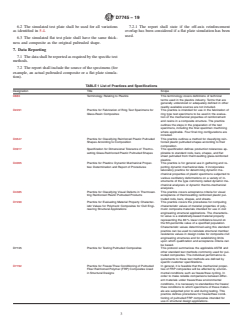
TABLE 1 List of Practices and Specifications
Designation Title Scope
D883 Terminology Relating to Plastics This terminology covers definitions of technical
terms used in the plastics industry. Terms that are
generally understood or adequately defined in other
readily available sources are not included.
D2291 Practice for Fabrication of Ring Test Specimens for This practice is intended for use in the fabrication of
Glass-Resin Composites ring type test specimens to be used in the evalua-
tion of the mechanical properties of reinforcement
and resins in a composite structure. The practice
outlines the steps in the preparation of the test
specimens, including the final specimen machining
where applicable. Four final ring configurations are
included.
D3647 Practice for Classifying Reinforced Plastic Pultruded This practice outlines a method for classifying rein-
Shapes According to Composition forced plastic pultruded shapes according to their
composition.
D3917 Specification for Dimensional Tolerance of Thermo- This specification defines production tolerances ap-
setting Glass-Reinforced Plastic Pultruded Shapes plicable to standard rods, bars, shapes, and flat
sheet pultruded from thermosetting glass-reinforced
plastics.
D4065 Practice for Plastics: Dynamic Mechanical Proper- This practice is for general use in gathering and re-
ties: Determination and Report of Procedures porting dynamic mechanical data. It incorporates
laboratory practice for determining dynamic me-
chanical properties of plastic specimens subjected to
various oscillatory deformations on a variety of in-
struments of the type commonly called dynamic me-
chanical analyzers or dynamic thermo-mechanical
analyzers.
D4385 Practice for Classifying Visual Defects in Thermoset- This practice covers acceptance criteria for visual
ting Reinforced Plastic Pultruded Products acceptance of thermosetting reinforced plastic pul-
truded rods, bars, shapes, and sheets.
D7290 Practice for Evaluating Material Property Character- This practice covers the procedures for computing
istic Values for Polymeric Composites for Civil Engi- characteristic values of material properties of poly-
neering Structural Applications meric composite materials intended for use in civil
engineering structural applications. The characteris-
tic value is a statistically-based material property
representing the 80 % lower confidence bound on
the 5th-percentile value of a specified population.
Characteristic values determined using this standard
practice can be used to calculate structural member
resistance values in design codes for composite civil
engineering structures and for establishing limits
upon which qualification and acceptance criteria can
be based.
D7745 Practice for Testing Pultruded Composites This protocol summarizes the applicable ASTM and
other standard test methods commonly used for pul-
truded composites. The individual performance re-
quirements to these test methods are defined by
specific customer specifications.
D7792 Practice for Freeze/Thaw Conditioning of Pultruded In general, it is feasible that the mechanical proper-
Fiber Reinforced Polymer (FRP) Composites Used ties of FRP composites will be affected by environ-
in Structural Designs mental conditions such as freeze/thaw cycling. In
order to make reliable comparisons between differ-
ent materials under freeze/thaw environmental
conditions, it is necessary to standardize the freeze/
thaw conditions to which specimens of these materi-
als are subjected prior to and during testing. This
practice defines procedures for freeze/thaw condi-
tioning of pultruded FRP composites intended for
use in structural design applications.
D7992 Practice for Elevated Temperature and Moisture In general, it is feasible that the mechanical proper-
Conditioning of Pultruded Fiber Reinforced Polymer ties of FRP composites will be affected by environ-
(FRP) Composites Used in Structural Designs mental conditions such as exposure to moisture at
elevated temperatures. In order to make reliable
comparisons between different materials under el-
evated temperature and moisture environmental
conditions, it is necessary to standardize the el-
evated temperature and moisture conditions to
which specimens of these materials are subjected
prior to and during testing. T
...