

IEC 62047-37:2020
(Main)Semiconductor devices - Micro-electromechanical devices - Part 37: Environmental test methods of MEMS piezoelectric thin films for sensor application
General Information
- Abstract
IEC 62047-37:2020 specifies test methods for evaluating the durability of MEMS piezoelectric thin film materials under the environmental stress of temperature and humidity and under mechanical stress and strain, and test conditions for appropriate quality assessment. Specifically, this document specifies test methods and test conditions for measuring the durability of a DUT under temperature and humidity conditions and applied voltages. It further applies to evaluations of direct piezoelectric properties in piezoelectric thin films formed primarily on silicon substrates, i.e. piezoelectric thin films used as acoustic sensors, or as cantilever-type sensors.
This document does not cover reliability assessments, such as methods of predicting the lifetime of a piezoelectric thin film based on a Weibull distribution.
- Status
- Published
- Publication Date
- 27-Apr-2020
- Technical Committee
- SC 47F - Micro-electromechanical systems
- Current Stage
- PPUB - Publication issued
- Start Date
- 28-Apr-2020
- Completion Date
- 22-May-2020
Buy Documents
IEC 62047-37:2020 - Semiconductor devices - Micro-electromechanical devices - Part 37: Environmental test methods of MEMS piezoelectric thin films for sensor application Released:4/28/2020
Overview
IEC 62047-37:2020 is an international standard developed by the International Electrotechnical Commission (IEC) focusing on environmental test methods for MEMS piezoelectric thin films used in sensor applications. This standard is part 37 of the IEC 62047 series covering semiconductor devices and micro-electromechanical systems (MEMS). It provides standardized procedures to assess the durability and quality of MEMS piezoelectric thin films, specifically under environmental stresses such as temperature, humidity, mechanical stress, and applied voltage. These thin films are primarily utilized in acoustic sensors and cantilever-type sensors based on silicon substrates.
The standard plays a vital role in ensuring the performance stability of piezoelectric MEMS devices by defining test protocols that help manufacturers and researchers evaluate the impact of environmental factors on piezoelectric properties. It complements IEC 62047-30, which addresses measurement methods for the electro-mechanical characteristics of MEMS piezoelectric thin films.
Key Topics
Durability Testing Under Environmental Stress
IEC 62047-37 specifies tests that subject devices under test (DUTs) to high/low temperature cycles, humidity conditions, mechanical strain, and electrically induced stress. The standard includes:- High-temperature bias tests
- High-temperature and high-humidity bias tests
- Temperature cycling tests
- Soldering heat tests simulating real manufacturing and operational environments
Measurement of Piezoelectric Properties
The assessment framework involves measuring piezoelectric parameters before and after environmental stress exposure, based on methods outlined in IEC 62047-30. This ensures changes in direct piezoelectric characteristics are accurately tracked.Test Conditions and Setup
The document outlines detailed procedures for setting up DUTs, defining test durations, number of devices to test, and environmental chamber configurations. It also includes specifications for:- Temperature and humidity ranges
- Applied voltage levels during bias testing
- Dielectric withstand testing circuits
Quality Assessment, Not Reliability Projection
IEC 62047-37 focuses on immediate durability and quality evaluation rather than long-term lifetime predictions or reliability distributions such as Weibull analysis.
Applications
IEC 62047-37:2020 is critical for any organization involved in the development, manufacturing, or quality assurance of MEMS piezoelectric thin film devices used in various sensor applications:
Acoustic Sensors
For use in microphones, ultrasound devices, and other applications requiring sensitive acoustic detection where piezoelectric thin film stability impacts performance.Cantilever-Type Sensors
In environmental sensing, biomedical devices, and mechanical detection systems where MEMS cantilevers integrated with piezoelectric films provide signal conversion.Semiconductor Fabrication and Assembly
Test guidelines include heat profiles mimicking solder reflow processes, helping manufacturers ensure their devices can withstand assembly stresses.Quality Control in MEMS Production
Facilitates consistent manufacturing standards by employing reproducible environmental testing relevant to operational conditions.
Related Standards
IEC 62047-30
Measurement methods for electro-mechanical conversion characteristics of MEMS piezoelectric thin films, which complements the environmental testing procedures of part 37.IEC Standards on Semiconductor Environmental Testing
Incorporates test conditions and requirements adapted from general semiconductor device and ceramic dielectric capacitor environmental standards, ensuring cross-industry compatibility.Others in IEC 62047 Series
Cover various aspects of MEMS devices and testing methods, offering a comprehensive framework for micro-electromechanical device standardization.
Summary
IEC 62047-37:2020 establishes essential environmental testing protocols for evaluating the durability of MEMS piezoelectric thin films used in sensor applications under real-world operational stresses. By providing systematic test procedures to measure piezoelectric properties after exposure to temperature, humidity, mechanical strain, and applied voltages, it ensures device reliability and quality assurance. This standard supports manufacturers, engineers, and researchers in optimizing MEMS sensor performance and robustness, facilitating innovation in acoustic and cantilever sensor technologies with confidence in their environmental endurance.
Buy Documents
IEC 62047-37:2020 - Semiconductor devices - Micro-electromechanical devices - Part 37: Environmental test methods of MEMS piezoelectric thin films for sensor application Released:4/28/2020
Frequently Asked Questions
IEC 62047-37:2020 is a standard published by the International Electrotechnical Commission (IEC). Its full title is "Semiconductor devices - Micro-electromechanical devices - Part 37: Environmental test methods of MEMS piezoelectric thin films for sensor application". This standard covers: IEC 62047-37:2020 specifies test methods for evaluating the durability of MEMS piezoelectric thin film materials under the environmental stress of temperature and humidity and under mechanical stress and strain, and test conditions for appropriate quality assessment. Specifically, this document specifies test methods and test conditions for measuring the durability of a DUT under temperature and humidity conditions and applied voltages. It further applies to evaluations of direct piezoelectric properties in piezoelectric thin films formed primarily on silicon substrates, i.e. piezoelectric thin films used as acoustic sensors, or as cantilever-type sensors. This document does not cover reliability assessments, such as methods of predicting the lifetime of a piezoelectric thin film based on a Weibull distribution.
IEC 62047-37:2020 specifies test methods for evaluating the durability of MEMS piezoelectric thin film materials under the environmental stress of temperature and humidity and under mechanical stress and strain, and test conditions for appropriate quality assessment. Specifically, this document specifies test methods and test conditions for measuring the durability of a DUT under temperature and humidity conditions and applied voltages. It further applies to evaluations of direct piezoelectric properties in piezoelectric thin films formed primarily on silicon substrates, i.e. piezoelectric thin films used as acoustic sensors, or as cantilever-type sensors. This document does not cover reliability assessments, such as methods of predicting the lifetime of a piezoelectric thin film based on a Weibull distribution.
IEC 62047-37:2020 is classified under the following ICS (International Classification for Standards) categories: 31.080.99 - Other semiconductor devices; 31.140 - Piezoelectric devices. The ICS classification helps identify the subject area and facilitates finding related standards.
IEC 62047-37:2020 is available in PDF format for immediate download after purchase. The document can be added to your cart and obtained through the secure checkout process. Digital delivery ensures instant access to the complete standard document.
Standards Content (Sample)
IEC 62047-37 ®
Edition 1.0 2020-04
INTERNATIONAL
STANDARD
NORME
INTERNATIONALE
colour
inside
Semiconductor devices – Micro-electromechanical devices –
Part 37: Environmental test methods of MEMS piezoelectric thin films for sensor
application
Dispositifs à semiconducteurs – Dispositifs microélectromécaniques –
Partie 37: Méthodes d’essai d’environnement des couches minces
piézoélectriques MEMS pour les applications de type capteur
All rights reserved. Unless otherwise specified, no part of this publication may be reproduced or utilized in any form
or by any means, electronic or mechanical, including photocopying and microfilm, without permission in writing from
either IEC or IEC's member National Committee in the country of the requester. If you have any questions about IEC
copyright or have an enquiry about obtaining additional rights to this publication, please contact the address below or
your local IEC member National Committee for further information.
Droits de reproduction réservés. Sauf indication contraire, aucune partie de cette publication ne peut être reproduite
ni utilisée sous quelque forme que ce soit et par aucun procédé, électronique ou mécanique, y compris la photocopie
et les microfilms, sans l'accord écrit de l'IEC ou du Comité national de l'IEC du pays du demandeur. Si vous avez des
questions sur le copyright de l'IEC ou si vous désirez obtenir des droits supplémentaires sur cette publication, utilisez
les coordonnées ci-après ou contactez le Comité national de l'IEC de votre pays de résidence.
IEC Central Office Tel.: +41 22 919 02 11
3, rue de Varembé info@iec.ch
CH-1211 Geneva 20 www.iec.ch
Switzerland
About the IEC
The International Electrotechnical Commission (IEC) is the leading global organization that prepares and publishes
International Standards for all electrical, electronic and related technologies.
About IEC publications
The technical content of IEC publications is kept under constant review by the IEC. Please make sure that you have the
latest edition, a corrigendum or an amendment might have been published.
IEC publications search - webstore.iec.ch/advsearchform Electropedia - www.electropedia.org
The advanced search enables to find IEC publications by a The world's leading online dictionary on electrotechnology,
variety of criteria (reference number, text, technical containing more than 22 000 terminological entries in English
committee,…). It also gives information on projects, replaced and French, with equivalent terms in 16 additional languages.
and withdrawn publications. Also known as the International Electrotechnical Vocabulary
(IEV) online.
IEC Just Published - webstore.iec.ch/justpublished
Stay up to date on all new IEC publications. Just Published IEC Glossary - std.iec.ch/glossary
details all new publications released. Available online and 67 000 electrotechnical terminology entries in English and
once a month by email. French extracted from the Terms and Definitions clause of
IEC publications issued since 2002. Some entries have been
IEC Customer Service Centre - webstore.iec.ch/csc collected from earlier publications of IEC TC 37, 77, 86 and
If you wish to give us your feedback on this publication or CISPR.
need further assistance, please contact the Customer Service
Centre: sales@iec.ch.
A propos de l'IEC
La Commission Electrotechnique Internationale (IEC) est la première organisation mondiale qui élabore et publie des
Normes internationales pour tout ce qui a trait à l'électricité, à l'électronique et aux technologies apparentées.
A propos des publications IEC
Le contenu technique des publications IEC est constamment revu. Veuillez vous assurer que vous possédez l’édition la
plus récente, un corrigendum ou amendement peut avoir été publié.
Recherche de publications IEC - Electropedia - www.electropedia.org
webstore.iec.ch/advsearchform Le premier dictionnaire d'électrotechnologie en ligne au
La recherche avancée permet de trouver des publications IEC monde, avec plus de 22 000 articles terminologiques en
en utilisant différents critères (numéro de référence, texte, anglais et en français, ainsi que les termes équivalents dans
comité d’études,…). Elle donne aussi des informations sur les 16 langues additionnelles. Egalement appelé Vocabulaire
projets et les publications remplacées ou retirées. Electrotechnique International (IEV) en ligne.
IEC Just Published - webstore.iec.ch/justpublished Glossaire IEC - std.iec.ch/glossary
Restez informé sur les nouvelles publications IEC. Just 67 000 entrées terminologiques électrotechniques, en anglais
Published détaille les nouvelles publications parues. et en français, extraites des articles Termes et Définitions des
Disponible en ligne et une fois par mois par email. publications IEC parues depuis 2002. Plus certaines entrées
antérieures extraites des publications des CE 37, 77, 86 et
Service Clients - webstore.iec.ch/csc CISPR de l'IEC.
Si vous désirez nous donner des commentaires sur cette
publication ou si vous avez des questions contactez-nous:
sales@iec.ch.
IEC 62047-37 ®
Edition 1.0 2020-04
INTERNATIONAL
STANDARD
NORME
INTERNATIONALE
colour
inside
Semiconductor devices – Micro-electromechanical devices –
Part 37: Environmental test methods of MEMS piezoelectric thin films for sensor
application
Dispositifs à semiconducteurs – Dispositifs microélectromécaniques –
Partie 37: Méthodes d’essai d’environnement des couches minces
piézoélectriques MEMS pour les applications de type capteur
INTERNATIONAL
ELECTROTECHNICAL
COMMISSION
COMMISSION
ELECTROTECHNIQUE
INTERNATIONALE
ICS 31.080.99; 31.140 ISBN 978-2-8322-8231-1
– 2 – IEC 62047-37:2020 © IEC 2020
CONTENTS
FOREWORD . 3
INTRODUCTION . 5
1 Scope . 6
2 Normative references . 6
3 Terms and definitions . 6
4 Testing procedure . 6
4.1 General . 6
4.2 Initial measurements . 7
4.3 Tests . 7
4.3.1 DUT setup and environmental conditions . 7
4.3.2 Test duration . 7
4.3.3 Number of tests and number of DUTs . 7
4.4 Post-treatment . 8
4.5 Final measurements . 8
5 Environmental and dielectric withstand testing . 8
5.1 Environmental testing . 8
5.1.1 General . 8
5.1.2 High-temperature bias test . 9
5.1.3 High-temperature and high-humidity bias test . 9
5.1.4 High-temperature storage . 9
5.1.5 Low-temperature storage . 10
5.1.6 High-temperature and high-humidity storage . 10
5.1.7 Soldering heat test . 10
5.1.8 Temperature cycling test . 11
5.2 Dielectric withstand testing . 12
Annex A (informative) Report of test results . 14
A.1 General . 14
A.2 High-temperature bias test . 14
Bibliography . 16
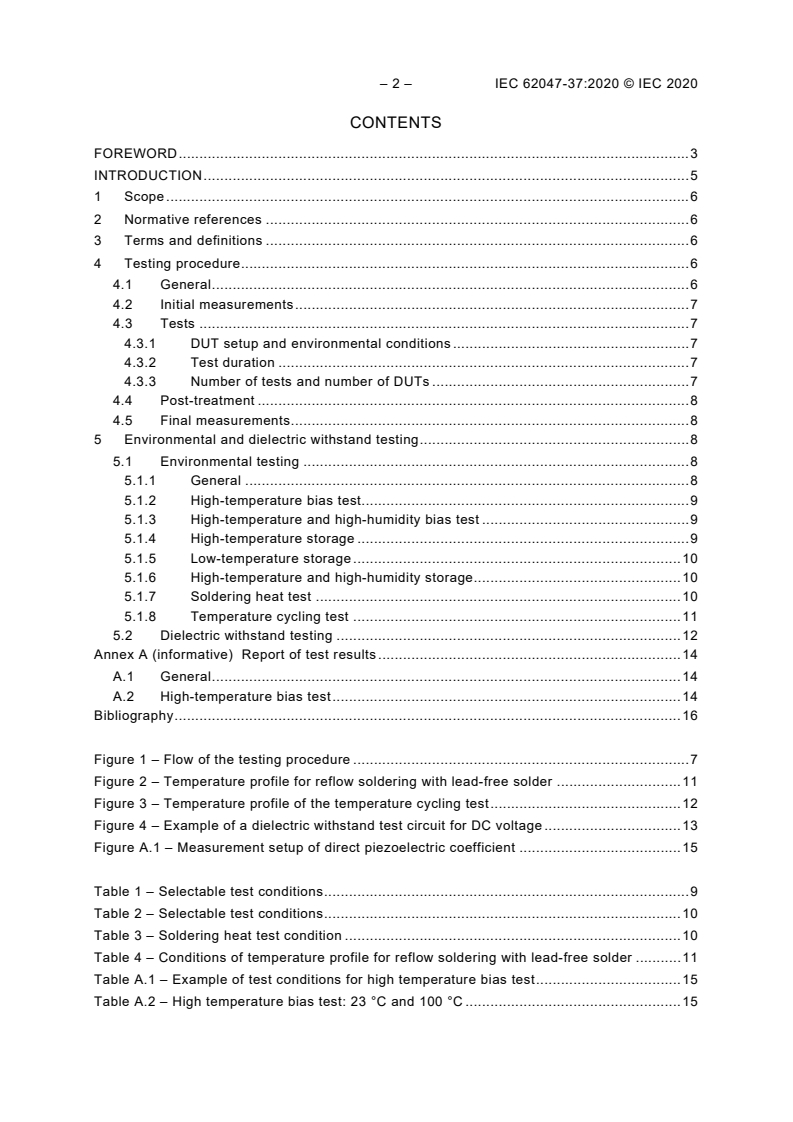
Figure 1 – Flow of the testing procedure . 7
Figure 2 – Temperature profile for reflow soldering with lead-free solder . 11
Figure 3 – Temperature profile of the temperature cycling test . 12
Figure 4 – Example of a dielectric withstand test circuit for DC voltage . 13
Figure A.1 – Measurement setup of direct piezoelectric coefficient . 15
Table 1 – Selectable test conditions . 9
Table 2 – Selectable test conditions . 10
Table 3 – Soldering heat test condition . 10
Table 4 – Conditions of temperature profile for reflow soldering with lead-free solder . 11
Table A.1 – Example of test conditions for high temperature bias test . 15
Table A.2 – High temperature bias test: 23 °C and 100 °C . 15
INTERNATIONAL ELECTROTECHNICAL COMMISSION
____________
SEMICONDUCTOR DEVICES –
MICRO-ELECTROMECHANICAL DEVICES –
Part 37: Environmental test methods of MEMS
piezoelectric thin films for sensor application
FOREWORD
1) The International Electrotechnical Commission (IEC) is a worldwide organization for standardization comprising
all national electrotechnical committees (IEC National Committees). The object of IEC is to promote
international co-operation on all questions concerning standardization in the electrical and electronic fields. To
this end and in addition to other activities, IEC publishes International Standards, Technical Specifications,
Technical Reports, Publicly Available Specifications (PAS) and Guides (hereafter referred to as “IEC
Publication(s)”). Their preparation is entrusted to technical committees; any IEC National Committee interested
in the subject dealt with may participate in this preparatory work. International, governmental and non-
governmental organizations liaising with the IEC also participate in this preparation. IEC collaborates closely
with the International Organization for Standardization (ISO) in accordance with conditions determined by
agreement between the two organizations.
2) The formal decisions or agreements of IEC on technical matters express, as nearly as possible, an international
consensus of opinion on the relevant subjects since each technical committee has representation from all
interested IEC National Committees.
3) IEC Publications have the form of recommendations for international use and are accepted by IEC National
Committees in that sense. While all reasonable efforts are made to ensure that the technical content of IEC
Publications is accurate, IEC cannot be held responsible for the way in which they are used or for any
misinterpretation by any end user.
4) In order to promote international uniformity, IEC National Committees undertake to apply IEC Publications
transparently to the maximum extent possible in their national and regional publications. Any divergence
between any IEC Publication and the corresponding national or regional publication shall be clearly indicated in
the latter.
5) IEC itself does not provide any attestation of conformity. Independent certification bodies provide conformity
assessment services and, in some areas, access to IEC marks of conformity. IEC is not responsible for any
services carried out by independent certification bodies.
6) All users should ensure that they have the latest edition of this publication.
7) No liability shall attach to IEC or its directors, employees, servants or agents including individual experts and
members of its technical committees and IEC National Committees for any personal injury, property damage or
other damage of any nature whatsoever, whether direct or indirect, or for costs (including legal fees) and
expenses arising out of the publication, use of, or reliance upon, this IEC Publication or any other IEC
Publications.
8) Attention is drawn to the Normative references cited in this publication. Use of the referenced publications is
indispensable for the correct application of this publication.
9) Attention is drawn to the possibility that some of the elements of this IEC Publication may be the subject of
patent rights. IEC shall not be held responsible for identifying any or all such patent rights.
International Standard IEC 62047-37 has been prepared by subcommittee 47F: Micro-
electromechanical systems, of IEC technical committee 47: Semiconductor devices.
The text of this International Standard is based on the following documents:
FDIS Report on voting
47F/355/FDIS 47F/357/RVD
Full information on the voting for the approval of this International Standard can be found in
the report on voting indicated in the above table.
This document has been drafted in accordance with the ISO/IEC Directives, Part 2.
– 4 – IEC 62047-37:2020 © IEC 2020
A list of all parts in the IEC 62047 series, published under the general title Semiconductor
devices – Micro-electromechanical devices, can be found on the IEC website.
The committee has decided that the contents of this document will remain unchanged until the
stability date indicated on the IEC website under "http://webstore.iec.ch" in the data related to
the specific document. At this date, the document will be
• reconfirmed,
• withdrawn,
• replaced by a revised edition, or
• amended.
IMPORTANT – The 'colour inside' logo on the cover page of this publication indicates
that it contains colours which are considered to be useful for the correct
understanding of its contents. Users should therefore print this document using a
colour printer.
INTRODUCTION
Piezoelectric MEMS technology belongs to an interdisciplinary field founded on a wide range
of element technologies including piezoelectric thin film materials, thin film deposition and
microfabrication processes, device design, and system formulation. Along with the increased
sophistication of MEMS functionality, research on MEMS applications for piezoelectric thin
films, such as Pb(Zr,Ti)O (PZT) or AlN, has become increasingly popular in recent years.
MEMS piezoelectric thin films have the capability of configuring simple compact devices that
have a lower power consumption, higher sensitivity, and quicker response than conventional
bulk-type, electrostatic, or electromagnetic thin films. However, their device performance is
greatly affected by the properties of the thin film materials.
Several test methods for thin film materials have been established to date. Among these, the
overriding property that determines device performance is the material’s piezoelectric
property. Standardization of IEC 62047-30 (Semiconductor devices – Micro-electromechanical
devices – Part 30: Measurement methods of electro-mechanical conversion characteristics of
MEMS piezoelectric thin film) has been promoted for the purpose of precisely measuring and
evaluating MEMS piezoelectric thin films using simply structured test pieces and inexpensive
equipment.
In order to realize a viable MEMS piezoelectric thin film, it is essential to gain a clear
understanding of how its piezoelectric properties change as a result of the environmental
stress of temperature and humidity, and degradation in the piezoelectric material over time at
its surfaces and interfaces.
The following summarizes the features of this standard.
• The degree of degradation in a device under test (DUT) is evaluated by measuring the
piezoelectric properties of the DUT before and after applying the environmental stress of
temperature and humidity using the measurement methods in IEC 62047-30.
• Test conditions for moist heat and dielectric withstand tests are derived from existing
standards for semiconductor devices and fixed capacitors of ceramic dielectric.
– 6 – IEC 62047-37:2020 © IEC 2020
SEMICONDUCTOR DEVICES –
MICRO-ELECTROMECHANICAL DEVICES –
Part 37: Environmental test methods of MEMS
piezoelectric thin films for sensor application
1 Scope
This part of IEC 62047 specifies test methods for evaluating the durability of MEMS
piezoelectric thin film materials under the environmental stress of temperature and humidity
and under mechanical stress and strain, and test conditions for appropriate quality
assessment. Specifically, this document specifies test methods and test conditions for
measuring the durability of a DUT under temperature and humidity conditions and applied
voltages. It further applies to evaluations of direct piezoelectric properties in piezoelectric thin
films formed primarily on silicon substrates, i.e. piezoelectric thin films used as acoustic
sensors, or as cantilever-type sensors.
This document does not cover reliability assessments, such as methods of predicting the
lifetime of a piezoelectric thin film based on a Weibull distribution.
2 Normative references
The following documents are referred to in the text in such a way that some or all of their
content constitutes requirements of this document. For dated references, only the edition
cited applies. For undated references, the latest edition of the referenced document (including
any amendments) applies.
IEC 62047-30, Semiconductor devices – Micro-electromechanical devices – Part 30:
Measurement methods of electro-mechanical conversion characteristics of MEMS
piezoelectric thin film
3 Terms and definitions
No terms and definitions are listed in this document.
ISO and IEC maintain terminological databases for use in standardization at the following
addresses:
• IEC Electropedia: available at http://www.electropedia.org/
• ISO Online browsing platform: available at http://www.iso.org/obp
4 Testing procedure
4.1 General
The degree of degradation in a device under test (DUT) is evaluated by measuring the
piezoelectric properties of the DUT before and after applying the environmental stress of
temperature and humidity. Figure 1 shows the general flow of the testing procedure.
Figure 1 – Flow of the testing procedure
4.2 Initial measurements
The methods of measurement used in the environmental tests shall conform to the methods
described in IEC 62047-30. The ambient conditions for measurements shall include an
ambient temperature of 25 °C ± 3 °C, a relative humidity of 45 % to 75 %, and an atmospheric
pressure of 86 kPa to 106 kPa.
4.3 Tests
4.3.1 DUT setup and environmental conditions
For tests requiring continuous operation of the DUT, the DUT is placed in a test bed that can
be adjusted to the prescribed temperature and humidity to conditions. The test conditions are
monitored to verify that no abnormalities occur when the chamber environment reaches the
prescribed conditions. For tests that do not require continuous operations of the DUT, the
DUT may be placed in the test bed and the test bed may be deposited in the chamber, but the
test bed need not be put in the chamber. When depositing and removing the DUT and test
bed for either test, the operator shall ensure that:
• water does not drip onto the DUT;
• the DUT is not directly immersed in water.
4.3.2 Test duration
Test duration is described in 5.1.1 to 5.1.7.
4.3.3 Number of tests and number of DUTs
Specifications for the number of tests and the number of DUTs shall take the failure
mechanism, failure distribution, and other factors anticipated in each test into account. When
intermediate measurements are required, such measurements may be performed in
accordance with the following timetable:
• 24 h (+8 h, −0 h);
• 48 h (+8 h, −0 h);
• 96 h (+24 h, −0 h);
• 168 h (+48 h, −0 h);
– 8 – IEC 62047-37:2020 © IEC 2020
• 480 h (+72 h, −0 h).
Here, the time spent removing the DUT and conducting the intermediate measurements shall
be omitted from the test duration.
4.4 Post-treatment
After completion of the tests, first the application of mechanical stress and strain, or vibration,
is halted, and then the DUT is removed from the chamber and returned to standard conditions.
However, this shall not apply to cases in which the DUT clearly recovers from its degraded
state after the application of mechanical stress and strain, or vibration, is halted at the testing
temperature because a correct result is not possible.
4.5 Final measurements
The methods of measurement used in moist heat tests shall conform to the methods set forth
in IEC 62047-30. The degraded state of a DUT is evaluated by comparing the final
measurements to the initial measurements. The environmental conditions for measurements
shall include:
• ambient temperature: 25 °C ± 3 °C;
• relative humidity: 45 % to 75 %;
• atmospheric pressure: 86 kPa to 106 kPa.
As a general rule, final measurements shall be conducted within 48 h from the completion of
tests after verifying that the surface of the DUT is dry. When conducting intermediate
measurements prior to the final measurements, the DUT shall be deposited back into the
testing chamber within 96 h after being removed for measurements. Final measurements are
preferably completed within 96 h after halting voltage application to the DUT.
5 Environmental and dielectric withstand testing
5.1 Environmental testing
5.1.1 General
Equipment used in these experiments includes:
• a chamber or a room capable of maintaining predetermined test temperature and humidity
and allowable temperature and humidity;
• a vibrator or an external actuator for generating a predetermined deflection of the
unimorph beam;
• a mechanical stress and strain, or vibration, application equipment having sufficient
resistance for withstanding the test temperatures and humidity.
The chamber shall be capable of maintaining its entire interior at the set temperature ±2 °C
and the set humidity ±5 % during the test. The applied mechanical stress and strain, and the
operating method shall be established with consideration for the limits of the DUT. The
application circuit shall be considered to account for load conditions and other factors in order
that the operating state of the DUT be suitably maintained.
NOTE 1 The degree of degradation in a device under test (DUT) is evaluated by measuring the piezoelectric
properties of the DUT before and after applying the environmental stress of temperature and humidity.
NOTE 2 The degree of degradation in a DUT is evaluated using the measurement methods in IEC 62047-30.
NOTE 3 A test circuit for testing a plurality of DUT simultaneously is designed so that failure of one DUT during a
test does not affect the other DUT.
5.1.2 High-temperature bias test
The objective of this test is to evaluate the ability of MEMS piezoelectric thin film to operate at
a high temperature. Mechanical stress and strain (beam deflection) is applied to the
piezoelectric film under a high temperature to evaluate the effects of these conditions over a
long duration. The conditions applied to the DUT, including the vibration mode (resonant
mode or non-resonant mode), input waveform, the frequency, and the like shall be determined
based on the expected application of the sensor. The following test conditions shall be
applied:
• test temperature: 85 °C or higher;
• test duration: 96 h or longer.
The example of this test result is provided in Annex A.
NOTE 1 Sample test temperatures can include 85 °C, 105 °C and 125 °C.
NOTE 2 Sample test durations can include 96 h, 480 h and 960 h.
5.1.3 High-temperature and high-humidity bias test
The objective of this test is to evaluate the ability of MEMS piezoelectric thin film to operate
under high temperature and high humidity. Mechanical stress and strain (beam bending) is
applied to the piezoelectric thin film under high temperature and humidity and the effects of
these conditions are assessed over a long duration. The humidity test determines whether
electronic products have sufficient electrical and mechanical properties to withstand heavy
conditions with high relative humidity, regardless of whether condensation is present. The
humidity test may also be used to inspect the resistance of the DUT to various corrosive
actions. Based on the expected application of the sensor, the measurement parameters shall
be determined as follows:
• resonant mode or non-resonant mode;
• input waveform;
• frequency.
Table 1 shows the selectable test conditions.
Table 1 – Selectable test conditions
Condition Temperature Humidity
(°C) (%)
A 40 ± 2 90 ± 5
B 60 ± 2 90 ± 5
C 85 ± 2 85 ± 5
The test parameters shall be determined as follows:
• test strain: maximum strain of piezoelectric thin films applied by bending beam (operation
max.);
• test duration: 96 h or longer.
NOTE Sample test durations include 96 h, 480 h and 960 h.
5.1.4 High-temperature storage
The objective of this test is to evaluate the ability of MEMS piezoelectric thin film to withstand
storage at a high temperature. The piezoelectric thin film is kept under a high temperature for
– 10 – IEC 62047-37:2020 © IEC 2020
a long duration, and the effects of these conditions are evaluated. The following test
conditions shall be applied:
• test temperature: 85 °C or higher;
• test duration: 96 h or longer.
NOTE 1 Sample test temperatures include 85 °C, 105 °C and 125 °C.
NOTE 2 Sample test durations include 96 h, 480 h and 960 h.
5.1.5 Low-temperature storage
The objective of this test is to evaluate the ability of MEMS piezoelectric thin film to withstand
storage at a low temperature. The piezoelectric thin film is kept under a low temperature for a
long duration, and the effects of these conditions are evaluated. The following test conditions
shall be applied:
• test temperature: −20 °C or lower;
• test duration: 96 h or longer.
NOTE Sample test durations include 96 h, 480 h and 960 h.
5.1.6 High-temperature and high-humidity storage
The objective of this test is to evaluate the ability of MEMS piezoelectric thin film to withstand
storage under a high temperature and high humidity. The piezoelectric thin film is maintained
under high temperature and high humidity conditions for a long duration, and the effects of
these conditions are evaluated. Table 2 shows the selectable test conditions.
Table 2 – Selectable test conditions
Condition Temperature Humidity
(°C) (%)
A 40 ± 2 90 ± 5
B 60 ± 2 90 ± 5
C 85 ± 2 85 ± 5
The test parameters shall be determined as follows:
• test duration: 96 h or longer.
NOTE Sample test durations include 96 h, 480 h and 960 h.
5.1.7 Soldering heat test
The objective of this test is to evaluate the resistance of MEMS piezoelectric thin film to heat
generated during soldering. The temperature and time required for replicating thermal
conditions expected in reflow soldering are specified in Table 3.
Table 3 – Soldering heat test condition
Specified temperature Hold time
(°C) (s)
Test conditions 265 ± 5 30 ± 5
Figure 2 shows an example of a temperature profile assuming reflow conditions for lead-free
solder. Measurement should be done at a room temperature, after point D. The test may be
repeated a maximum of three times for a duration of 10 s.
Key
A starting to add heat
B finishing to add heat
C starting to cool
D finishing to cool
Figure 2 – Temperature profile for reflow soldering with lead-free solder
Table 4 shows a condition of temperature profile for reflow soldering with lead-free solder.
Table 4 – Conditions of temperature profile for reflow soldering with lead-free solder
Time Ramp rate Temperature
(s) (°C/s) (°C)
A 0 20
B 240 265
C 270 265
D 510 20
A-B 1,02
C-D 1,02
5.1.8 Temperature cycling test
The objective of this test is to evaluate the resistance of MEMS piezoelectric thin film to
cycling between high temperature and low temperature extremes. The test method used here
– 12 – IEC 62047-37:2020 © IEC 2020
is in accordance with IEC 60068-2-14:2009, Clause 8 (Test Nb: Change of temperature with
specified rate of change).
One cycle of test is as follows:
• the temperature of the testing chamber is lowered at a prescribed ramp-down rate R to a
cold temperature T ;
A
• after the internal temperature has stabilized, the DUT is exposed to cold temperature for a
specified time t ;
• the temperature of the chamber is raised at a prescribed ramp-up rate R to a hot
temperature T ;
B
• after the internal temperature has stabilized, the DUT is exposed to hot temperature for
;
the specified time t
• the temperature in the chamber is then lowered at a prescribed rate to 25 °C ± 5 °C.
Figure 3 shows the temperature profile of the temperature cycling test. Measurement should
be carried out at room temperature after the heating or cooling process. The test is
continually repeated N times.
Key
1 hot temperature T : 85 °C (+15, −0)
B
: −20 °C (+0, −10)
2 cold temperature T
A
3 upper or lower soak time t : 1 h or longer
4 ramp-up or down rate R: 100 °C/h
5 room temperature T : 20 °C (+10, −10)
R
Figure 3 – Temperature profile of the temperature cycling test
NOTE The number of cycles is arbitrary.
5.2 Dielectric withstand testing
The objective of this test is to evaluate the resistance of MEMS piezoelectric thin film to a
voltage exceeding the rated voltage. The applied voltage and operating method shall be
established with consideration for the limits of the DUT. Withstand voltage is defined when the
leakage current between the top and bottom electrodes increases to 10 times larger than the
initial leakage current at 100 kV/cm. The following test parameters and results shall be
indicated with the value of withstand voltage:
• electrode (material, size, shape, thickness);
• input waveform and /or increasing ratio of applied voltage;
• polarity of applied voltage (positive or negative on a top electrode);
• I-V curves;
• photographs of electrodes after withstand test;
• test temperature and humidity.
EXAMPLE The voltage increasing rate is set to 2 V/s, the prescribed voltage value to 1,2 times the rated voltage,
and the prescribed time to 60 s.
A test circuit for testing a plurality of DUT simultaneously is designed so that failure of one
DUT during a test does not affect the other DUT.
Figure 4 shows the example of a dielectric withstand test circuit for DC voltage.
Key
1 leakage current tester with variable DC voltage source and voltmeter
2 DUT
Figure 4 – Example of a dielectric withstand test circuit for DC voltage
– 14 – IEC 62047-37:2020 © IEC 2020
Annex A
(informative)
Report of test results
A.1 General
Annex A describes an example of the environmental test of the piezoelectric thin films.
Clause A.2 summarizes the procedures and the measurement results of the high-temperature
bias test.
A.2 High-temperature bias test
The following steps show an example of measuring procedures of a high-temperature bias
test. Direct piezoelectric measurements are conducted using a three-point bending system as
d
shown in Figure A.1. This test method can derive the same piezoelectric coefficient of e
31,f
as that described in IEC 62047-30.
a) The sample is a piezoelectric 2-μm-thick PZT thin film deposited by sol-gel process.
b) The specimen is the unimorph beam of 625 μm thickness of (100) single crystal silicon
substrate.
c) Thicknesses of the top and bottom platinum electrodes are 0,2 μm and 0,05 μm
respectively.
d) The sample is cut out to the beam shape of 40 mm length and 2 mm width by a dicing saw
along with <110> crystal orientation.
e) Two points of the unimorph beam are clamped by the triangular-shaped clamp.
f) The centre of the beam is placed on the tip of the shaker and the bending deformation is
applied by the vibration of the shaker.
g) Vibration amplitude is measured by a laser Doppler vibrometer.
h) Maximum stress S on the PZT thin films is calculated with the following equation:
Ph l 6h
s0 s
Su
2EI
l
where P, h , l , u are load, thickness, length of the fixed parts, deflection, and E and I are
s 0
Young’s modulus and area moment of inertia of Si, respectively.
i) Piezoelectric coefficient e is defined by the following equation:
31,f
d
e =
31,f
EE
ss+
11 12
E E
where d is the transverse piezoelectric coefficient, and s and s are the elastic
31 11 12
compliances of the piezoelectric thin film at constant electric field, respectively. In order to
clarify the piezoelectric coefficient derived from direct piezoelectric effect, piezoelectric
d
coefficient e is written as e .
31,f 31,f
d
j) Direct piezoelectric coefficient of e is calculated with the following equation:
31,f
l Q
d 0
e =
31,f
u
31( −−ν ) 2l l l hW
s ( 0 1) 1s
==
where l is the length of the electrode, W is the width of the beam, ν is the Poisson’s ratio
1 s
of silicon, and Q is the generated charge, respectively. The example of test conditions
used for this equation are shown in Table A.1.
k) The results of the environmental test of the bias temperatures of 23 °C and 100 °C are
shown in Table A.2.
Figure A.1 – Measurement setup of direct piezoelectric coefficient
Table A.1 – Example of test conditions for high temperature bias test
−5
Maximum strain: S
8,3 × 10
PZT thickness 3 µm
Si thickness: h 625 μm
s
width: W 2 mm
l
15 mm
l 10 mm
Displacement: u 5 μm
Vibration frequency 500 Hz
Table A.2 – High temperature bias test: 23 °C and 100 °C
Temperature: 23 °C Time (h) 0 1 10 24
d 2
5,4 3,5 2,7 2,4
|e | (C/m )
31,f
Temperature: 100 °C Time (h) 0 1 10 24
d 2
5,5 2,9 2 1,7
|e | (C/m )
31,f
– 16 – IEC 62047-37:2020 © IEC 2020
Bibliography
IEC 60068-2-14:2009, Environmental testing – Part 2-14: Tests – Test N: Change of
temperature
IEC 60068-2-58, Environmental testing – Part 2-58: Tests – Test Td: Test methods for
solderability, resistance to dissolution of metallization and to soldering heat of surface
mounting devices (SMD)
IEC 60384-1, Fixed capacitors for use in electronic equipment – Part 1: Generic specification
___________
– 18 – IEC 62047-37:2020 © IEC 2020
SOMMAIRE
AVANT-PROPOS . 19
INTRODUCTION . 21
1 Domaine d’application . 22
2 Références normatives . 22
3 Termes et définitions . 22
4 Procédure d’essai . 23
4.1 Généralités . 23
4.2 Mesures initiales . 23
4.3 Essais . 23
4.3.1 Configuration du DUT et conditions d’environnement . 23
4.3.2 Durée de l’essai . 23
4.3.3 Nombre d’essais et nombre de DUT . 24
4.4 Post-traitement . 24
4.5 Mesures finales. 24
5 Essais d’environnement et essais de tenue diélectrique . 24
5.1 Essais d’environnement . 24
5.1.1 Généralités . 24
5.1.2 Essai de polarisation à haute température . 25
5.1.3 Essai de polarisation à haute température et taux d’humidité élevé . 25
5.1.4 Stockage à haute température . 26
5.1.5 Stockage à basse température . 26
5.1.6 Stockage à haute température et taux d’humidité élevé . 26
5.1.7 Essai de chaleur de brasage . 27
5.1.8 Essai cyclique de températures . 29
5.2 Essai de tenue diélectrique . 30
Annexe A (informative) Consignation des résultats d’essai . 31
A.1 Généralités . 31
A.2 Essai de polarisation à haute température . 31
Bibliographie . 34
Figure 1 – Schéma de principe de la procédure d’essai . 23
Figure 2 – Profil de température pour un brasage par refusion sans plomb . 28
Figure 3 – Profil de température de l’essai cyclique de températures . 29
Figure 4 – Exemple de circuit d’essai de tenue diélectrique pour une tension continue . 30
Figure A.1 – Montage de mesure du coefficient piézoélectrique de l’effet direct . 32
Tableau 1 – Conditions d’essai définissables . 26
Tableau 2 – Conditions d’essai définissables . 27
Tableau 3 – Conditions de l’essai de chaleur de brasage . 27
Tableau 4 – Conditions du profil de température pour un brasage par refusion sans
plomb . 28
Tableau A.1 – Exemple de conditions d’essai pour l’essai de polarisation à haute
température . 33
Tableau A.2 – Essai de polarisation à haute température: 23 °C et 100 °C . 33
COMMISSION ÉLECTROTECHNIQUE INTERNATIONALE
____________
DISPOSITIFS À SEMICONDUCTEURS –
DISPOSITIFS MICROÉLECTROMÉCANIQUES –
Partie 37: Méthodes d’essai d’environnement des couches minces
piézoélectriques MEMS pour les applications de type capteur
AVANT-PROPOS
1) La Commission Electrotechnique Internationale (IEC) est une organisation mondiale de normalisation
composée de l’ensemble des comités électrotechniques nationaux (Comités nationaux de l’IEC). L’IEC a pour
objet de favoriser la coopération internationale pour toutes les questions de normalisation dans les domaines
de l’électricité et de l’électronique. A cet effet, l’IEC – entre autres activités – publie des Normes internationales,
des Spécifications techniques, des Rapports techniques, des Spécifications accessibles au public (PAS) et des
Guides (ci-après dénommés "Publication(s) de l’IEC"). Leur élaboration est confiée à des comités d’études, aux
travaux desquels tout Comité national intéressé par le sujet traité peut participer. Les organisations
internationales, gouvernementales et non gouvernementales, en liaison avec l’IEC, participent également aux
travaux. L’IEC collabore étroitement avec l’Organisation Internationale de Normalisation (ISO), selon des
conditions fixées par accord entre les deux organisations.
2) Les décisions ou accords officiels de l’IEC concernant les questions techniques représentent, dans la mesure
du possible, un accord international sur les sujets étudiés, étant donné que les Comités nationaux de l’IEC
intéressés sont représentés dans chaque comité d’études.
3) Les Publications de l’IEC se présentent sous la forme de recommandations internationales et sont agréées
comme telles par les Comités nationaux de l’IEC. Tous les efforts raisonnables sont entrepris afin que l’IEC
s’assure de l’exactitude du contenu technique de ses publications; l’IEC ne peut pas être tenue responsable de
l’éventuelle mauvaise utilisation ou interprétation qui en est faite par un quelconque utilisateur final.
4) Dans le but d’encourager l’uniformité internationale, les Comités nationaux de l’IEC s’engagent, dans toute la
mesure possible, à appliquer de façon transparente les Publications de l’IEC dans leurs publications nationales
et régionales. Toutes divergences e
...