


Announcements

Introducing the Engineering Workplace
Mark up any standard, right in the browser. Highlight clauses, sketch redlines, drop text notes, and add comments to your highlights — autosaved, page-accurate, restored every time you reopen the document.
On a team subscription, publish annotations to your colleagues in one click. Keep work-in-progress private, share the finished review.

Stop buying standards one at a time
Ongoing access to entire body catalogues - or focused ICS scopes - for a flat monthly or annual price. Unlimited reads, multi-seat for the whole team, volume discounts that scale.
Includes the Engineering Workplace markup tools on every standard, so reviews and audits become a team activity.

Need a standard once? Rent it. Need an answer? Ask the AI.
Read any standard for the period you actually need — a fraction of the purchase price, full in-browser access, no commitment.
Add the optional AI Chat to ask questions about the standard in plain English and get answers grounded in the document. Find the right clause in seconds, not minutes.
Standards Packages
iTeh together with SIST has developed and compiled a comprehensive collection of standard packages to support your standard requirements. Our packages cover an array of content that includes quality management, risk management, road vehicles, machine safety, and much more. With over 200 packages to choose from, you are sure to find a collection to suit your standard needs.

















Latest Posts






Latest Standards
- Corrigendum2 pagesEnglish languagee-Library read for1 day
This document specifies both a procedure for preliminary examination of a single sample as received for testing, and a procedure for preparing a test sample by blending and reduction of a series of samples representative of a consignment or a bulk delivery of fluid fertilizer.
NOTE This document complements the corresponding standard for solid fertilizers (ISO 14820-2).
- Standard12 pagesEnglish languagee-Library read for1 day
This document applies to the basic safety and essential performance of a humidifier, also hereafter referred to as ME equipment, in combination with its accessories, the combination also hereafter referred to as ME system.
This document is also applicable to those accessories intended by their manufacturer to be connected to a humidifier where the characteristics of those accessories can affect the basic safety or essential performance of the humidifier.
EXAMPLE 1 Heated breathing tubes (heated-wire breathing tubes) or ME equipment intended to control these heated breathing tubes (heated breathing tube controllers).
NOTE 2 Heated breathing tubes and their controllers are ME equipment and are subject to the requirements of IEC 60601‑1.
NOTE 3 ISO 5367 specifies other safety and performance requirements for breathing tubes.
This document includes requirements for the different medical uses of humidification, such as invasive ventilation, non-invasive ventilation, nasal high-flow therapy, and obstructive sleep apnoea therapy, as well as humidification therapy for tracheostomy patients.
NOTE 4 A humidifier can be integrated into other equipment. When this is the case, the requirements of the other equipment also apply to the humidifier.
EXAMPLE 2 Heated humidifier incorporated into a critical care ventilator where ISO 80601‑2-12 also applies.
EXAMPLE 3 Heated humidifier incorporated into a homecare ventilator for dependent patients where ISO 80601‑2‑72 also applies.
EXAMPLE 4 Heated humidifier incorporated into sleep apnoea therapy equipment where ISO 80601‑2‑70 also applies.
EXAMPLE 5 Heated humidifier incorporated into ventilatory support equipment where either ISO 80601-2-79 or ISO 80601-2-80 also apply.
EXAMPLE 6 Heated humidifier incorporated into respiratory high-flow therapy equipment where ISO 80601‑2‑90 also applies.
This document also includes requirements for an active HME (heat and moisture exchanger), ME equipment which actively adds heat and moisture to increase the humidity level of the gas delivered from the HME to the patient. This document is not applicable to a passive HME, which returns a portion of the expired moisture and heat of the patient to the respiratory tract during inspiration without adding heat or moisture.
NOTE 5 ISO 9360‑1 and ISO 9360‑2 specify safety and performance requirements for a passive HME.
NOTE 6 If a clause or subclause is specifically intended to be applicable to ME equipment only, or to ME systems only, the title and content of that clause or subclause will say so. If that is not the case, the clause or subclause applies both to ME equipment and to ME systems, as relevant.
Hazards inherent in the intended physiological function of ME equipment or ME systems within the scope of this document are not covered by specific requirements in this document except in IEC 60601‑1:2005+AMD1:2012+AMD2:2020, 7.2.13 and 8.4.1.
NOTE 7 Additional information can be found in IEC 60601‑1:2005+AMD1:2012+AMD2:2020, 4.2.
This document does not specify the requirements for cold pass-over or cold bubble-through humidification devices, the requirements for which are given in ISO 20789.
This document is not applicable to equipment commonly referred to as “room humidifiers” or humidifiers used in heating, ventilation and air conditioning systems, or humidifiers incorporated into infant incubators to humidify the chamber
- Standard123 pagesEnglish languagee-Library read for1 day
This document provides requirements for the evaluation process for bottles predominantly made of PET with respect to compatibility of the design with recycling processes.
Packaging components and ancillary elements made of other materials than PET are also covered by this document as they need to be evaluated for compatibility with the recycling processes.
- Standard24 pagesEnglish languagee-Library read for1 day
This document specifies a framework introducing the approaches that can be applied to assess the risks linked to dermal exposure to chemical substances in the workplace. This document provides guidance on the different steps to be taken when performing qualitative and quantitative dermal exposure assessments.
This document is not applicable to inhalation, oral, ocular and mucous membranes exposure, biological agents, wet work and mechanical stressors.
- Standard47 pagesEnglish languagee-Library read for1 day
IEC 61788-15:2026 describes measurements of the intrinsic surface impedance (Zs) of HTS films at microwave frequencies by a modified two-resonance mode dielectric resonator method. The object of measurement is to obtain the temperature dependence of the intrinsic Zs at the resonant frequency f0.
The frequency and thickness range and the measurement resolution for the Zs of HTS films are as follows:
- frequency: up to 40 GHz;
- film thickness: greater than 50 nm;
- measurement resolution: 0,01 mΩ at 10 GHz.
It is crucial that the Zs data at the measured frequency, and that scaled to 10 GHz be reported for comparison, assuming the f2 rule for the intrinsic surface resistance, Rs (f < 40 GHz), and the f rule for the intrinsic surface reactance, Xs. This second edition cancels and replaces the first edition published in 2011. This edition constitutes a technical revision.
This edition includes the following significant technical changes with respect to the previous edition:
- informative Annex B, combined relative standard uncertainty in the intrinsic surface impedance is added;
- the terms, ‘precision and accuracy’, are replaced with uncertainty;
- results from a round robin test are added.
- Standard66 pagesEnglish languagee-Library read for1 day
This document applies to the basic safety and essential performance of pulse oximeter equipment intended for use on humans, hereafter referred to as ME equipment. This includes any part necessary for normal use, including the pulse oximeter monitor, pulse oximeter probe, and probe cable extender.
These requirements apply to pulse oximeter equipment, including pulse oximeter monitors, pulse oximeter probes and probe cable extenders regardless of their origin (i.e. including remanufactured products).
The intended use of pulse oximeter equipment includes, but is not limited to, the estimation of arterial oxygen haemoglobin saturation and pulse rate of patients in professional healthcare institutions as well as patients in the home healthcare environment and the emergency medical services environment.
If a clause or subclause is specifically intended to be applicable to ME equipment only, or to ME systems only, the title and content of that clause or subclause says so. If that is not the case, the clause or subclause applies both to ME equipment and to ME systems, as relevant.
Hazards inherent in the intended physiological function of ME equipment or ME systems within the scope of this document are not covered by specific requirements in this document except in 201.11.1.2.2, IEC 60601-1:2005+AMD1:2012+AMD2:2020, 7.2.13 and 8.4.1.
NOTE 2 See also IEC 60601-1:2005+AMD1:2012+AMD2:2020, 4.2.
This document can also be applied to ME equipment and their accessories used for compensation or alleviation of disease, injury, or disability.
This document is not applicable to pulse oximeter equipment intended for use in laboratory research applications nor to oximeters that require a blood sample from the patient.
This document is not applicable to pulse oximeter equipment intended solely for foetal use.
This document is not applicable to remote or slave (secondary) equipment that displays SpO2 values that are located outside of the patient environment.
NOTE 3 ME equipment that provides selection between diagnostic and monitoring functions is expected to meet the appropriate requirements of this document when configured for that function.
This document is applicable to pulse oximeter equipment intended for use under extreme or uncontrolled environmental conditions outside the hospital environment or physician’s office, such as in ambulances and air transport. Additional standards can apply to pulse oximeter equipment for those environments of use.
This document is a particular standard in the IEC 60601-1 and ISO and IEC 80601 series of standards.
- Standard161 pagesEnglish languagee-Library read for1 day
This document provides requirements for the evaluation process of any rigid packaging which has its main component, in weight, predominantly made of EPS, with respect to compatibility of the design with recycling processes.
Packaging constituents and packaging components made of other materials than EPS are also covered by this document as they need to be evaluated on compatibility with polymer recycling.
Unless otherwise stated, in the interests of better readability, ‘EPS packaging’ always includes ‘EPS white goods packaging and fish boxes’.
- Standard14 pagesEnglish languagee-Library read for1 day
IEC 61512-1:2026 applies to systems, specifications, and their use for implementing batch and related procedure-oriented manufacturing controls in the process industries. This document establishes a reference model framework for procedure-oriented control, defines terms to help explain the model relationships and usage, and describes general criteria for evaluating conformance. This follows the principle of separation between recipe procedural elements and equipment procedural elements enabling operations to define recipes without the need of changes in equipment procedures.
This second edition cancels and replaces the first edition published in 1997. This edition constitutes a technical revision.
This edition includes the following significant technical changes with respect to the previous edition:
a) Models and text are modified to provide more detail and clarity. Key clarifications are:
1) Two types of equipment modules are defined: generic and recipe-aware. All recipe-aware equipment modules contain procedural control and can be used as phases in the recipe.
2) Execution of all procedural control contained directly in units is part of the Unit Supervision activity.
3) The relationships between types of recipes, recipe components, and equipment control are more fully described and illustrated.
4) Entity relationship diagrams have been replaced with more intuitive UML instance diagrams, except for the equipment entity model.
5) The transition diagram for the procedural states example has been updated with a more intuitive and complete UML state diagram.
6) References to other standards in the series and to IEC 62264 are included to provide direction for further clarification of selected topics.
7) Activity names are capitalised to help prevent confusion with similar terms, such as their underlying functions.
b) Previous Clauses 4 through 6 (now Clauses 4 through 8) were rearranged to provide a clearer top-down organisation of the document. Key changes are:
1) Removing the lower levels of the physical (role-based equipment) model (see 4.4.2) to eliminate redundancy because their groupings are defined by the associated functionality in the equipment entity model and are not meaningful for batch control without those associations.
2) Describing equipment control and the equipment entity model immediately after the physical (role-based equipment) model and describing each level as completely as possible without excessive use of forward references (see 4.4.3).
3) Combining the descriptions of basic, procedural, and coordination control with their usage in each type of equipment entity, providing a single consolidated discussion of each type of control (see Clause 5)
4) Additional considerations to support application of the models have been grouped in Clause 7 to clarify their supporting relationship to the core models.
c) Clause 9 was added to define completeness, compliance, and conformance in relation to this document.
d) Annex B was added to provide a more expansive procedural state reference model. The model found in Clause 7 can be considered a collapsed version of this more general model.
e) Annex C was added to clarify a number of points concerning the models, their application, and the new Clause 9 on conformance and compliance.
f) Annex E was added to more fully describe the changes in this update to IEC 61512-1:1997.
- Standard132 pagesEnglish languagee-Library read for1 day
This document defines the term nonwovens and provides auxiliary terminology to distinguish nonwovens from other materials.
- Standard11 pagesEnglish languagee-Library read for1 day
ISO/IEC 30187:2026 specifies the evaluation indicators for IoT systems.
This document is applicable to the compilation of the evaluation indicators for IoT systems in specific industries.
NOTE The indicators identified in this document are typical indicators but are not a comprehensive list; and conversely, not every indicator listed applies to every IoT system.
- Standard25 pagesEnglish languagesale 15% off
IEC 60947-10:2026 applies to semiconductor circuit-breakers with a rated voltage up to 1 000 V AC or 1 500 V DC, intended to be installed and operated by instructed or skilled persons.
This document covers the following different types:
- semiconductor circuit-breakers (SCCBs) having semiconductor switching elements and, for isolation function, mechanical isolation contacts connected in series;
- semiconductor hybrid circuit-breakers (SCHCBs) having semiconductor switching elements and mechanical switching elements in parallel and in addition, for isolation function, mechanical isolation contacts connected in series.
In this document, where the term "circuit-breaker" only is used, it applies to both types.
This document applies regardless of the rated currents, the method of construction or the proposed applications of the circuit-breakers.
The object of this document is to state:
a) the characteristics of circuit-breakers;
b) the conditions with which circuit-breakers shall comply with reference to:
1) operation and behaviour in normal service;
2) operation and behaviour under specific abnormal circuit conditions (e.g. overload or short-circuit);
3) dielectric properties;
4) requirements on electromagnetic compatibility;
c) tests intended for confirming that these conditions have been met and the methods to be adopted for these tests;
d) information to be marked on or given with the circuit-breakers.
- Standard250 pagesEnglish and French languagesale 15% off
- Standard250 pagesEnglish and French languagesale 15% off
IEC 60761-2:2026 is applicable to equipment intended for simultaneous, delayed or discrete sequential measurement of aerosols in gaseous effluents discharged into the environment.
It is applicable to equipment designed to fulfil the following functions:
- the measurement of the volumetric activity (Bq/m3) of the aerosols in either gaseous effluents or the released total activity of aerosols (Bq), or both;
- the actuation of an alarm signal when either a predetermined volumetric activity or a predetermined total released activity of aerosols is exceeded.
This equipment is intended for measurement over a wide range of activity, including very small quantities in the presence of a much larger natural background. The daughters of 222Rn (radon) and 220Rn (thoron) are naturally occurring aerosols contributing to the natural background.
The objective of this document is to establish specific standard requirements, including technical characteristics and general test conditions, and to give examples of acceptable methods for aerosol effluent monitors.
The general requirements, technical characteristics, test procedures, radiation characteristics, electrical, mechanical, safety and environmental characteristics are given in IEC 60761-1. Unless otherwise stated, these requirements apply to this document.
This International Standard is to be used in conjunction with IEC 60761-1:2002. This third edition cancels and replaces the second edition published in 2002. This edition includes the following significant technical changes with respect to the previous edition:
- more precise tests for air-flow were added:
- sampled volume correctness;
- flow-rate robustness;
- uncertainties have been taken into account for the reference response test;
- addition of tests against aerosol granulometry variation;
- creating a uniform functionality test for all environmental, electromagnetic and mechanical tests and a requirement for the coefficient of variation of each nominal mean reading.
- Standard53 pagesEnglish and French languagesale 15% off
- Standard53 pagesEnglish and French languagesale 15% off
IEC 62933-5-4:2026 primarily describes the safety test methods and procedures for grid-connected energy storage systems where a lithium ion battery-based subsystem is used.
This document provides test methods and procedures to validate safety issues specifically related to the use of a lithium-ion battery-based subsystem, primarily based on IEC 62933-5-1, which establishes criteria for ensuring the safe applications and use of electrical energy storage systems of any type or size, and IEC 62933-5-2, which further specifies safety provisions arising from the use of an electrochemical storage subsystems in EES systems. All test methods and procedures are based on the requirements of IEC 62933-5-2 Ed 2.0. This standard includes only the test methods specifically related to lithium ion battery-based BESS and is based on by actual tests.
The scope of this document is limited to some representative actual test method and procedure for lithium-ion battery-based BESS, but does not include all tests method and procedure.
- Standard36 pagesEnglish languagesale 15% off
This document gives guidelines for the assessment of thermal stress inside vehicles used for land, sea and air operation. It offers information about the assessment of hot, cold as well as moderate thermal environments by referring to different methods and specifying the constraints and necessary adjustments for the special case of vehicle climate assessment.
- Standard9 pagesEnglish languagesale 15% off
This document specifies requirements and provides recommendations for repetitive work tasks involving repetitive movements and exertions of the upper extremity. It provides guidance on the identification and assessment of risk factors commonly associated with repetitive movements and exertions of the upper limbs, thereby allowing evaluation of the related health risks to the working population. The recommendations apply to the adult working population and are intended to give reasonable protection for nearly all healthy adults. This document does not address the manual handling of objects while using lift-assistive devices such as exoskeletons and does not address the needs of pregnant women or persons with disabilities.
- Standard45 pagesEnglish languagesale 15% off
- Standard5 pagesEnglish languagesale 15% off
IEC 60695-2-10:2026 specifies the glow-wire apparatus and common test procedure to simulate the effects of thermal stresses which may be produced by heat sources such as glowing elements or overloaded resistors, for short periods, in order to assess the fire hazard by a simulation technique. The test procedure described in this document is a common test procedure intended for the small-scale tests in which a standardized electrically heated wire is used as a source of ignition. It is a common part of the test procedures applied to end products and to solid electrical insulating materials or other solid combustible materials. A detailed description of each particular test procedure is given in IEC 60695-2-11, IEC 60695-2-12 and IEC 60695-2-13.
This fourth edition cancels and replaces the third edition published in 2021. This edition constitutes a technical revision.
This edition includes the following significant technical changes with respect to the previous edition:
a) revision of 4.3 to add reference to new Annex D;
b) addition of new normative Annex D on "Use of pyrometer for glow-wire test";
c) revision of Clause 3 references to align with ISO 13943:2017.
It has the status of a basic safety publication in accordance with IEC Guide 104. This International Standard is to be used in conjunction with IEC 60695-2-11, IEC 60695-2-12, and IEC 60695-2-13.
- Standard61 pagesEnglish languagesale 15% off
- Standard62 pagesEnglish and French languagesale 15% off
- Standard62 pagesEnglish and French languagesale 15% off
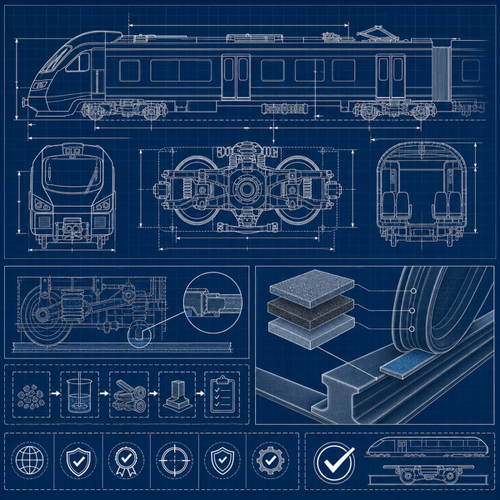
This document is applicable to all electronic equipment for control, regulation, protection, diagnostic, energy supply installed on railway vehicles and any relevant elements of rolling stock subsystems (e.g. external doors, On-Board ETCS functionality, wheel slide protection). For the purpose of this document, electronic equipment is defined as equipment composed of electronic components (e.g. resistors, capacitors, transistors, diodes, integrated circuits, hybrids, application specific integrated circuits, wound components and relays), and recognized associated components (e.g. connectors, mechanical parts). These components are mainly mounted on printed circuit boards. Sensors (e.g. current, voltage, speed) and semiconductor drive units for power electronic devices are covered by this document. Complete semiconductor drive units and power converters are covered by EN 61287 1. This document covers the requirements for operating conditions, design, documentation, testing and integration of electronic equipment, as well as hardware and software requirements considered necessary for compliant and reliable equipment. Specific requirements related to practices necessary to ensure defined safety integrity level or functional safety are not covered by this document. Nevertheless, this document is applicable to the hardware of all rolling stock electronic equipment or systems performing safety-related functions. The software development requirements for on-board railway equipment are specified by EN 50716.
- Draft111 pagesEnglish languagee-Library read for1 day
This document specifies processes for the management and operation of data centres. The primary focus of this document is the processes necessary to deliver the expected level of resilience, availability, risk management, risk mitigation, capacity planning, security and resource and energy efficiency. The secondary focus is on organization and data centre management to align the actual and future demands. Only processes specific for data centres are in the scope of this document. Business processes like people management, financial management, etc. are out of scope.
- Draft71 pagesEnglish languagee-Library read for1 day
Benefits

Full Standards Solution
Our catalog includes not only latest standards but also full meta information about related standardization project lifecycle.

Cost Effective
Our PRICE MATCH GUARANTEE policy with multi-level volume discounts gives our clients the best option in the market. In addition, you can get access to the standards for 3, 10, or 30 days.

Stay Notified
Get alerted to the latest revisions and new standards in the Weekly Newsletter. Standards are constantly changing. Don’t miss a revision that can impact your business.
Frequently Asked Questions
While can’t speak to your particular circumstance generally no. You get the same standard at a cheaper price!
We provide licenses to standards documents adopted by Slovenian Institute for Standardization (SIST). These are exactly the same as original works but are preceded by cover pages acknowledging their adoption. For instance, the international standard document ISO 8601:2013 is adopted by European Committee for Standardization (CEN) as the European Standard document EN ISO 3166-1:2014 and subsequently adopted by SIST as Slovenian Standard document SIST EN ISO 8601-1:2014.
Yes, the intended recipient for which a license has been granted may print documents for their personal use. No other persons may print, receive, inspect, duplicate, or otherwise consume printed material.
Documents are licensed to individuals and must not be made accessible to any person who the license was not purchased for (including the purchaser). This would preclude posting the documents in any manner that would allow distribution. This includes but not exclusively public or private network shares, wikis, FTP, messaging services, etc.
A license grants 1 persons exclusive access to purchased document in perpetuity. Licenses are not transferable. If for instance you have team of five individuals that need access to a document then five licenses must be purchased, one for each member. If a new team member is added regardless of the departure of any existing member a new license must be acquired for that individual. If you know you will need multiple licenses, consider purchasing several at one time as we offer volume discounts. See: Do you offer discounts?
iTeh Standards already offers substantial discounts in most cases in comparison to original publishing organizations. Furthermore, we offer volume discounts for buying multiple licenses. Simply multiply the price of the publication according to the relevant discount.
- 2-3 licenses - 15% discount
- 4-5 licenses - 30% discount
- 6-10 licenses - 50% discount
- more than 10 licenses - 60% discount
About Us
iTeh Inc is a software development and IT consulting team of professionals who provide consulting, development and implementation of solutions for all types of businesses.
In cooperation, with the Slovenian Institute of Standardization (SIST), we create a unique solution that covers all aspects of the lifecycle of Standardization organizations. iTeh Standards is a part of the solution that helps SIST to provide and sell their products to Customers.
iTeh Standards Store is an evolving project, our goal is to build long-term relationships with our customers. We believe in delivering quality services to solve our customers' challenges and define success by exceeding our customers' expectations. We are always ready to listen and our experience allows us to provide our customers with helpful effective suggestions. You can contact us by email.
We are committed to providing the best possible experience for our customers.
Compliance with international standards is increasingly becoming one of the key competitive advantages in the global market. Our company creates all conditions for the most comfortable implementation of new documents and norms in the processes carried out by your organization. Some of the key advantages of working with us are:
- Cost-effective - multi-level discounts and permanent updates of the functions give our clients the best option on the market.
- e-Library - access to standards for a period of time of your choice. It is a cost-effective solution for keeping updated with the newest standards.
- Company-wide documents - create a company account and connect all employees with access to purchased standards, e-Library documents, and packages.
- All in one spot - all purchased standards are kept in one place with controlled access by the account administrator.
- Client-centric - providing quality consulting is the prerogative and incentive to create new products that accompany your success and scale.
- 24 / 7 client support
We are dedicated to building mutually beneficial and long-term relationships with our clients. That is why our team focuses on creating services to help our customers develop and achieve new productive results.