







Announcements
Introducing the Engineering Workplace
Mark up any standard, right in the browser. Highlight clauses, sketch redlines, drop text notes, and add comments to your highlights — autosaved, page-accurate, restored every time you reopen the document.
On a team subscription, publish annotations to your colleagues in one click. Keep work-in-progress private, share the finished review.
Stop buying standards one at a time
Ongoing access to entire body catalogues - or focused ICS scopes - for a flat monthly or annual price. Unlimited reads, multi-seat for the whole team, volume discounts that scale.
Includes the Engineering Workplace markup tools on every standard, so reviews and audits become a team activity.

Need a standard once? Rent it. Need an answer? Ask the AI.
Read any standard for the period you actually need — a fraction of the purchase price, full in-browser access, no commitment.
Add the optional AI Chat to ask questions about the standard in plain English and get answers grounded in the document. Find the right clause in seconds, not minutes.
Standards Packages
iTeh together with SIST has developed and compiled a comprehensive collection of standard packages to support your standard requirements. Our packages cover an array of content that includes quality management, risk management, road vehicles, machine safety, and much more. With over 200 packages to choose from, you are sure to find a collection to suit your standard needs.














Latest Posts






Latest Standards
This document describes methods for simulating the mechanical loads that can be imparted to passive fire protection (PFP) materials and systems by explosions resulting from releases of flammable gas, pressurized liquefied gas, flashing liquid fuels, or dust that can precede a fire. These methods can be used to determine the resistance of passive fire protection materials to such events. This document considers PFP materials applied to substrates that are subject to the combined effects of pressure and drag that occur in the flow path of an explosion. This document excludes specimens in which the substrate is subject to plastic deformation or brittle failure.
- Standard17 pagesEnglish languagesale 15% off
This document specifies a range of fineness of precious metal alloys recommended for use in the field of jewellery.
NOTE There is a possibility that national legal requirements for the designation, marking and stamping of finished articles exist in the respective countries.
- Standard9 pagesEnglish languagee-Library read for1 day
This document specifies requirements and methods of tests for mechanical and physical properties of toys.
This document applies to toys for children, toys being any product or material designed or intended, whether or not exclusively, for use in play by children of less than 14 years. It refers to new toys taking into account the period of foreseeable and normal use, and that the toys are used as intended or in a foreseeable way, bearing in mind the behaviour of children.
It includes specific requirements for toys intended for children under 36 months, children under 18 months and for children who are too young to sit up unaided. For example, soft-filled toys with simple features intended for holding and cuddling are considered as intended for use by children under 36 months.
NOTE Information relating to the age grading and age determination of toys can be found in CEN ISO/TR 8124-8 [22] and the European Commission’s Guidance Documents on the Toy Safety Directive.
This document also specifies requirements for packaging, marking and labelling.
This document does not apply to the following toys:
— automatic playing machines, whether coin operated or not, intended for public use;
— toy vehicles equipped with combustion engines;
— toy steam engines;
— toy slings and toy catapults, supplied without projectiles;
— remote control flying toys incorporating rotor blade(s) which are capable of spinning approximately horizontally, each blade being greater than 175 mm in length, measured from the centre of rotation to the blade tip, and with an overall mass of the flying toy greater than 50 g.
This document does not cover musical instruments, sports equipment or similar items but does include their toy counterparts.
Toy slings and toy catapults supplied with projectiles are covered by this document.
This document does not cover electrical safety aspects of toys which are covered by EN IEC 62115.
Furthermore, it does not cover the following items which, for the purpose of this document, are not considered as toys:
a) decorative objects for festivities and celebrations;
b) products for collectors, provided that the product or its packaging bears a visible and legible indication that it is intended for collectors of 14 years of age and above; examples of this category are:
1) detailed and faithful scale models (see A.2),
2) kits for the assembly of detailed scale models,
3) folk dolls and decorative dolls and other similar articles,
4) historical replicas of toys,
5) reproductions of real fire arms;
c) sports equipment including roller skates, inline skates, and skateboards intended for children with a body mass of more than 20 kg;
d) bicycles with a maximum saddle height of more than 435 mm, measured as the vertical distance from the ground to the top of the seat surface, with the seat in a horizontal position and with the seat pillar set to the minimum insertion mark;
e) scooters and other means of transport designed for sport, or which are intended to be used for travel on public roads or public pathways;
f) electrically-driven vehicles which are intended to be used for travel on public roads, public pathways, or the pavement thereof;
g) aquatic equipment intended to be used in deep water, and swimming learning devices for children, such as swim seats and swimming aids;
h) puzzles with more than 500 pieces;
i) guns and pistols using compressed gas, with the exception of water guns and water pistols;
j) bows for archery over 120 cm long;
k) fireworks, including percussion caps which are not specifically designed for toys;
l) products and games using sharp-pointed missiles, such as sets of darts with metallic points;
m) functional educational products, such as electric ovens, irons or other functional products, as defined in EU Directive 2009/48/EC (Toy Safety Directive) [21], operated at a nominal voltage exceeding 24 V which are sold exclusively for teaching purposes under adult supervision;
n) products i
- Standard221 pagesEnglish languagee-Library read for1 day
This document gives guidance on the development of a facility management (FM) organization working on the strategic, tactical and operational management levels to: satisfy the needs and objectives of the demand organization and users of its facility; meet the needs of stakeholders and applicable FM requirements consistently; provide a safe, healthy, secure and efficient environment that enhances the workplace experience for users; protect the asset value and resource value of the facility; provide appropriately specified, responsive and cost-effective facility services; implement measures to minimize the impact of climate change on the facility; contribute to goals and targets consistent with sustainable development; improve the usefulness and benefits provided by the FM system.
- Standard29 pagesEnglish languagesale 15% off
- Standard29 pagesFrench languagesale 15% off
This document specifies a method for exposing plastics to concentrated solar radiation using reflecting concentrators to accelerate the weathering processes. The purpose is to assess property changes produced after specified stages of such exposures. The reflecting concentrators used in these exposures are sometimes referred to as “Fresnel reflectors” because, in cross-section, the array of mirrors used to concentrate the solar radiation resembles the cross-section of a Fresnel lens.
General guidance concerning the scope of the ISO 877 series is given in ISO 877-1.
NOTE Additional information about solar concentrating exposures, including a partial list of standards in which they are specified, is given in the Bibliography.
- Standard18 pagesEnglish languagee-Library read for1 day
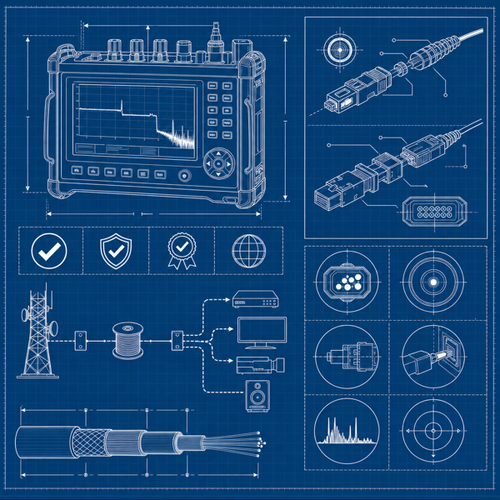
IEC 61753-022-13:2026 defines the minimum initial test and measurement requirements, and severities which multimode fibre optic connectors terminated as a pigtail or a patchcord satisfy in order to be categorized as meeting the IEC standard category OP+HP (Extended outdoor protected environment with additional heat dissipation), as defined in IEC 61753-1.
If tests are performed on the connectors terminated as pigtails or patchcords for category OP+HP, and the product pass, the product will be automatically qualified or categorized as meeting the IEC standard for categories OP+, OP, OPHD, C and CHD.
- Standard23 pagesEnglish languagee-Library read for1 day
This part of IEC/IEEE 62582 contains methods for condition monitoring of organic and polymeric materials in instrumentation and control systems using the indenter measurement technique in the detail necessary to produce accurate and reproducible measurements. It includes the requirements for the selection of samples, the measurement system and measurement conditions, and the reporting of the measurement results.
The different parts of IEC/IEEE 62582 are measurement standards, primarily for use in the management of ageing in initial qualification and after installation. IEC/IEEE 62582-1 includes requirements for the application of the other parts of the IEC/IEEE 62582 series and some elements which are common to all methods. Information on the role of condition monitoring in the qualification of equipment important to safety is found in IEC/IEEE 60780-323.
This document is intended for application to non-energised equipment.
- Standard24 pagesEnglish languagee-Library read for1 day
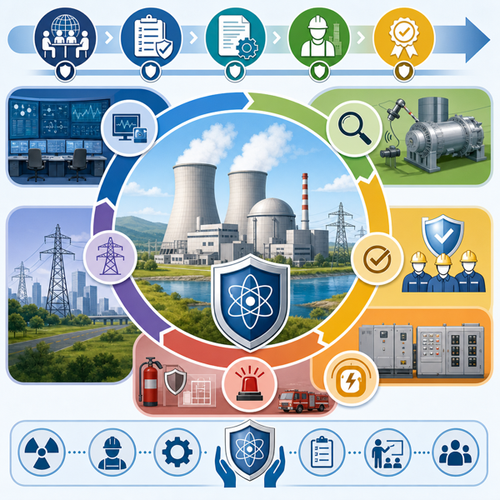
IEC 62705:2022 gives requirements for the lifecycle management of radiation monitoring systems (RMS) and gives guidance on the application of existing IEC standards covering the design and qualification of systems and equipment. The purpose of this document is to lay down requirements for the lifecycle management of RMSs and give application guidance. This document is intended to be consistent with the latest versions of International Standards dealing with radiation monitors, sampling of radioactive materials, instruments calibration, hardware and software design, classification, and qualification. This document is applicable to RMSs installed in nuclear facilities intended for use during normal operation, anticipated operational occurrences (AOO), design basis accidents (DBA) and design extension conditions (DEC), including severe accidents (SA). This second edition cancels and replaces the first edition published in 2014. This edition includes the following significant technical changes with respect to the previous edition:
- modification of the title.
- to be consistent with the categorization of the accident condition.
- to update the references to new standards published since the first edition.
- to update the terms and definitions.
- Standard29 pagesEnglish languagee-Library read for1 day
This document specifies requirements and test methods for activity toys.
This document also specifies requirements for:
- separately sold accessories for, and components of activity toys;
- separately sold swing elements that are ready for use on or in combination with an activity toy;
- construction packages for activity toys including components used to build activity toys in accordance with a scheduled building instruction.
The scope of this document excludes:
- playground equipment intended for public use dealt with in the EN 1176 series;
- bow-mounted rocking activity toys such as rocking horses and similar toys, which are covered by specific requirements in EN 71-1;
- toy pools with maximum depth of water over 400 mm measured, between the overflow level and the deepest point within the pool;
NOTE 1 For information regarding the classification of pools as toys see European Commission guidance document No. 8 on the application of the Directive 2009/48/EC on the safety of toys - Pools [1].
- pools with maximum depth of water over 400 mm measured, between the overflow level and the deepest point within the pool, without play elements covered e.g. by the EN 16582 series or EN 16927.
NOTE 2 There is an enhanced risk of drowning in pools where the depth of water is in excess of 400 mm.
- toy slides designed to be used in conjunction with domestic in-ground swimming pools;
- trampolines for domestic use dealt with in EN 71-14;
- powered blowers used to continuously inflate inflatable activity toys.
NOTE 3 Powered blowers used to continuously inflate inflatable activity toys are considered to be a household appliance and covered by requirements given in EN 60335-2-80.
See also Clause A.1.
- Standard81 pagesEnglish languagee-Library read for1 day
This document provides good practice that can be adopted by any service provider, not limited to e-hailing and p-hailing operators, for the implementation of work-related road traffic safety (RTS) management. This document is applicable to any service provider to offer further protection to the drivers for digital platform providers as well as other road users through the adoption of a proactive approach to manage work-related road risks.
- Standard22 pagesEnglish languagesale 15% off
This document describes a method that demonstrates the use of polyethylene reference film (PERF) for monitoring laboratory and outdoor conditions as a weathering reference material in weathering tests used for plastics.
- Technical report24 pagesEnglish languagesale 15% off
This document is directly applicable to pulsed X-radiation with pulse duration of 0,1 ms up to 10 s. This range covers the whole range used in medical diagnostics at the time of publication. Some specifications can also be applicable for much shorter pulses; one example is the air kerma of one pulse. Such a pulse can be produced, e.g. by X-ray flash units or high-intensity femtosecond-lasers. Other specifications are not applicable for much shorter pulses; one example is the time-dependent behaviour of the air kerma rate. This cannot be measurable for technical reasons as no suitable instrument is available, e.g. for pulses produced by a femtosecond-laser.
This document specifies the characteristics of reference pulsed radiation for calibrating and testing radiation protection dosemeters and dose rate meters with respect to their response to pulsed radiation. At this point, it is only concerned with the characteristics of single pulses. Single pulses are the most difficult for dosemeters to measure. Determining the dose for repeated pulses is easier, but still more difficult than for continuous radiation, i.e. the performance of the dosemeters when measuring repeated pulses lies between these extremes. The radiation characteristics includes the following:
time-dependent behaviour of the air kerma rate of the pulse;
time-dependent behaviour of the X-ray tube high voltage during the pulse;
uniformity of the air kerma rate within a cross-sectional area of the radiation beam;
air kerma of one radiation pulse;
air kerma rate of the radiation pulse;
repetition frequency.
This document does not define new radiation qualities but uses those radiation qualities specified in existing ISO and IEC standards. Instead, this document gives the link between the parameters for pulsed radiation and the parameters for continuous radiation specifying the radiation qualities. It does not specify specific values or series of values for the pulsed radiation field but specifies only those limits for the relevant pulsed radiation parameters that are required for calibrating dosemeters and dose rate meters and for determining their response depending on the said parameters.
The pulse parameters with respect to the phantom-related quantities were determined using conversion coefficients according to ISO 4037 (all parts). This is possible as the radiation qualities specified in existing ISO and IEC standards are used.
A given reference pulsed X-ray facility is characterized by the parameter ranges over which the full specifications and requirements according to this document are met. Therefore, not all reference pulsed X-ray facilities can produce pulses covering the same parameter ranges.
- Standard25 pagesEnglish languagee-Library read for1 day
This document specifies the heating condition, method of test and criteria for the evaluation of the ability of a penetration sealing system to maintain the integrity and insulation of a fire-separating element at the position at which it has been penetrated. This document assesses: the effect of such penetrations on the integrity and insulation performance of the element concerned, the integrity and insulation performance of the penetration sealing system, and the insulation performance of the penetrating service or services, and where appropriate, the integrity failure of a service. NOTE 1 Optional water and air leakage tests are included in Annex A. NOTE 2 Explanatory notes are included in Annex B.
- Standard27 pagesEnglish languagesale 15% off
This document specifies a method for the determination of selected polybrominated diphenylethers (PBDE) (see Figure 1 and Table 1) in sediment, suspended particulate matter and biota using gas chromatography coupled with tandem mass spectrometry (GC-MS/MS) or with high resolution mass spectrometry (GC-HRMS) in the electron impact (EI), negative ion chemical ionization (NCI) or atmospheric pressure ionization (APCI) mode.
The method is applicable to sediment and suspended particulate matter samples with limits of quantification of 0,2 µg/kg dry mass (dm) for brominated diphenylether (BDE) BDE-28 to BDE-183, of 2 µg/kg dry mass (dm) for BDE‑209.
The method is applicable as well with lower limits of quantification (LOQ), if specific clean-up methods, described in Clause 10, Table 3, method 1 and method 2 in combination with measurement methods GC-MS/MS or GC-HRMS after electron impact ionization (El) or negative ion chemical ionization (NCI) for BDE-209 are used. Depending on the analytical capability of the instrument, limits of quantification down to 0,003 µg/kg dm for BDE-28 to BDE-154 and 0,02 µg/kg dm for BDE-183 and 1 µg/kg dm for BDE-209 and lower are possible.
The method is applicable to biota samples with limits of quantification down to 0,000 2 µg/kg fresh mass (fm) (BDE-28 to BDE-154) and 0,03 μg/kg fresh mass (fm) (BDE-183), if specific clean-up methods, described in Table 4 in combination with measurement methods GC-MS/MS or GC-HRMS after electron impact ionization (El) are used.
Performance data are listed in Annex E.
- Standard39 pagesEnglish languagee-Library read for1 day
This document specifies methods for the determination of basic measurements of surgical standard instruments. This document does not apply to instruments for use on the central nervous system and on the central cardiovascular system. NOTE Instruments for use on the central nervous system and on the central cardiovascular system are measured differently due to complex geometries which are adapted to the human anatomy.
- Standard7 pagesEnglish languagesale 15% off
- Standard8 pagesEnglish languagesale 15% off
- Standard9 pagesFrench languagesale 15% off
This document defines test methods for surgical standard instruments. This document does not cover instruments for use on the central nervous system and on the central cardiovascular system.
- Standard13 pagesEnglish languagesale 15% off
This document specifies a method for the measurement of flame spread times of vertically oriented textile fabrics and industrial products in the form of single or multi-component textile fabrics (coated, quilted, multilayered, sandwich combinations, and similar combinations) when subjected to a small, defined flame.
- Standard21 pagesEnglish languagee-Library read for1 day
This document specifies a test method using radioactive methyl iodide (CH3131I) as a tracer to determine the in-situ decontamination factor of an iodine trap. An in-situ test allows to reach the global efficiency of the trap characterized by the sorbent efficiency but also by the implementation of the trap within the ventilation duct) while the intrinsic efficiency of a charcoal is characterized in a laboratory by ISO 18417[9] (or other national standards such as ASTM D3803[10]). This document provides general and common requirements for this method to assess the efficiency of an iodine trap, but also, the tools requirements, accuracy and the provisions needed to ensure safety of the workers, public and the environment during the test. This reproducible method can support nuclear facility operators as a reference method to compare the decontamination factor evaluated by this method to reference values (e.g. safety criteria, national legislation, etc.). Because of the use of a radioactive tracer, some precautions should be applied. Firstly, this method is usually used for ventilation systems with monitoring of gaseous iodine releases in environment in accordance with the national regulations. Secondly, this method is not used to determine the decontamination factor of iodine traps used in ventilation systems with air release in rooms with potential presence of workers (e.g. control room). For those rooms, a non-radioactive method is preferred. This document can apply to installations with low inventory of radioiodine equipped with iodine traps (e.g. small laboratories). In this case, some provisions can be adapted but always in accordance with the national regulations. Finally, this document mainly deals with iodine traps using impregnated activated carbon. However, this method can be used with some adaptations to other solid sorbent as inorganic sorbent (e.g. zeolite – aluminium and silica base usually doped with silver nitrate – or impregnated catalytic supports[11][12]).
- Standard39 pagesEnglish languagesale 15% off
- Standard41 pagesFrench languagesale 15% off
This document describes a method to expose test organisms (amphipods), directly on the field by a caging methodology, with the aim to measure bioaccumulation of chemical substances on a monitoring station, i.e. either the concentrations of metals or organic compounds, or both, accumulated in the organisms. This document also describes the specifications for test organism selection and conditioning, in situ exposure, and finally sorting and conditioning of the surviving organisms after exposure. This document does not apply to organism preparation methods (freeze-drying, extraction, mineralization) and quantification of the chemical substances.
- Technical specification18 pagesEnglish languagesale 15% off
Benefits

Full Standards Solution
Our catalog includes not only latest standards but also full meta information about related standardization project lifecycle.

Cost Effective
Our PRICE MATCH GUARANTEE policy with multi-level volume discounts gives our clients the best option in the market. In addition, you can get access to the standards for 3, 10, or 30 days.

Stay Notified
Get alerted to the latest revisions and new standards in the Weekly Newsletter. Standards are constantly changing. Don’t miss a revision that can impact your business.
Frequently Asked Questions
While can’t speak to your particular circumstance generally no. You get the same standard at a cheaper price!
We provide licenses to standards documents adopted by Slovenian Institute for Standardization (SIST). These are exactly the same as original works but are preceded by cover pages acknowledging their adoption. For instance, the international standard document ISO 8601:2013 is adopted by European Committee for Standardization (CEN) as the European Standard document EN ISO 3166-1:2014 and subsequently adopted by SIST as Slovenian Standard document SIST EN ISO 8601-1:2014.
Yes, the intended recipient for which a license has been granted may print documents for their personal use. No other persons may print, receive, inspect, duplicate, or otherwise consume printed material.
Documents are licensed to individuals and must not be made accessible to any person who the license was not purchased for (including the purchaser). This would preclude posting the documents in any manner that would allow distribution. This includes but not exclusively public or private network shares, wikis, FTP, messaging services, etc.
A license grants 1 persons exclusive access to purchased document in perpetuity. Licenses are not transferable. If for instance you have team of five individuals that need access to a document then five licenses must be purchased, one for each member. If a new team member is added regardless of the departure of any existing member a new license must be acquired for that individual. If you know you will need multiple licenses, consider purchasing several at one time as we offer volume discounts. See: Do you offer discounts?
iTeh Standards already offers substantial discounts in most cases in comparison to original publishing organizations. Furthermore, we offer volume discounts for buying multiple licenses. Simply multiply the price of the publication according to the relevant discount.
- 2-3 licenses - 15% discount
- 4-5 licenses - 30% discount
- 6-10 licenses - 50% discount
- more than 10 licenses - 60% discount
About Us
Standards work, redesigned for the way teams actually work.
iTeh builds the digital infrastructure of the standards industry. Together with the Slovenian Institute for Standardization (SIST) and a growing network of publishers and certification partners, we run standards.iteh.ai — where engineers, procurement teams, compliance officers and standardization institutes find, buy, read, annotate and reuse the standards their work depends on. Our platform turns a static catalog into a workplace your team will actually open every day.
Advantage
- AI-first. Ask any standard a question. Search the catalog semantically. Connect ChatGPT, Claude, Perplexity or your own agents through our MCP endpoints.
- Engineering Workplace. Highlight, draw, comment and share — page-accurate, saved automatically, publishable to your whole team in one click.
- Company-wide licensing. One account, every employee, controlled by your administrator — no more chasing PDFs across inboxes.
- e-Library. Subscription access to live standards collections — pay for the shelf, not for every single document.
- Always on, always current. Continuous platform updates, 24/7 support, no version-upgrade projects.